
Start with how much water you actually use
Capacity is the first thing to check because it affects both convenience and power use. A 1.0 litre kettle works well for one or two people, while 1.5 to 1.7 litres is usually better for families, busy kitchens or anyone boiling water more than a few times a day. If you often make tea for visitors, instant meals or hot water for washing up, a smaller kettle can become annoying very quickly.
Think about the number of cups you make at once, not just the total litres. A kettle filled to the top takes longer to boil and uses more electricity, so there is no point buying a big unit if you only need two mugs before work. In many Gauteng homes, especially where load-shedding and power costs are part of the routine, a kettle that matches your real habits is the smarter choice.
- 1.0 litres: best for singles, couples and compact flats
- 1.2 to 1.5 litres: good all-round size for most homes
- 1.7 litres and above: useful for larger families or shared spaces
Choose a finish that suits cleaning and daily handling
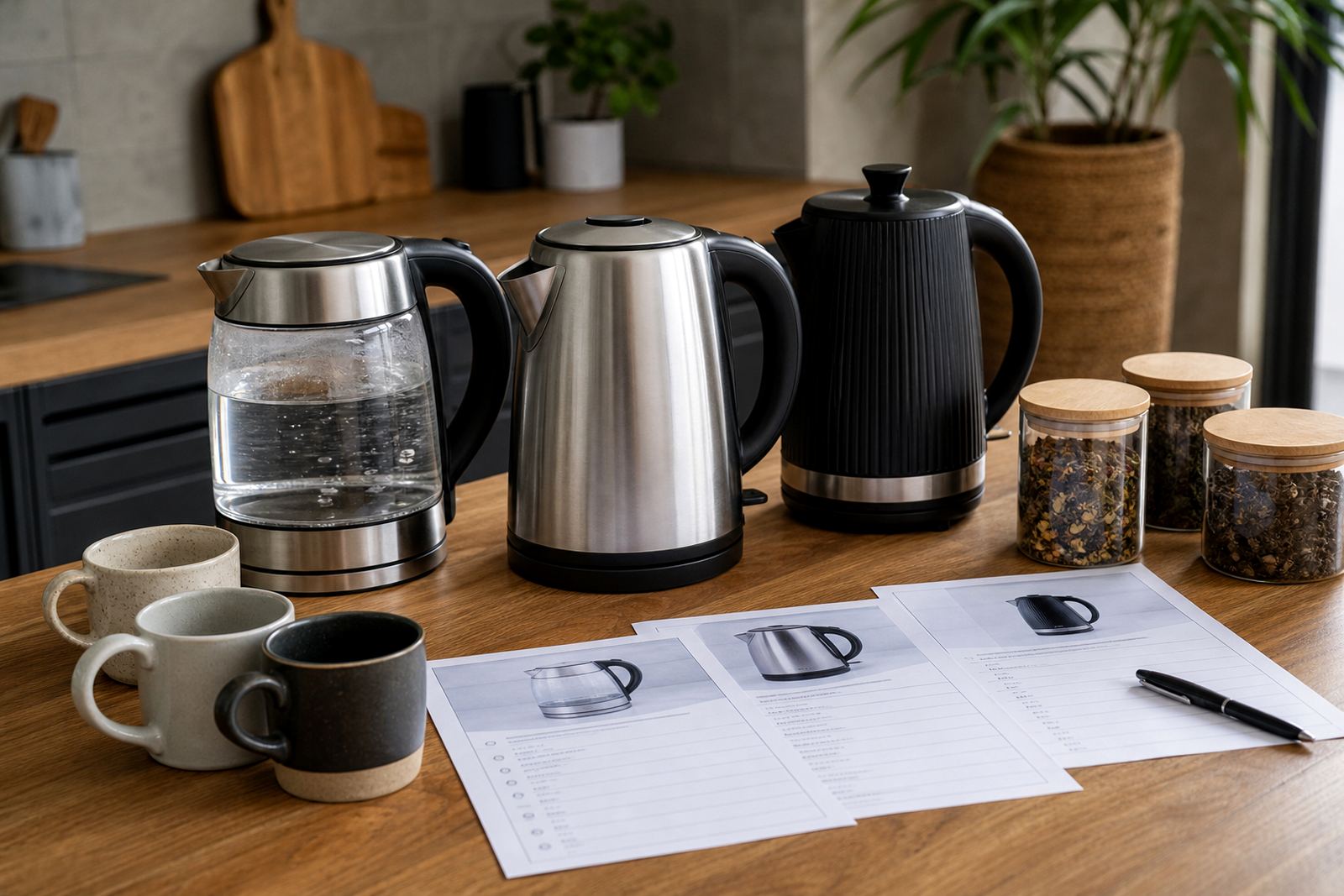
The finish affects how the kettle looks, how easy it is to clean and how well it holds up in your kitchen. Stainless steel usually hides wear fairly well and can handle regular use. Plastic models are often lighter and more affordable, while glass kettles let you see the water level clearly, though they need a bit more wiping to stay neat. If your kitchen gets steamy or salty air from the coast, it is worth choosing a finish that will not show marks too quickly.
Look at the handle too. A kettle can have a nice finish but still feel awkward if the grip is narrow or slippery. For older users or anyone boiling water several times a day, a comfortable handle matters as much as the outer body. A balanced kettle with a solid base is also easier to lift when full.
- Stainless steel: durable and practical for everyday use
- Plastic: lighter and often easier on the budget
- Glass: clear water level, but needs more upkeep
Boil speed matters more than most people think
When you are rushing to get children ready for school or trying to make a quick cup before work, boil speed becomes a real factor. A kettle that heats water faster can save time every morning, especially in households where everyone wants something hot at once. It also helps if you need hot water during power interruptions and want to use a backup supply or inverter system efficiently.
Power rating plays a part here. Most household kettles run at around 1800 to 2200 watts, which is usually fast enough for normal use. Higher wattage often means quicker boiling, but it also means a bigger draw on your power supply. If your home is managing other appliances at the same time, it is worth checking whether your electrical setup can handle the load without tripping.
A local example: a family in Midrand with two school children may use the kettle five or six times a day. In that case, a fast-boiling 1.5 litre model can save real time, while a larger slower kettle can feel like a nuisance by the third cup.
Safety features are worth checking before you buy
Good safety features reduce hassle and help prevent damage. Auto shut-off is one of the most useful, because it switches the kettle off once the water reaches boiling point. Boil-dry protection is another important feature, since it stops the kettle from heating when there is no water inside. That is useful in busy kitchens where someone may switch it on and get distracted.
Also check for a secure lid that opens smoothly, a stable base and a spout that pours cleanly without splashing. If children use the kitchen, or if the kettle is kept in an office break room, these details matter. You want something that feels controlled in the hand, not flimsy.
- Auto shut-off for peace of mind
- Boil-dry protection to prevent damage
- Stable base for safer lifting and pouring
- Clear water gauge so you fill it properly
Everyday ease of use saves time every single day
The best kettle is the one that makes daily life simpler. A wide opening makes filling and cleaning easier. A clear water window helps you avoid overfilling, which can waste electricity and cause splashing. A lid that opens fully is helpful when you are rinsing the kettle out after using borehole water or if you want to keep scale build-up under control.
Cord storage and a 360 degree base are small features that make a big difference. They help keep the counter tidy and make the kettle easy to pick up from any angle. If your kitchen is short on space, these practical touches matter more than fancy extras. You want something that fits into the way you already work, not something that slows you down.
- Wide opening for easier filling and cleaning
- 360 degree base for left or right hand use
- Cord storage to keep counters neat
- Clear fill marks to avoid overfilling
Match the kettle to your home and your habits
There is no single kettle that suits every home. A one-bedroom apartment in Pretoria may need something compact and quick. A family home in Durban might prefer a larger kettle that is easy to refill and wipe down. In Gqeberha, where salty air can affect surfaces over time, a finish that is easy to clean and dry after use can be a better choice than a showy exterior.
Before you decide, ask yourself how often you boil water, who uses the kettle and where it will stand in the kitchen. If you like making tea throughout the day, a mid-sized model with a comfortable handle and quick boil time is usually the best all-round choice. If you mostly use hot water for instant meals or occasional tea, a smaller unit may be enough. The right kettle should feel sensible from the first use, not just good on paper.
Buy-This Deals helps South African shoppers compare practical home and kitchen products with delivery across Johannesburg, Pretoria, Cape Town, Durban and Gqeberha. If you need help choosing a kettle for home use or a gift, the enquiry form on the contact page is the best place to start.