

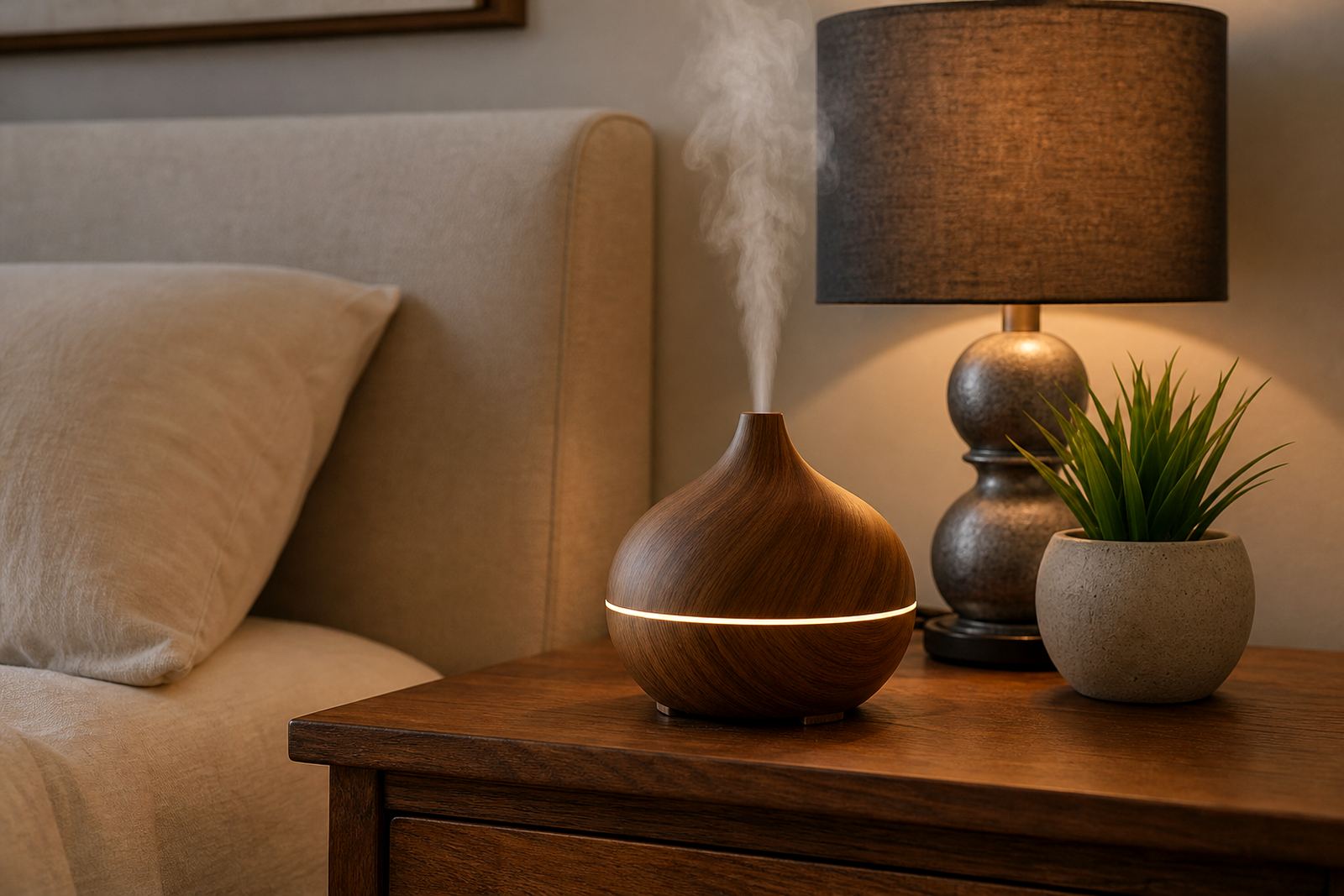
What a humidifier diffuser does in everyday use
This compact unit combines a water mist function with fragrance use, so you can improve the feel of a room and keep the space smelling fresh at the same time. It is suited to small to medium rooms and is especially useful in bedrooms, study corners and living areas where dry air can irritate the nose, throat or skin.
In practice, it works best as a light daily comfort item rather than a heavy-duty appliance. If you want a simple way to add moisture for night-time use or a calmer lounge feel during the afternoon, this type of unit is easy to live with and does not take up much space.
- Adds fine mist for a more comfortable indoor feel
- Can be used with water only or with compatible fragrance oils
- Suitable for short runs or longer background use
- Low power draw, which helps when running on an inverter or backup supply
Sizes and options to compare before you order
Most compact humidifier diffusers are available in a few practical sizes, usually measured by water tank capacity. Smaller tanks suit bedside use, while larger tanks are better for longer evening use in a lounge or open-plan room. If you are buying for a flat in Midrand or an apartment in Pretoria, a compact model is often the easiest option because it stores neatly and can be moved from room to room.
Look at the mist output, run time and tank capacity together, not just one figure on its own. A unit with a bigger tank can run longer, but if the mist output is too strong for a small bedroom it may leave surfaces damp. For coastal homes in Durban or Gqeberha, that balance matters because air can already feel humid on some days.
- Tank capacity options: 200 ml, 300 ml and 500 ml common in compact units
- Mist modes: continuous or intermittent settings
- Light function: some units include a soft night light
- Noise level: best kept quiet for bedroom use
Where this product suits best in the home
This product suits rooms where comfort and a pleasant scent matter more than high output. Bedrooms, reading nooks, baby rooms, home offices and smaller lounge areas are the usual choices. In winter, many homes around Johannesburg and the East Rand feel noticeably drier indoors, so a humidifier diffuser can be useful at night or during the evening.
It also works well in homes where the air conditioner runs often, because cooled air can become dry and make a room feel less comfortable. If you have wooden furniture, bookshelves or fitted cupboards, keep the unit on a stable surface and not too close to timber or wall paint. That helps avoid moisture build-up in one spot.
- Bedrooms for night-time comfort
- Lounges and TV rooms for light fragrance
- Home offices for a calmer working space
- Guest rooms and rental units for simple added comfort
Power use, placement and setup tips
Most humidifier diffusers run from standard mains power through a low-voltage adaptor, which makes them simple to plug in and use. They are not gas appliances and do not need plumbing. For homes affected by load shedding, they can be paired with a small inverter or backup power setup if the power draw is suitable for the system.
Place the unit on a flat, level surface with some open space around it. Keep it away from curtains, soft furnishings and delicate electronics. If you plan to use it in a nursery or bedroom, position it where the mist can spread without blowing directly onto bedding. A small mat or tray underneath can help protect polished surfaces from any fine moisture, especially in dry weather when the unit may run for longer periods.
- Uses standard electrical power, no gas required
- Needs a stable, level surface
- Keep clear of direct sun and heat sources
- Do not place under shelves where mist may collect
Care, cleaning and basic servicing
Regular cleaning is important if you want the diffuser to keep working properly and avoid stale smells in the tank. Empty any leftover water after use, wipe the inside dry and rinse it before refilling. If you use fragrance oils, clean the tank more often so residue does not build up around the mist outlet. A simple weekly routine is enough for many homes, although hard water areas may need more frequent attention.
If the mist output starts to drop, check for mineral build-up, a blocked outlet or an empty tank first. In coastal towns, humidity can affect how often the unit needs a wipe down because fine condensation may gather on the outside. Do not use harsh cleaners or soak the electrical base. A soft cloth and clean water usually does the job. Little bit of care goes a long way here.
- Empty and dry the tank after use
- Use clean water to reduce mineral build-up
- Wipe the mist outlet gently with a soft cloth
- Check the adaptor and cable for wear before use
What to check when ordering your humidifier diffuser
Before placing an order, check the tank size, mist settings and whether the unit is suitable for the room you have in mind. If you want it for a bedroom, a quieter unit with softer output is usually better. If you are buying as part of a housewarming or corporate gift, gift wrapping and a compact design can make it easier to present and use straight away.
It is also worth confirming the delivery address and whether you need help with bulk ordering or a specific gift request. Buyers in Johannesburg, Pretoria, Cape Town, Durban and Gqeberha often want the item delivered straight to home or office, so having the correct suburb and access details helps avoid delays. If you are unsure, keep these checks in mind before you complete the order.
- Room size and intended use
- Tank capacity and expected run time
- Noise level for bedroom or lounge use
- Delivery details and any special instructions
- Whether fragrance oils are to be used
Key facts
| Product type | Compact humidifier diffuser |
|---|---|
| Use case | Moisture and fragrance for bedrooms, lounges and home offices |
| Power | Low-voltage electric adaptor, mains powered |
| Tank capacity | Approx. 300 ml |
| Coverage | Small to medium rooms |
| Care | Rinse after use and wipe dry before refilling |