
What a Laundry Corner Needs in a Busy Home
A laundry corner does not need a full room. In many Midrand homes, it is a passage nook, a section of the garage, a scullery corner or a tucked away spot near the back door. The aim is simple, give wet washing a place to wait, clean items a place to dry and detergents a place that stays tidy and dry.
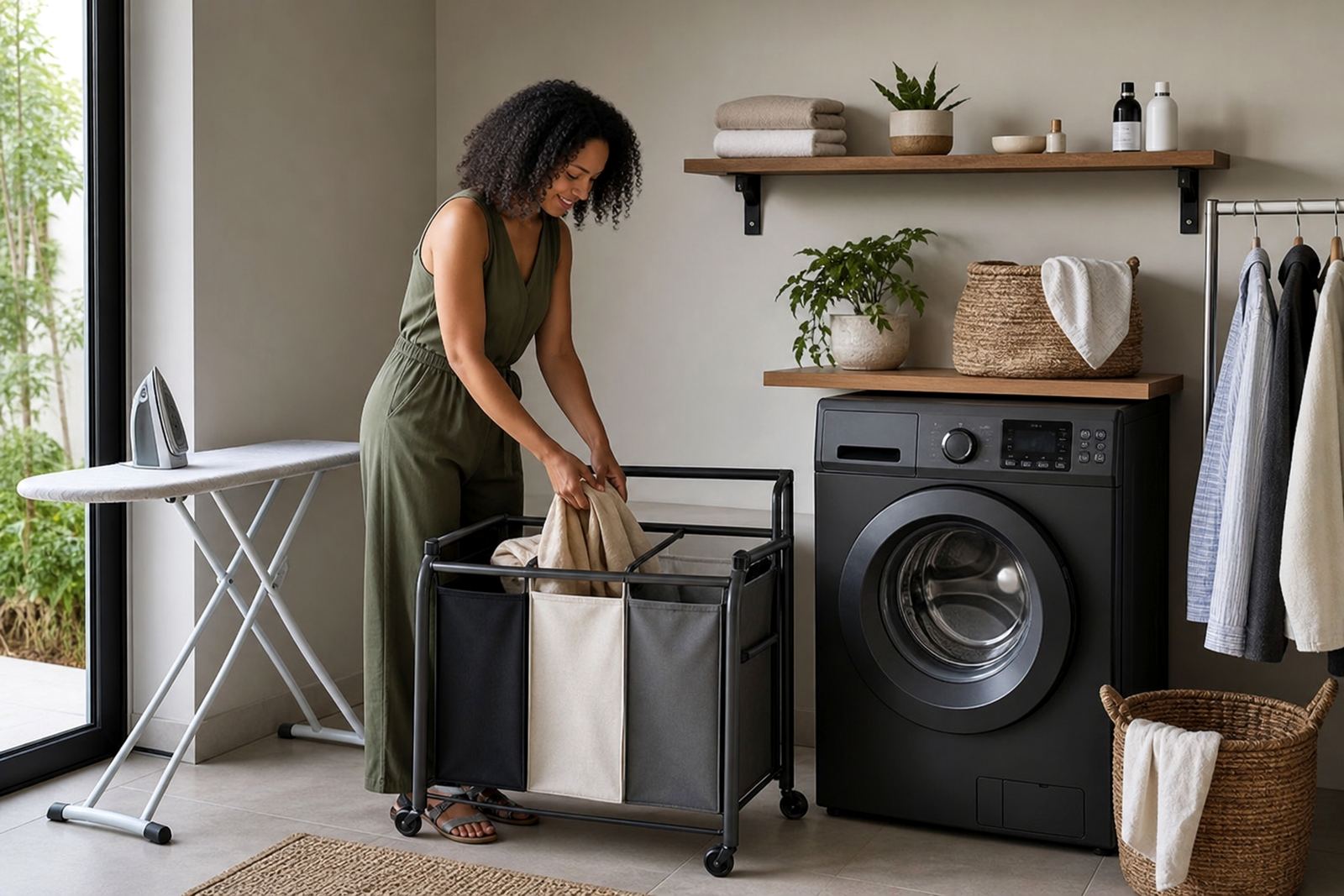
For most households, the core set includes a washing basket or two, a drying rack, a small shelf or caddy for supplies, pegs and clips, an ironing surface if space allows, and a wall hook or rail for hanging shirts and school clothes. If your home has limited outdoor space, a folding rack and a slim trolley can make a big difference. In coastal areas like Durban and Gqeberha, airflow matters as much as storage because humidity can keep clothes damp longer than expected.
Buy-This Deals focuses on practical home items that help you keep a laundry corner in order without overfilling the space. The best setups are the ones that fit the family routine, not the other way around.
Simple Equipment Sets That Work Day to Day
The right equipment set depends on how much washing you do each week. A couple with light laundry needs can manage with a two-basket sort system and one foldable rack. A larger family in Pretoria or Johannesburg may need more drying room, extra baskets and a label system for school uniforms, darks and towels.
- Two or three sorting baskets for lights, darks and delicate items
- A foldable metal or plastic drying rack for indoor drying during rain or load-shedding days
- Strong pegs and a peg holder to keep smaller items together
- Wall shelves or a narrow storage unit for detergent, stain remover and spare cloths
- A hanging rail or over the door hook set for shirts and dresses
- A lidded container for clothespins, gloves and laundry pods or powder
If you iron in the same spot, keep the iron, spray bottle and folded board cover nearby but out of the way of wet laundry. A good set up should let you move from sorting to drying to folding without walking across the house with dripping clothes.
How to Plan the Layout Around Your Space
Start by measuring the corner. Even a narrow area can work if you use vertical space well. Leave enough room for the washing machine door to open fully and make sure the drying rack can fold out without hitting a wall or cupboard. If the space gets used by more than one person, keep the busiest items at waist height so nobody has to bend too much or reach over a pile of laundry.
Try to split the area into three zones: sort, dry and store. Sorting baskets sit closest to the washing machine. Drying gear goes in the middle, where there is enough airflow. Detergents and cleaning items go on the top shelf or in a closed container if you have small children or pets. In homes near the coast, a covered and airy spot is better than a closed cupboard because trapped moisture can lead to damp smells and mould.
If the corner is near a window, use that light and air to your advantage. If it is in a garage or enclosed passage, a small fan can help during damp weather. You do not need a large footprint, only a layout that reduces back and forth and keeps the floor clear.
Common Mistakes That Make Laundry Harder
Many laundry corners become cluttered because they are treated as a spare storage area. That usually leads to bottles on the floor, missing pegs and wet items hanging over chairs. Another common mistake is buying baskets that are too large for the space. A basket that looks useful in a shop can become awkward when you need to lift it through a narrow doorway or around a washing machine.
- Using open shelves for too many loose items, which makes the space look untidy quickly
- Placing the drying rack too close to a wall, slowing airflow
- Choosing weak pegs that snap in strong sun or with heavy wet towels
- Keeping detergent in unsealed containers where moisture gets in
- Leaving no space for dirty laundry to wait, which leads to piles on chairs or the floor
Another issue is planning only for summer. Winter laundry in Gauteng can be slower to dry, and a single rack is often not enough if the family washes twice a week. It helps to have one indoor backup rack and a second smaller hanger for school shirts and work clothes.
Budget Ranges for a Practical Setup
You do not need to spend a large amount to get a useful laundry corner in place. A starter setup for a small home can begin around R350 to R700, especially if you only need one drying rack, a basket and a few storage bits. A more complete family setup with multiple baskets, a stronger rack, shelf storage and wall hooks may sit between R900 and R1 800.
If you want better sorting, stronger materials and more storage for a high use household, budget around R2 000 to R3 500. That range is more suitable for homes where washing happens several times a week or where the laundry corner also needs to handle linen, school kit and work clothes. For small businesses, guesthouses or shared accommodation, the total can go higher once you add heavy duty racks and extra baskets.
It usually makes sense to spend a little more on items that get used every day. Cheap baskets that crack or flimsy racks that wobble end up costing more in the long run.
Practical Extras That Save Time Each Week
Once the main setup is in place, a few small extras make wash day easier. A clip set helps hold socks and baby items together. A small label system can keep family washing sorted by room or person. A lidded laundry caddy keeps stain remover, gloves and cloths together, so you are not hunting for them when the machine finishes.
It also helps to keep a simple routine. Sort as the washing comes in, empty pockets before items go into the basket, and fold dry laundry as soon as possible. That cuts down on wrinkles and keeps the corner clear for the next load. If you manage household washing for a larger family, or even a small office with towels and cloths, the same setup applies, only with more baskets and stronger drying space.
For shoppers in Midrand, Johannesburg, Pretoria, Cape Town, Durban, Gqeberha, East Rand and West Rand, courier delivery makes it easier to gather the pieces you need without driving around for each item. A good laundry corner is not about having more stuff, it is about having the right items in the right place.