
What a student flat needs first
A student flat usually needs three things straight away: something to cook with, something to store food in, and something that makes everyday living easier in a small room. Most students start with one or two occupants, a small kitchenette, limited cupboard space and not much spare cash after rent, transport and textbooks. The aim is to buy items that work hard every day, not extras that sit in a box.
For a typical South African student setup in Midrand, Johannesburg, Pretoria or Cape Town, the first shop should cover the basics for meals, laundry and charging devices during load-shedding. That means compact cookware, a few sturdy containers, a kettle or small appliance, a torch or rechargeable light, and simple cleaning tools. If you are sharing with a flatmate, buy items that can be divided fairly so nobody ends up carrying the full cost.
- Entry setup for one student: about R750 to R1 500
- Shared 2 person setup: about R1 500 to R3 000
- Extras for convenience and storage: about R300 to R800
Kitchen items that earn their place
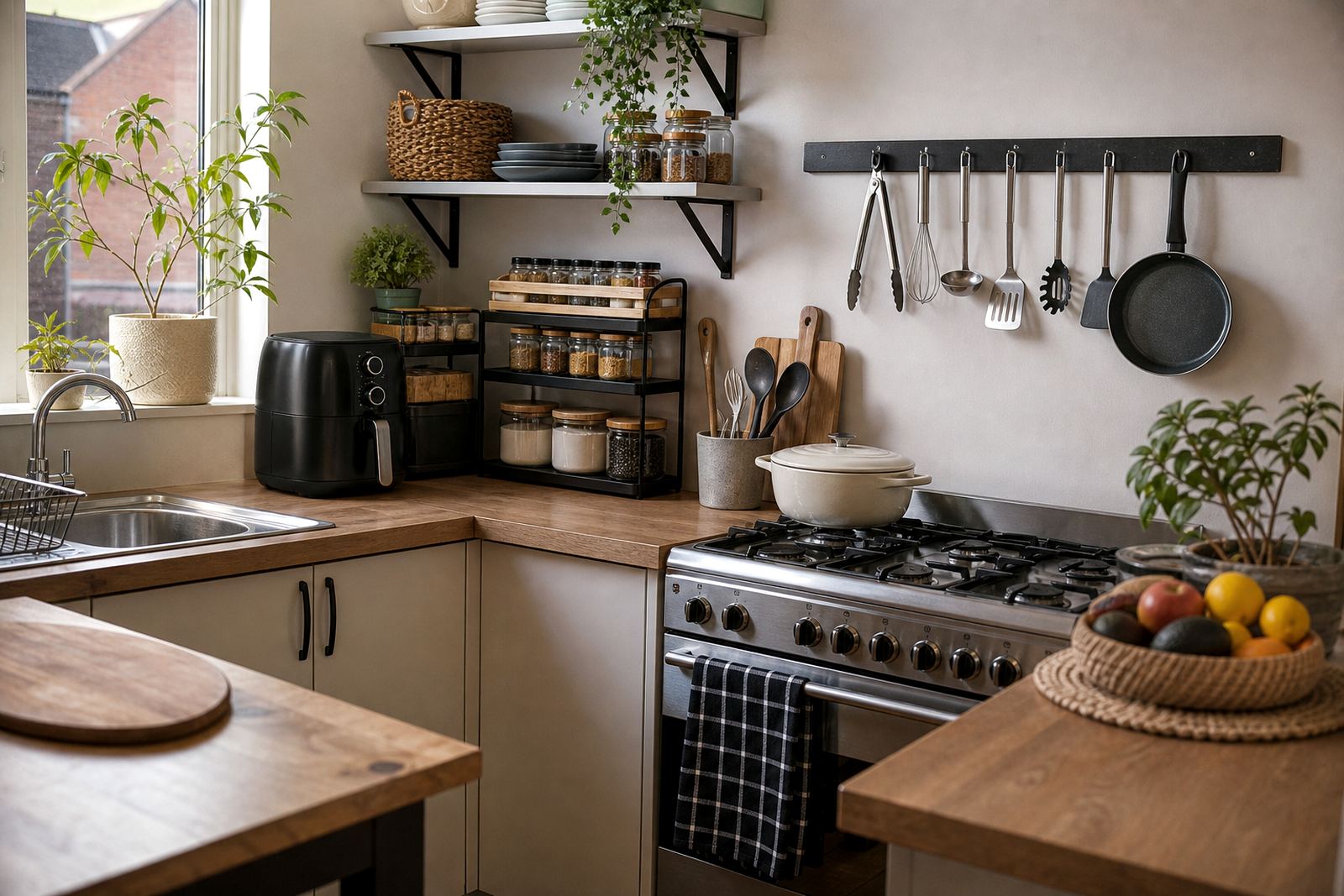
The kitchen is where student savings usually start showing. A compact flat does not need a full house kitchen set, but it does need a few pieces that can handle breakfast, lunch and late study dinners. A small pot, frying pan, mug, plate, bowl and utensils are enough for many students. Add a lunch container and a bottle for water or juice, and you can prep food for class days without spending extra on takeaways.
Gadgets should be chosen for usefulness, not novelty. A kettle, hand blender, small fan, rechargeable light or power bank can be very helpful when municipal supply is erratic or the building has regular outages. In coastal areas such as Durban or Gqeberha, choose items that are easy to dry and store so humidity does not cause rust or odours. In Gauteng, where flats can get hot and dusty, a small fan and easy-clean surfaces are often worth more than decorative items.
- Cookware that suits one pot meals and quick meals
- Stackable containers to save cupboard space
- Rechargeable or low-power gadgets for outage days
- Easy-clean utensils and surfaces for shared living
Layout advice for small rooms and shared spaces
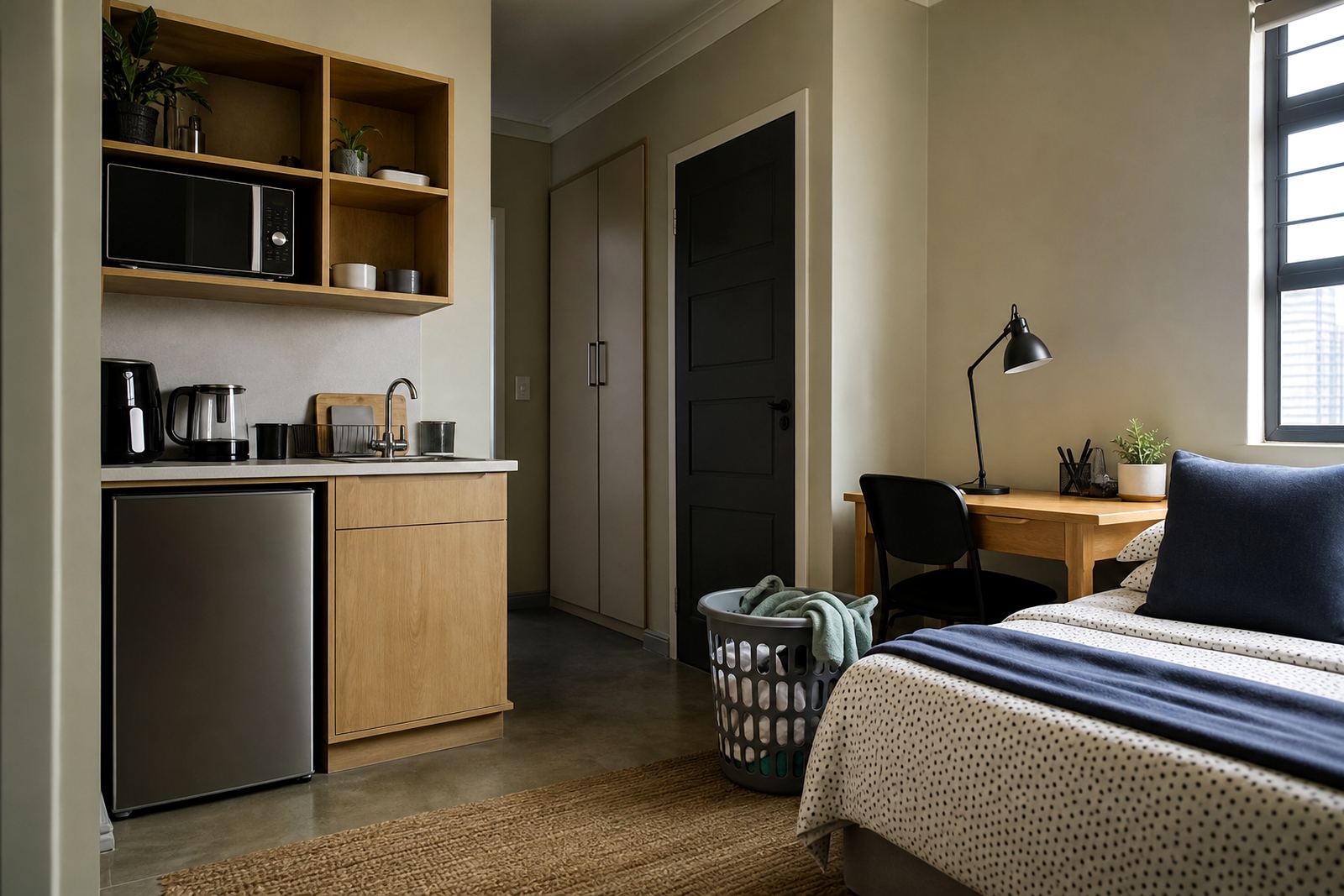
Student flats are usually tight on space, so planning matters before you buy. Measure the sink shelf, cupboard depth, fridge shelf height and the space beside the bed or study table. Many students buy items that are too large, then end up storing them under the bed or leaving them packed away. A better approach is to choose items that stack, nest or fold.
If you are setting up in a block with strict rules, check what is allowed before buying appliances. Some buildings limit heaters, hot plates or open flames, and many landlords prefer low-wattage equipment because of safety and wiring concerns. It also helps to keep cords short and tidy. For a small flat, place the most used items near the kitchenette or study area, and keep seasonal or occasional items in one labelled box. That saves time when tests are near and the room is packed.
- Measure storage spaces before buying anything bulky
- Use stackable containers and nesting bowls
- Keep cords, plugs and chargers in one spot
- Choose low-wattage items where building rules are strict
Common mistakes students make when buying
The biggest mistake is buying for a fantasy flat instead of the room you actually have. A full set of matching items looks nice, but in a compact student space practicality matters more than matching colours. Another common mistake is spending on decorative pieces before getting the basics sorted. Cushions and wall decor can wait. Food storage and a working kettle cannot.
Students also overspend on duplicate items when sharing. It is easy for two flatmates to both buy kettles, toasters or chopping boards, then discover there is no room for all of it. Another issue is ignoring delivery timing. If you are moving in just before exams, or during a month with transport delays, allow enough time for courier delivery and checking the parcel on arrival. Keep packaging until you know everything works properly, because returns are easier when items are still complete.
- Buying style before function
- Ordering bulky items without measuring the flat
- Duplicating shared appliances
- Leaving delivery too late before move-in day
Budget ranges that make sense in Rand
For most students, the budget depends on whether the flat is fully furnished or almost empty. If the room already has a bed and study table, the spend can stay fairly low. If you need to supply kitchen basics, storage and a few gadgets from scratch, the total rises quickly. A sensible first shop is usually better than trying to buy everything at once.
Here is a practical guide for South African student budgets. A starter pack for one person can land around R750 to R1 500 if you choose only the essentials. A more complete setup with extra storage, a better kettle and a few comfort items can reach R2 000 to R3 500. For a shared flat, a combined spend of R2 500 to R5 000 is common when you split bigger items fairly. If you are supporting a first-year student from home, it helps to set a limit and stick to it, then add a few items later when the budget allows.
Think in stages. Buy what is needed for the first month, then add a fan, extra containers or a gift item when you know the room layout and daily routine. That keeps waste down and makes the money stretch further.
Delivery and support for student move-ins
Student move-ins are often tight on time, especially in Johannesburg, Pretoria, Cape Town, Durban and Gqeberha where families may travel in on a weekend and need everything ready by Monday. Courier delivery helps when you are setting up a room from another town or buying for a child at university. It also helps with larger bulk orders for shared flats, residence kitchens or corporate student support packs.
If you need help choosing items, use the enquiry form on the contact page and explain the size of the room, how many people will share, and what the budget is. That makes it easier to suggest practical options, whether you want gift wrapping for a care parcel, product sourcing for a specific item, or order tracking for a move-in date. For student flats, the best results come from keeping it simple, checking the rules of the building, and choosing pieces that can handle daily use without taking up half the room.
- Courier delivery across South Africa for move-in support
- Useful for shared flats, residence rooms and care parcels
- Help available for bulk orders and gift ideas