
Start with your daily backup needs
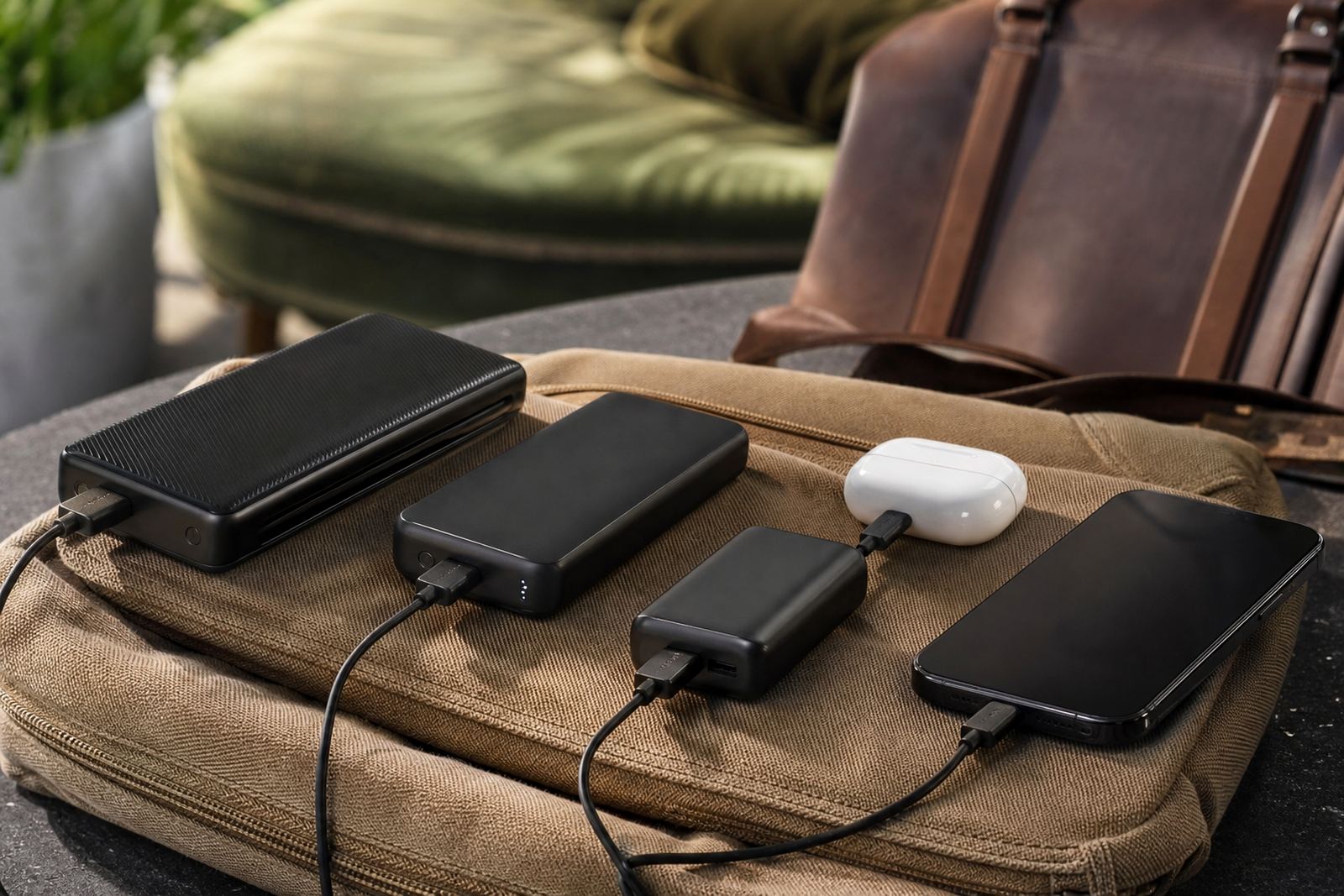
The right power bank depends on what you want to keep running when the power goes off. If you only need one phone top-up for commuting, meetings or load-shedding at home, a smaller unit is usually enough. If you carry a phone, wireless earphones and maybe a tablet, you will need more capacity and more than one output.
Think about where you will use it most. In Midrand, Johannesburg and Pretoria, many people keep one in a work bag for traffic delays and office outages. In coastal areas like Cape Town, Durban and Gqeberha, humidity and beach trips also make it worth choosing a unit that stores well and fits in a sealed bag when not in use.
- One phone only: lighter, easier to carry, lower capacity
- Phone plus accessories: medium capacity with at least 2 outputs
- Tablet or shared use: higher capacity and faster charging support
- Frequent power cuts: choose a model that can recharge more than once
Read the mAh rating the practical way
The number on the box is usually shown in mAh, which tells you how much energy the power bank can store. A 10 000 mAh unit is a common everyday choice for a phone user, while 20 000 mAh or more suits longer days, family use or short trips. Bigger is not always better though, because weight and charging time go up as the capacity increases.
A useful rule is to match the power bank to your real routine, not just the biggest number you can afford. A 10 000 mAh model may give one modern phone around one and a half to two full charges, depending on battery size and cable quality. A 20 000 mAh model can often handle several top-ups, but it will take longer to recharge from the wall.
- 5 000 to 10 000 mAh: light carry, basic daily backup
- 10 000 to 20 000 mAh: balanced option for most users
- 20 000 mAh and above: better for long outages or shared use
Check ports, cables and charging speed
Look at what you want to plug in before you buy. Some power banks have one output, others have two or three. If you often lend a charge to a colleague or family member, extra ports save time. Also check whether the unit charges through USB-C, micro-USB or another input, because that affects how easy it is to recharge at home or in the car.
Fast charging support matters if you are in a hurry. A power bank with a higher output can top up compatible phones quicker, which is handy before school runs, client visits or long taxi trips. Just make sure your cable and device can handle the speed. If not, the power bank will still work but at a slower rate.
- USB-C input: easier for newer chargers and quicker recharging
- Multiple outputs: useful for more than one device
- Fast charge support: better for busy days and short stops
- Built-in cable: convenient, but check if it suits your device
Choose a size you will actually carry
Portability matters more than many shoppers expect. A power bank that is too heavy often stays at home, which defeats the point. If you keep it in a handbag, laptop bag or car cubby, check the dimensions and weight before ordering. Slim models are easier to carry, while larger units suit a home or office drawer.
For everyday use, a compact unit is often the best balance. If you travel between Sandton, Centurion and the East Rand, or move between home and site work, a medium-size model can offer enough backup without taking up much space. A textured finish also helps with grip, especially if you are using it in a hurry or while moving around.
- Compact: best for pockets, small bags and short trips
- Medium: good balance for work and daily commuting
- Large: better for home backup, trips and multiple devices
Safety features to look for before checkout
Safety should not be an afterthought. A decent power bank should have protection against overcharging, overheating and short circuits. That is especially useful in South African homes where devices may stay plugged in during scheduled outages and return-to-power surges. If you live near the coast, a case that closes well and a clean storage spot help reduce wear from damp air.
It also helps to look for a clear battery indicator so you know when to recharge the unit. A simple display or light bars are practical, because you do not want to discover an empty power bank during load-shedding. Check the casing too. A solid shell stands up better to daily carrying, while a loose or flimsy body may not last as long.
- Overcharge protection
- Overheat protection
- Short-circuit protection
- Battery level indicator
Quick checklist before you place the order
Before you add a power bank to your cart, work through a simple checklist. This helps you avoid buying one that is too small, too heavy or not compatible with your devices. It also makes returns less likely and saves time if you are ordering for home, the office or as a gift.
If you are buying for corporate gifting or staff packs, consider a few extra units so everyone gets the same charging capacity. For households, think about who uses the most battery during the day and whether one unit should live in the kitchen, the study or the car. A little planning goes a long way when the power goes off at the wrong time.
- How many full phone charges do I need?
- Will I carry it every day or keep it at home?
- Do I need one port or more than one?
- Is fast charging important for my routine?
- Does the size suit my bag or drawer?
- Does it have basic safety protection?
Once you answer those points, choosing becomes much easier. A power bank should fit your routine, not force you to work around it.