
Start with the jobs you want it to do
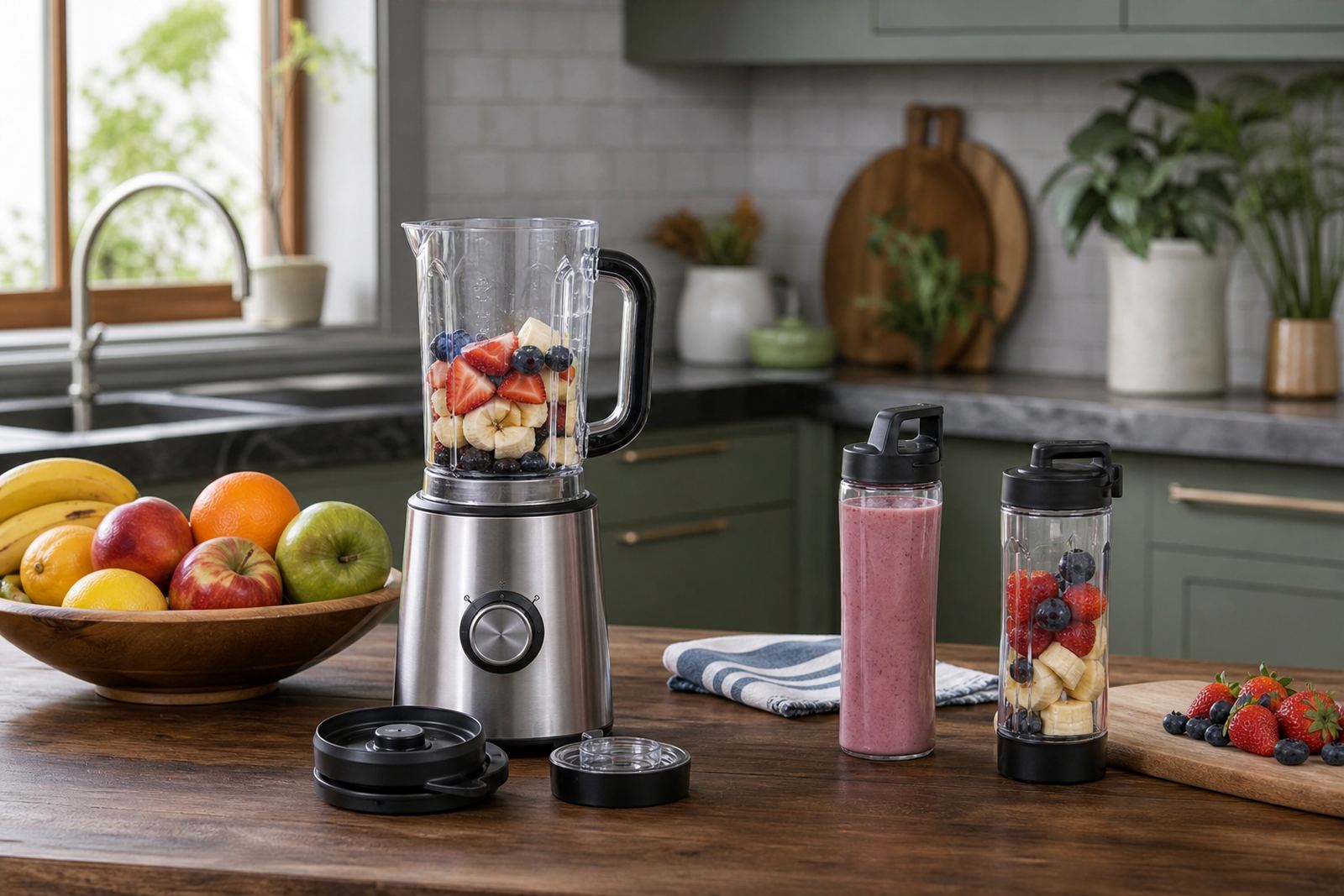
Before you look at wattage or extras, think about what you will blend most often. A blender for morning smoothies has different needs from one used for soups, chutneys, baby food or crushing ice for weekend drinks. If you only need it for small batches, a compact model can save counter space and use less power. For families, a larger jug can mean fewer rounds at the counter when meal prep is busy.
In South African homes, power cuts and load-shedding can also affect how you plan your kitchen. If you often blend during short time windows, choose a model that gets the job done quickly. A simple machine with clear controls is usually easier to use when you are in a hurry.
- List your top 3 blending tasks
- Decide if you need single servings or family-size batches
- Check if you want hot and cold use, or only cold drinks
- Think about storage space on the counter or in a cupboard
Choose the right jar size for your household
Jar size makes a big difference to daily use. A small jug is fine for one or two people, but it can struggle if you want to make soup for the whole family. A bigger jug is useful, yet it can take up more room and may be heavier when full. As a guide, smaller homes often do well with a mid-size jar, while larger households benefit from a bigger capacity for batch cooking.
Also check the material. Plastic jugs are lighter and less likely to crack if bumped, while glass jugs can feel sturdier and are good for hot ingredients, depending on the model. If you live near the coast in places like Durban, Gqeberha or Cape Town, think about moisture and storage too. Keep the base dry and wipe the lid and blade area after washing to avoid trapped damp.
- 1 to 2 people: compact jar for quick drinks and sauces
- 3 to 4 people: medium jar for daily family use
- 5 or more people: larger jar for soups, sauces and batch prep
- Choose a jar with clear measurement marks for easier recipes
Look at power, speed settings and blade design
Power matters because it affects how quickly the blender handles hard ingredients. If you blend frozen fruit, nuts or ice often, a stronger motor is usually worth it. For softer foods like cooked vegetables or milk-based drinks, a lighter unit may be enough. Do not only compare the number, though. A well-designed blade and a decent motor together can give better results than a high number on its own.
Speed settings help you control the texture. A few straightforward speeds are often better than too many confusing options. A pulse function is useful for chunky sauces and short bursts when you do not want to over-process the mix. If you cook often, ask yourself whether you want a simple everyday blender or something that can handle heavier food prep too.
- Use low speed for soft fruits and liquids
- Use medium speed for soups and batters
- Use pulse for chopping or quick bursts
- Look for blades that move ingredients toward the centre for more even blending
Think about cleaning after busy weekdays
A blender is far more likely to be used often if it is easy to clean. Wide openings help you rinse the jug properly, and removable blades can make washing easier. If parts can go in a dishwasher, that can save time, but hand washing is still fine when you clean it straight after use. The longer food sits, the harder it is to remove, especially with sticky fruit mixtures or thick soup.
For daily convenience, check whether the lid seals properly and whether the jug has awkward corners where food collects. A simple clean-up routine makes a big difference in a home kitchen. Rinse immediately, add warm water with a little soap, then run the blender for a few seconds before rinsing again. It sounds basic, but it works well and keeps smells from building up.
- Wide jar opening helps with hand washing
- Removable parts can save time after cooking
- Smooth surfaces are easier to keep clean
- Choose a model with fewer hard-to-reach corners
Check practical features that suit South African homes
Small details matter when you are choosing for everyday life. A non-slip base helps on tiled counters, which is useful in many homes. A cord that stores neatly can keep the kitchen less cluttered. If you often cook in smaller kitchens, a blender that is stable but not bulky is easier to live with. For households that buy in bulk or make meal prep batches, a stronger jug and a dependable lid are worth checking carefully.
If you plan to use it for gift ideas or corporate hampers, a neat design and easy operation usually appeal to more people. For busy Gauteng households in Midrand, Johannesburg, Pretoria or the East Rand, a blender that can move from breakfast to supper without fuss is often the best choice. The aim is not fancy extras, just the features you will actually use every week.
- Non-slip feet for stable use on smooth counters
- Simple controls for quick everyday blending
- Compact storage if cupboard space is limited
- Sturdy lid and jug for regular use
A quick checklist before you buy
Use a short checklist before you place an order so you do not miss the basics. Start with size, then power, then cleaning and storage. If two models seem similar, the one that is easier to wash and easier to use is often the better choice for a real kitchen. Price matters too, of course, but a cheap blender that struggles with your usual ingredients can cost more in frustration later.
At Buy-This Deals, shoppers often ask for practical advice before choosing home and kitchen items. If you are comparing blenders for your own home or as part of a gift, keep the decision simple: match the blender to the food you make, the number of people you cook for and how much time you want to spend cleaning up afterwards.
- Does it fit your most common recipe?
- Is the jug size right for your household?
- Will it be easy to clean after use?
- Can you store it safely when not in use?
- Does it suit your budget without cutting corners on daily use?