
Start With the Bottles You Use Every Day
Most bathroom clutter comes from half used bottles, spare soap bars and products that get moved from one spot to another. Before buying anything, clear the basin area and shower ledge, then keep only what you reach for daily within easy reach. Everything else can go into a closed box or a shelf higher up. That one step alone makes the room feel calmer.
In many Midrand flats and townhouses, bathrooms are compact and often shared by more than one person. When there is less floor space, the trick is to use the wall and inside of cupboards properly. A simple basket for hair products, a small tray for hand wash and a narrow shelf for medicines can stop the whole room from turning messy by Friday.
- Keep daily items near the basin or shower
- Move extras and duplicates out of sight
- Use one container per category, not one for everything
- Throw away empty bottles and cracked lids
Choose Storage That Works in a Humid Room
Bathrooms in coastal towns like Durban and Gqeberha deal with damp air, so the storage you choose must handle moisture. Metal that rusts quickly or chipboard that swells is poor value in the long run. Plastic, coated wire, treated wood and solid hanging organisers usually last better if they are wiped dry now and then.
If the room gets steamy after showers, open a window or run the extractor fan for a few minutes. That helps protect shelves and keeps towels from smelling musty. It also matters during load shedding, when bathrooms may stay closed up longer than usual and damp builds up faster. Good airflow makes simple storage last longer.
- Pick materials that can handle moisture
- Avoid anything that traps water at the base
- Check that screws and hooks will not loosen easily
- Wipe down shelves after deep cleaning
Use Wall Space Instead of the Floor
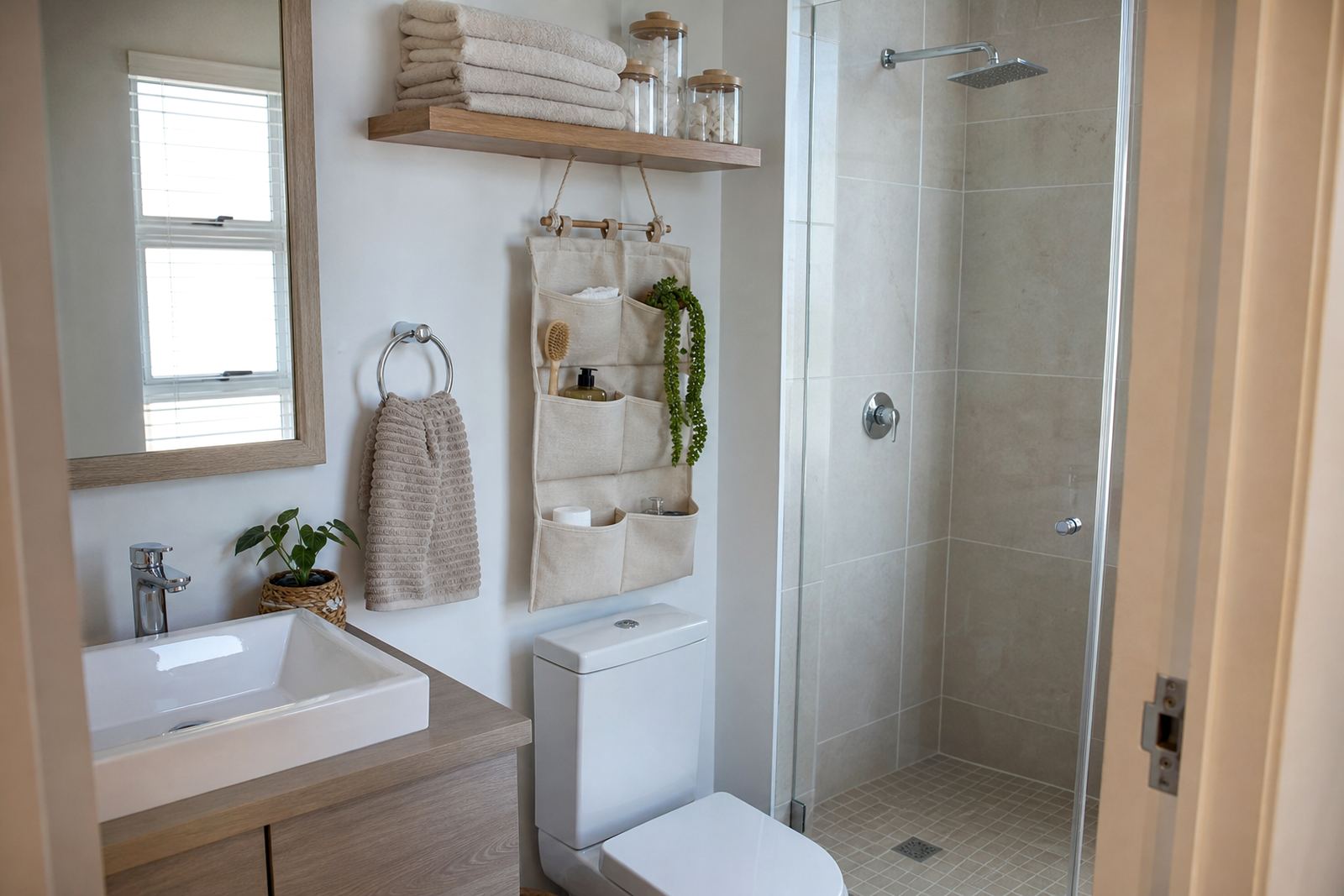
Floor baskets are useful, but too many of them make a bathroom harder to clean. Wall mounted shelves, corner caddies and hanging organisers give you storage without taking away walking space. This is especially useful in homes where the bathroom door opens close to the basin or where the toilet and shower sit tightly together.
A narrow shelf above the toilet can hold spare toilet rolls and cleaning spray. A corner shelf in the shower can keep shampoo bottles off the floor. Over the door hooks are handy for robes and toiletries bags, while adhesive holders can work for lighter items if the wall finish allows it. Just make sure the wall is dry and clean before fitting anything.
- Use vertical space before buying another bin
- Put heavy items on fixed shelves, not hanging hooks
- Keep cleaning products separate from personal items
- Leave enough space so shelves do not feel crowded
Make Shared Bathrooms Easier for the Whole Household
When a bathroom is shared, storage has to be simple enough for everyone to use. That means fewer containers, clearer labels and a place for each person’s things. In a busy home, especially with children or shift workers, people will not keep reorganising tiny boxes every morning. The layout must work even when people are rushing.
A good system is to give each person a small caddy or basket with their own toiletries. Towels can be folded on one shelf and toiletries kept below. If there are guests often, keep a separate basket for spare soap, face cloths and a few basic items. It looks neater and saves time when visitors stay over unexpectedly.
- Assign one basket per person or per category
- Use labels where there are many shared items
- Keep guest items together for quick access
- Store cleaning supplies where children cannot reach them
Small Upgrades That Make a Big Difference
You do not need to overhaul the whole bathroom to get better storage. A few practical products can change how the room works from day one. A shower caddy stops bottles from slipping off narrow ledges. A slim cabinet gives you somewhere to keep medicines and spare toiletries. A compact shelf above the basin can hold face cloths, cotton pads and hand cream without cluttering the sink.
For renters, it helps to choose storage that can move with you. Free standing units and hanging organisers are easier to take down when lease rules are strict. In many South African complexes, tenants are not allowed to drill holes without approval, so removable solutions can save hassle. They also suit homes that may change layout later, from a flat in Pretoria to a family house in the East Rand.
- Try a shower caddy for loose bottles
- Use a slim cabinet for spare stock
- Choose removable options if drilling is not allowed
- Measure the gap before buying anything tall
A Local Example From a Midrand Bathroom
A small Midrand family bathroom we looked at had one sink, one shower and very little floor space. The problem was not the size of the room, it was the number of items left out. There were three half empty shampoos on the floor, towels over the door and toiletries spread across the basin. By adding a corner shower shelf, one narrow wall shelf and two simple baskets, the room felt bigger without changing the layout.
The family also made one rule: each person keeps only one daily basket in the bathroom. Anything extra goes on the shelf in the linen cupboard. That reduced morning friction and made cleaning quicker. It is a small shift, but it works in homes across Johannesburg, Pretoria and the larger Gauteng suburbs where space is often limited and people need storage that fits real life.