
Start with shade that suits South African sun
If a patio gets too hot by 10 in the morning, it will not be used much, no matter how neat it looks. The first upgrade should be shade, because it changes how long people stay outside and how comfortable the space feels through the day. In Gauteng, where the sun is strong and afternoons can be dry and bright, a shade solution makes the patio usable for longer stretches.
Think in practical terms. A wall-mounted awning helps if the patio is next to the house, while a freestanding umbrella works better if the layout changes often. For coastal towns, choose fittings that handle wind and humidity, and make sure the base is heavy enough. If the patio is exposed, look for materials that dry quickly after summer rain and do not hold water in the seams.
- Choose a shade size that covers the seating area, not just the centre table.
- Use UV-resistant fabric where possible to slow fading.
- Keep brackets, ropes and bases simple to remove for cleaning or storage.
Choose seating that is easy to move and easy to clean
Patio seating should work for weekday tea, weekend visitors and the odd kids’ snack session. The best pieces are comfortable but not fussy. Lightweight chairs and benches are easier to shift around when you need space for washing, gardening or a braai. If you live in a windy area such as Gqeberha or parts of Cape Town, heavier seating or pieces with stabilising feet are worth considering.
Removable cushions make a big difference. They are easier to shake out after dust or pollen, and they can be brought indoors when the weather turns. Covered fabrics also help if the patio is near a pool, because splashes and damp feet are part of daily use. A small bench with a storage box underneath can carry cushions, charcoal tools or children’s outdoor toys without taking up extra floor space.
- Pick wipe-clean surfaces for high-use family patios.
- Use cushion covers that can be removed and washed.
- Leave enough space between chairs for easy walking, about 60 to 70 cm.
Add lighting for load-shedding and late evenings
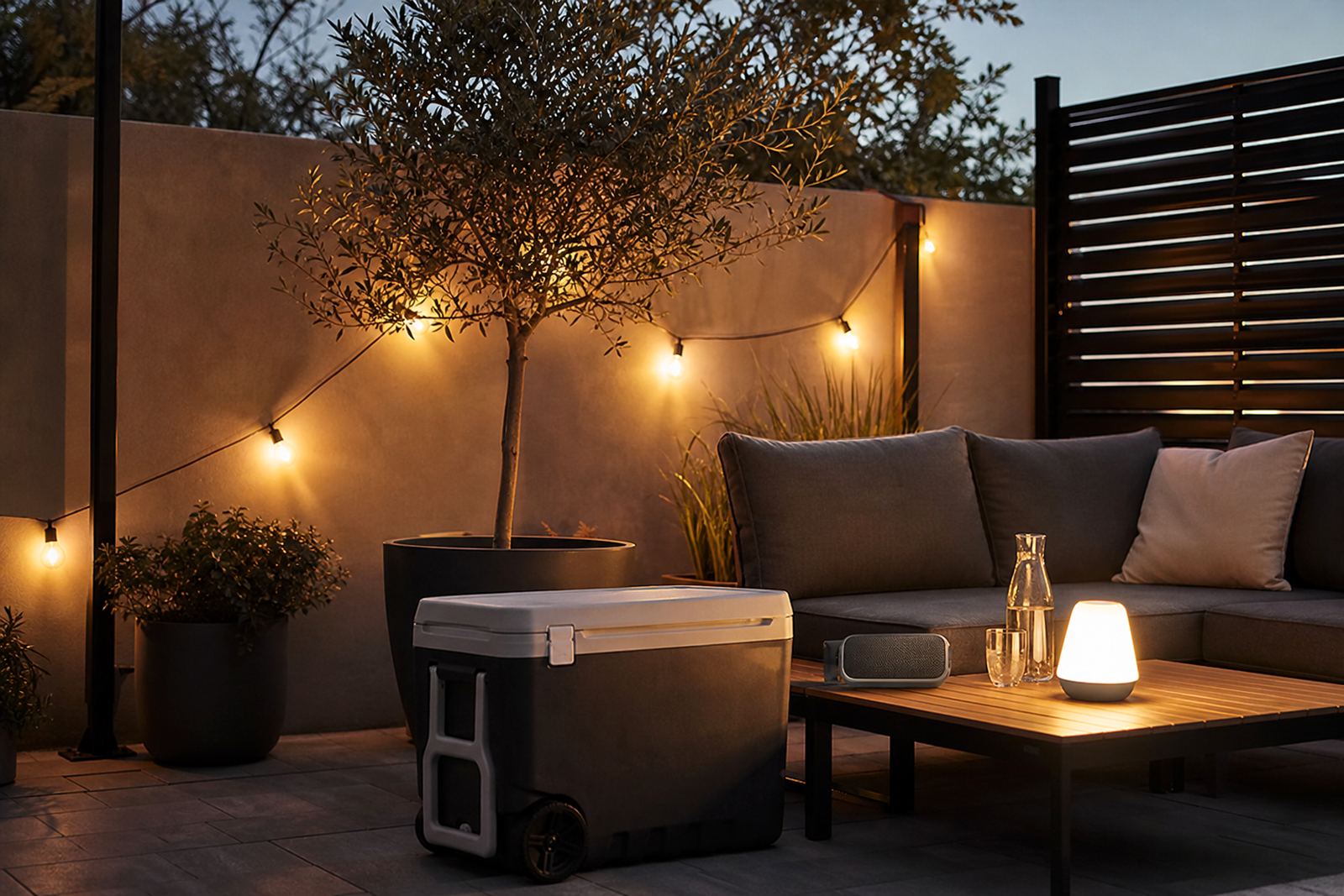
Patios become far more useful when the light stays practical after sunset and during load-shedding. Good outdoor lighting is not just decorative. It helps people move safely, see food on the table and keep the space usable when the power is off. Solar lights are useful in many parts of South Africa, especially where evening power cuts are common, and they need no wiring or municipal approvals for a simple setup.
A mix of lighting is better than one bright fitting. Use a few soft lights around the edges, then one stronger source near the table or prep area. Battery lanterns are useful as backup, while motion sensor lights help at side gates and steps. If the patio is near a garden path, low lights can show the route without shining into neighbours’ windows.
- Keep a charged backup lantern in a cupboard near the patio.
- Use warm light for seating areas and brighter light for serving food.
- Check that fittings are rated for outdoor use and dust.
Use storage to keep the patio tidy and ready
Patios are easier to enjoy when the clutter has a place to go. Storage is often what turns an outdoor area from something messy into something useful. A compact storage box, shelving unit or lidded container can hold braai tools, candles, gardening gloves, table cloths and spare cushions. This is especially helpful in Midrand homes where patios often need to serve more than one purpose.
Choose storage that can handle moisture and temperature changes. In humid coastal areas, closed containers help protect fabric and paper items from damp. In dusty inland areas, sealed lids keep everything cleaner between uses. If the patio is open to the elements, raised storage is better than items sitting directly on the floor where they can pick up water or dirt after rain.
- Keep similar items together so setup takes less than five minutes.
- Label containers if more than one person uses the space.
- Leave a clear path to doors, taps and plug points.
Practical extras that make meals outside easier
Small accessories can change how a patio is used every day. A fold-out side table gives people a place for cups, plates or a book without crowding the main table. Trays help with carrying snacks from the kitchen, and simple table protection such as placemats or coasters keeps surfaces in better condition. If you often eat outside, a covered serving dish or food cover is useful against flies and dust.
For families, think about the rhythm of the space. A hook for aprons, a basket for napkins and a washable runner on the table all save time. A compact trolley can also help when moving drinks and plates between kitchen and patio. These are the kinds of items that are easy to overlook, but they make the area work harder with less effort.
- Pick items that stack or fold when not in use.
- Use non-slip trays for carrying drinks on tiled surfaces.
- Keep a small bin nearby for wrappers and used serviettes.
A Midrand example: turning a plain patio into a daily space
A common Midrand setup is a paved patio off the back door, with limited shade and only a small table. With a few careful changes, that same area can become useful every week. Start with a shade umbrella, add two easy-clean chairs and a bench, then bring in a storage box for cushions and a solar light for evening use. If the family enjoys weekend meals outside, a side table and serving tray make the area easier to run without constant trips in and out of the house.
The point is not to fill every corner. It is to make the space simple to use, easy to clean and ready for changing weather. For many South African homes, that means planning for heat, dust, sudden rain and load-shedding all at once. When the accessories suit the conditions, the patio stops being a spare area and becomes part of the home’s daily routine.