

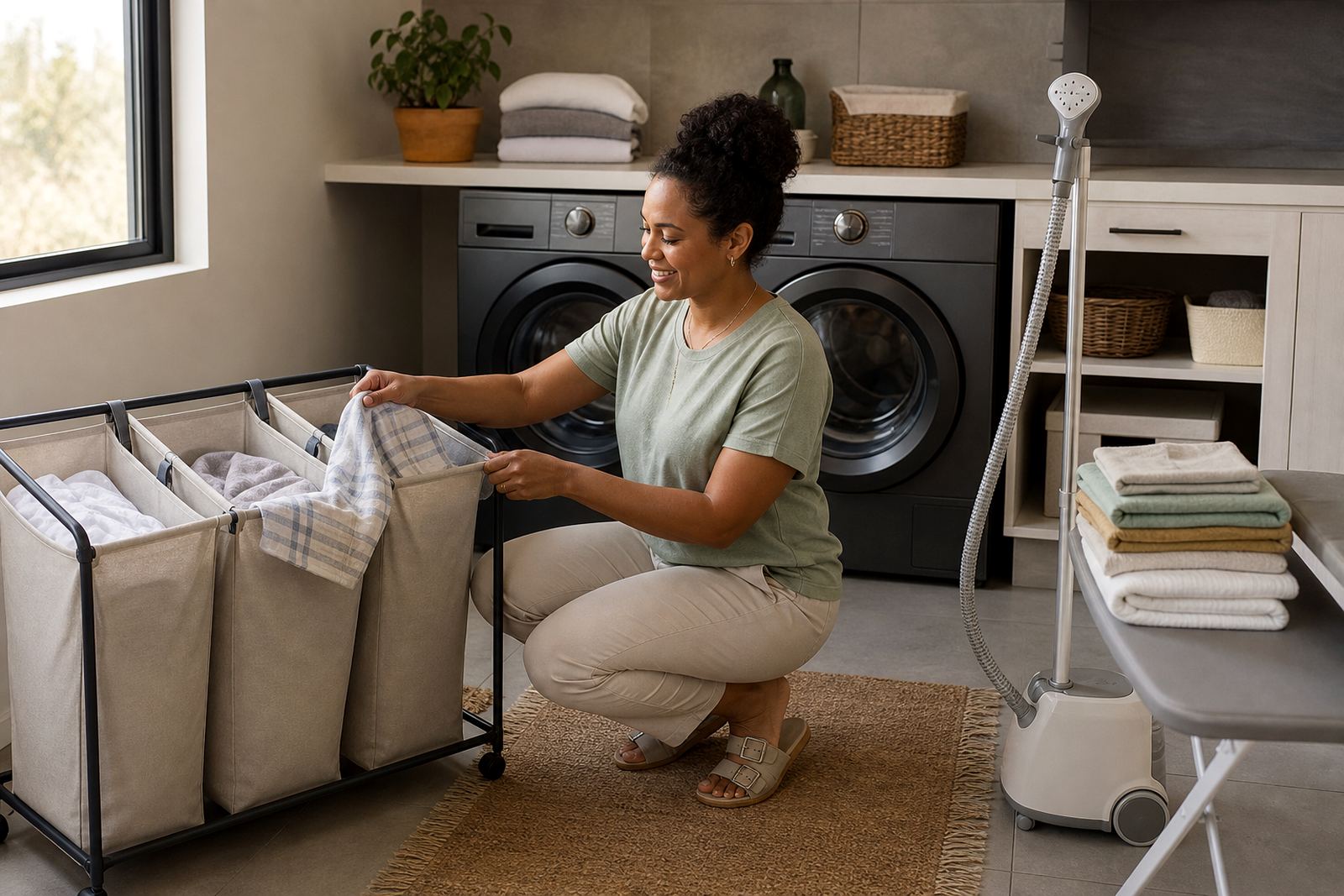
Start With a Sorting Station That Actually Saves Time
Most washing day stress starts before the machine is even switched on. A basic sorting system near the laundry area, or even in a passage cupboard, helps everyone in the house know where socks, school shirts and work clothes belong. In Midrand homes with two or three people rushing out the door by 7am, that small habit can save a surprising amount of time later.
Use separate containers or strong baskets for lights, darks, towels and delicate items. If your home deals with muddy sports kit, keep one extra basket for heavily soiled items so they do not sit mixed in with everyday clothing. A simple label on each basket makes the system easy to follow, even for teenagers who are in and out all day.
- Keep one basket for each wash load type
- Place laundry pegs, stain remover and a measuring cup in the same spot
- Use a small bin for lost buttons, loose change and hair clips
The goal is not a perfect set-up. It is to make the first step of washing clear and quick, so the rest of the routine runs with less friction.
Choose Tools That Work in Small Spaces and Busy Weeks
Many South African homes do not have a full laundry room, so flexible tools matter. Foldable drying racks, slim hampers and stackable storage containers work well in apartments, townhouses and smaller family homes. If you live in an area like Pretoria or the East Rand where the weather can change quickly, it also helps to have indoor drying options ready for wet weeks.
A good laundry routine relies on more than the machine itself. Practical add-ons like a lint brush, garment clips, a foldable ironing board and a sturdy peg basket can keep things organised and reduce last-minute scrambling. For homes affected by load-shedding, it helps to have a manual timer, a battery light and a basket system that lets you sort laundry before power comes back on.
- Foldable drying rack for indoor or balcony use
- Clip hangers for shirts, baby clothes and small items
- Mesh bags for underwear, socks and delicate fabrics
- Portable storage tub for detergent and stain treatment products
These items are not fancy, but they make wash day lighter to manage. In a busy household, that matters more than anything else.
Wash Smarter in Hot, Humid and Coastal Conditions
South African weather affects laundry more than many people expect. In Durban and Gqeberha, humidity can make clothes feel damp long after washing. In hotter inland areas, dust and sweat can build up quickly, especially when children play outside or when people commute in heat. The answer is to adapt the routine to the climate instead of repeating the same steps every week.
Use shorter wash cycles for lightly worn clothes and separate them from towels or workwear that needs a deeper clean. Do not overload the machine because clothes need room to move, especially when towels are packed in tightly. If you dry clothes indoors, leave enough space between items for air flow. A ceiling fan or open window can help, though not every day is suitable for line drying.
- Wash lighter items sooner so smells do not set in
- Shake garments out before hanging to reduce creases
- Turn dark clothes inside out to help them last longer
- Move dry laundry inside before evening moisture settles
For coastal households, a little planning goes a long way. It is often better to hang a half load properly than rush a full load and end up with clothes that still feel damp the next day.
Make School, Work and Sport Clothes Easier to Manage
Families with school uniforms, office clothes and weekend sport gear need a routine that respects different fabrics and wear patterns. Separate school shirts from gym clothes and always wash items with printed logos or special trims inside out. This helps protect the fabric and keeps clothes looking presentable longer.
One useful habit is creating a weekly clothing cycle. For example, Monday can be bedding and towels, Tuesday school uniforms, Wednesday workwear and so on. That sort of rhythm works well in Johannesburg and Pretoria homes where traffic, after-school activities and long office hours leave little room for uncertainty. It also makes it easier to spot what is running low before the week gets hectic.
- Keep a small checklist for uniforms and sports kit
- Store clean ironed clothes in labelled piles or hanging sections
- Use garment bags for special items that need extra care
- Set aside one box for items that need mending or missing buttons
If the routine is clear, nobody has to ask where their favourite shirt is on a school morning. That alone can lower the stress in a home.
How Small Laundry Habits Cut Water and Power Waste
With utility costs rising, better laundry routines also mean using less water and electricity where possible. Full loads are usually better than several half loads, but only when the machine is not overcrowded. Overfilling can lead to repeat washes, which wastes more than it saves. The same applies to drying time, since thick bundles take longer and often need extra attention later.
Try to group clothes by fabric weight so the machine can work more effectively. Light cotton items dry faster and heavier fabrics can be washed together on a different cycle. If your home often faces interrupted power, keep a backup plan for wet laundry that includes hooks, spare hangers and a drying rack that can move from indoors to outdoors easily.
Simple routines like these help households in Midrand, Cape Town or Gqeberha keep laundry under control without adding another big job to the week. They also make it easier to handle emergency loads when someone needs a school shirt cleaned quickly or a guest is arriving for the weekend.
Practical Help for Busy Households and Gift Needs
Some laundry tools make good household buys because they are useful from day one. Others also work well as practical gifts for a new homeowner, a student moving into a flat or a family setting up after a relocation. A useful item is better than something decorative that ends up stored away and forgotten.
When choosing laundry helpers, look for items that are easy to store, easy to clean and strong enough for regular use. Bulk ordering can also help when a home needs several baskets, hangers or storage tubs at once. If you are buying for a corporate gift pack or a family care parcel, practical items are usually appreciated more than novelty pieces.
- Drying rack for compact homes or apartments
- Hanging organisers for clothespins and small accessories
- Storage tubs for detergents, stain sprays and cleaning cloths
- Gift wrap for household presents and care packages
Good laundry habits are built from small repeatable actions. When the tools match the routine, washing day stops feeling like a crisis and starts feeling manageable.
A Midrand Example That Fits Real Life
Consider a family in Midrand with two school-going children, one parent working from home and another commuting into Sandton. The laundry pile grows quickly, especially after sport practice and rainy days. Their easiest fix is not a bigger machine, but a better system: one basket for uniforms, one for darks, one for towels and one for items needing repair.
They keep a foldable rack in the spare room, a peg basket near the back door and a small tub for stain treatment products. On load-shedding days, washing is done earlier in the day and dry items are moved inside before sunset. The result is less scrambling, fewer lost socks and a laundry area that stays usable. It is a small change, but it keeps the whole house moving better.
That is what better laundry routines are really about. Not doing more, just making each step easier to handle.