
Start with what the room needs after dark
A bedroom works best when the lighting follows your routine. If you only need light for sleep and dressing, a single soft ceiling fitting and a bedside lamp may be enough. If the room doubles as a study corner or dressing area, you will need a little more control so the space does not feel harsh at 9 pm.
In many Midrand homes, bedrooms face strong afternoon sun and then go dark quickly once the curtains are drawn. That change can make a bright white bulb feel a bit severe. A better choice is usually a warm light that is gentle on the eyes and does not make the room feel like an office. Think about the whole room, not only the centre ceiling point.
It also helps to check where the plugs are before you buy lamps. If the only socket is on the far side of the bed, you may end up using an extension lead that is always in the way. Small details like that matter, especially when you want a clean and calm room.
Choose warm light for rest, not glare
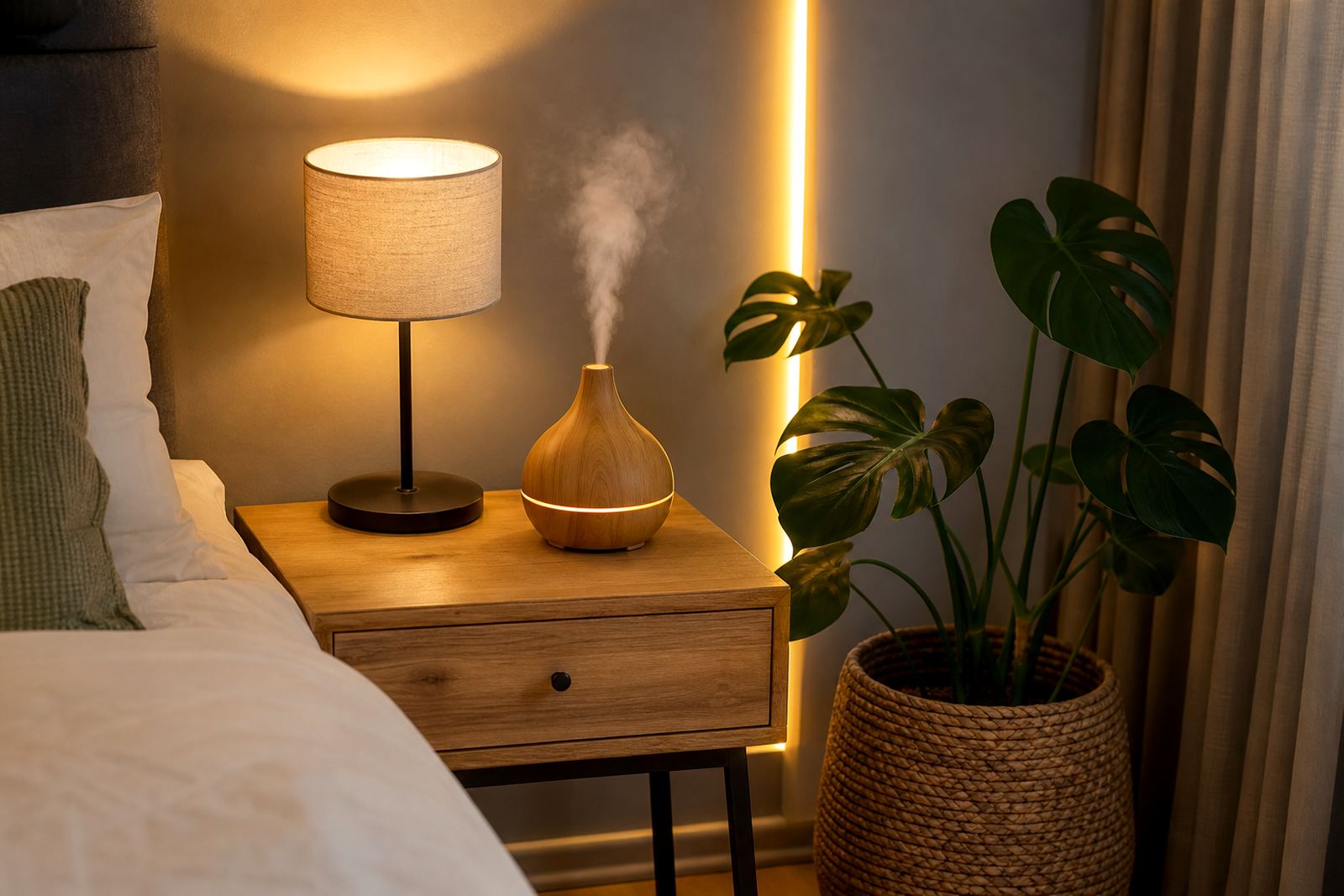
For bedrooms, warmer light usually feels more comfortable than very cool white light. It gives the room a softer look and helps create a quieter end to the day. Many households prefer warm bulbs for evening reading and getting children ready for bed because the light feels less sharp.
Brightness matters too. A bulb that is too strong can make the room feel busy, while one that is too dim can be frustrating when you need to find clothes or pack a school bag. A useful approach is to combine a modest ceiling light with one or two lower lamps. That way you can switch on only what you need.
If you live near the coast, moisture in the air can affect fittings over time, so it is worth checking whether the material is suitable for your room. In Gauteng, dust can build up quickly as well, so smooth surfaces are easier to wipe down. A little upkeep keeps the light looking neat and working properly.
- Warm light works well for bedtime routines
- Lower brightness is easier on the eyes at night
- Dust friendly fittings are simpler to clean
- Choose materials suited to your home environment
Mix ceiling, bedside and task lighting
A good bedroom usually needs more than one source of light. The ceiling light gives general light for cleaning or sorting laundry, while bedside lighting handles reading and quiet routines. If you have a mirror or dressing corner, a small task light can help there too.
Wall mounted lights can save space in smaller rooms, which is useful in apartments or compact homes where side tables are tight. Freestanding lamps are easier to move around if you like to change the layout. If you often have load-shedding, choose fittings that are easy to operate and do not depend on complicated controls. Simplicity helps when the power comes back late at night.
For shared rooms, separate switches are handy. One person may want to sleep while the other still reads. Being able to control each light on its own keeps the room peaceful and avoids turning the whole space into bright light when only one corner needs it.
- Ceiling light for general use
- Bedside light for reading and winding down
- Task light for mirrors or dressing areas
- Separate switches for better control
Pay attention to shade, height and direction
The shape of the shade changes how the light feels. A fabric shade gives a softer glow, while a bare bulb can feel harsh in a bedroom. If you like reading at night, choose a shade that directs the light downward or slightly to the side so it does not shine straight into your eyes.
Height matters as well. A bedside lamp that sits too low may not spread the light far enough, while one that is too tall can take up valuable surface space. The top of the shade should usually sit near eye level when you are sitting up in bed, though a little lower or higher can work depending on the bed frame and mattress thickness.
Also think about how the fitting looks during the day. The room should still feel tidy when the light is off. A simple, well sized lamp can make the room feel organised without becoming the main feature. This is one of those choices where function and appearance can sit nicely together.
Make power use and safety part of the decision
South African homes have to plan for outages, surges and rising electricity costs, so bedroom lighting should be practical. Energy saving bulbs can cut running costs and produce less heat, which is welcome in summer. If you use rechargeable lamps or backup lighting, keep them easy to reach and charge them before load-shedding starts.
Safety matters in bedrooms because there is often fabric, paper and wooden furniture nearby. Avoid placing lamps where they can tip over easily, and keep cords neat so no one catches a foot on them in the dark. If children use the room, choose fittings that stay cool and are not easy to knock over. That extra care is worth it.
It can also help to match the size of the light to the room. A large pendant can overwhelm a small bedroom, while a tiny lamp may look lost in a bigger main bedroom. Measure first, then buy. A quick check with a tape measure saves plenty of frustration later on.
Match the style to the room you already have
Bedroom lighting does not need to dominate the room. It should support the bed, bedding and storage you already own. If your room has light coloured walls and linen, a simple neutral fitting often works well. If the room is darker or more textured, a lamp with a softer shade can help lighten the feel without clashing.
When buying for a home in Johannesburg, Pretoria or Cape Town, shoppers often want something that can move between rooms if needed. That makes flexible lighting a smart choice. A bedside lamp can later move to a guest room, and a neutral ceiling fitting can fit most spaces if you redecorate later. Buying with reuse in mind can save money over time.
Use one or two accent pieces if you want a more finished look, but keep the overall setup calm. The best bedroom lighting does not shout for attention. It makes the room easier to live in, night after night.
A simple buying checklist before you order
Before placing an order, check the fitting type, bulb size, cord length and the amount of light you need. Then look at where the switch will sit and whether the lamp will fit beside the bed without crowding your glass of water, book or phone charger. A few minutes spent on the details can make a big difference.
If you are buying for a gift, think about how the person uses the room. Someone who reads every night may want a brighter bedside light, while someone who falls asleep early may prefer a softer glow and a small accent light. For households with multiple bedrooms, it often helps to standardise one or two styles so replacements are easy later. That keeps things simple when you need to reorder.
For shoppers comparing options through Buy-This Deals, it helps to think in terms of rest, routine and power use. The best bedroom light is the one that fits the way you live, not only the look on the box.
- Check fitting size and bulb type
- Measure the space beside the bed
- Choose a light that suits reading and rest
- Keep load-shedding and energy use in mind