
Start with a proper bedding sort-out
Before you pack anything away, take every blanket, duvet cover, fitted sheet and spare pillowcase out of the cupboard and sort it by season and use. Keep summer cotton sets separate from heavier winter layers, and pull out any items that are faded, torn or missing a matching piece. It is much easier to organise a cupboard once you know what is worth keeping.
A good rule is to group bedding by room or purpose. Guest room linen should not be mixed with the family stash, and older blankets for load-shedding nights can stay apart from the nicer set you use when visitors arrive. That way you are not searching through piles when someone needs a fresh set late at night.
- Separate winter blankets from lighter summer linen
- Match each duvet cover with its correct inner
- Set aside damaged items for repair or donation
- Keep guest bedding in one clearly marked stack
Wash and dry everything before storage
Never store bedding while it is still carrying dust, body oils or dampness from a quick rinse. Even if something looks clean, it should be washed and fully dried first. In humid coastal areas like Gqeberha or Durban, leftover moisture can lead to a musty smell or mildew. In Midrand, the dust that comes in through open windows can settle into fabric faster than you expect.
Use the care label as your guide, then make sure each item is completely dry before folding it away. If you have the space, air bedding outside in a shaded area rather than direct sun for too long, especially on coloured cotton or printed covers. A little extra drying time now saves you from musty linen later.
- Wash blankets, sheets and covers before packing them away
- Dry items fully, including seams and thick corners
- Avoid storing damp fabric in sealed plastic for long periods
- Check for pet hair, sand or dust before folding
Choose storage that suits your home
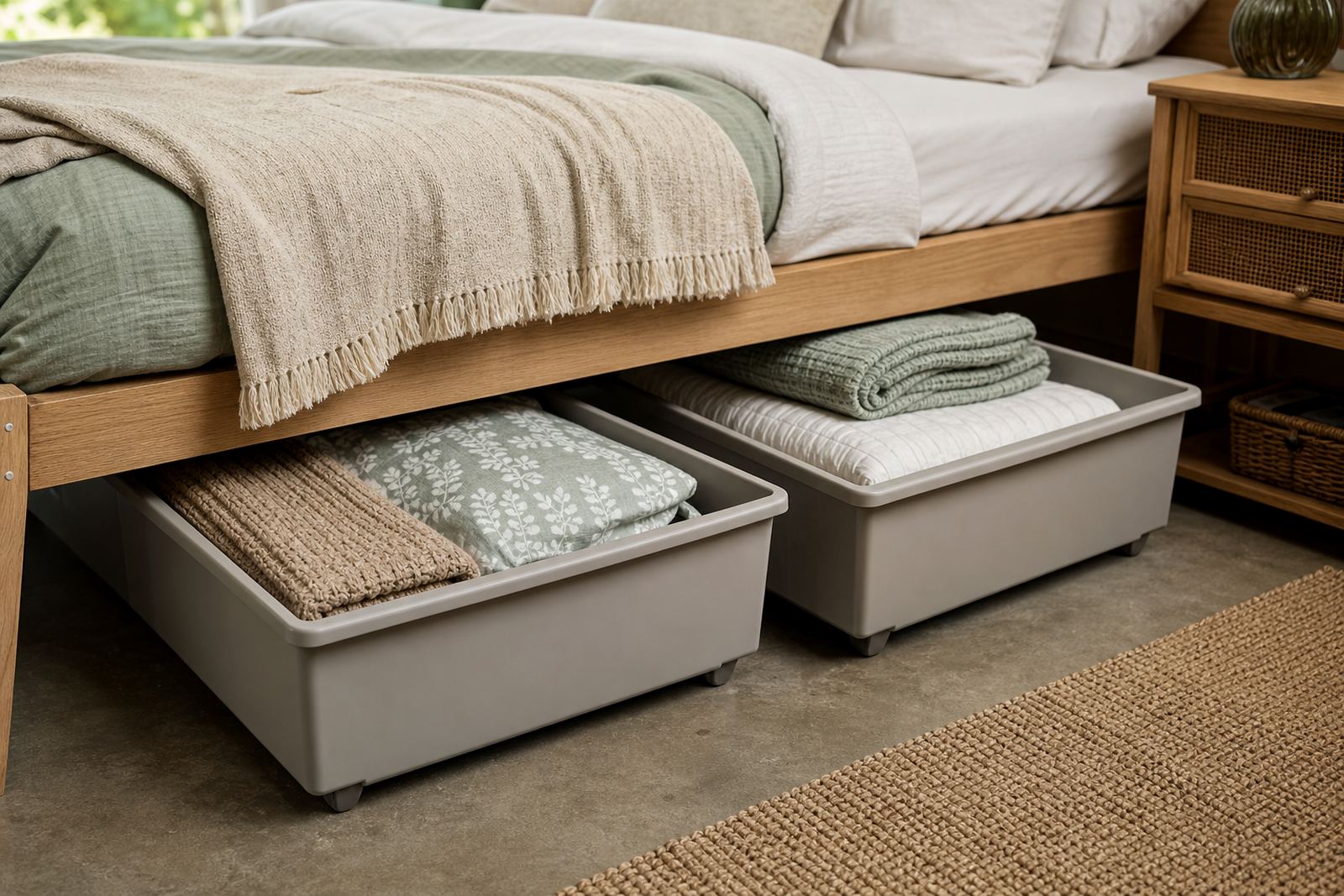
The right storage depends on the size of your home and how often you rotate bedding. In a small flat, under-bed storage boxes can free up cupboard space. In a larger house, a linen cupboard with shelves and labelled baskets works well. For households that deal with load-shedding and colder evenings, it helps to keep one winter set easy to reach so you are not digging through stacked bags when the power goes off and the temperature drops.
Use containers that protect from dust but still allow the fabric to breathe. Fabric storage bags, lidded plastic tubs and cotton pillowcases for loose items can all work. Avoid cramming too much into one container, because tight packing can crease fabric and make it harder to tell what is inside.
- Use breathable bags for blankets and duvets
- Choose clear tubs if you want quick visibility
- Keep heavier bedding on lower shelves for safer lifting
- Leave a little air space in each container
Label by room, size and season
Good labels save time, especially when several people share a linen cupboard. Write the room name, bed size and season on each bag or box. For example, “main bedroom king winter”, “guest room queen summer” or “spare blankets lounge”. If you keep extras for visitors, note how many pillowcases or fitted sheets are inside so you know when to top up.
Labels also help when you are making a quick check before a school holiday or a family visit. You can tell at a glance what is ready and what needs washing. If you are using a handwritten label, make it large enough to read without opening the container every time.
- Mark the room and bed size on every container
- Add the season or use, such as winter or guest
- Count matching pieces inside each set
- Keep a simple checklist inside the cupboard door if needed
Make room for easy access and rotation
Seasonal bedding works best when the items you use most are the easiest to reach. Store winter blankets lower down in summer, then swap them with lighter linen when the weather turns. This is especially useful in Gauteng, where one week can feel warm and the next can turn cool after rain. If bedding is packed away neatly but impossible to reach, it usually ends up getting left in the wrong place.
A simple rotation routine helps. When you bring out a seasonal set, check it first for stains or loose seams. After washing, return it to the cupboard only once it is dry and folded. If you live with children, ask everyone to return bedding to the same spot after use, otherwise the cupboard becomes untidy very fast.
- Bring out the bedding for the current season
- Inspect it before use
- Wash and dry the items you are packing away
- Return them to the correct labelled spot
Keep spare linen fresh between uses
Spare linen is there for emergencies, guests and quick changes, so it should stay fresh even when it is not used often. Re-fold sets every few months to prevent hard creases and to check for hidden damp or insects. A small sachet of dried lavender or a plain moisture absorber can help, but keep anything scented away from children and pets.
For apartments, small cupboards and homes with limited storage, it can help to keep one compact “ready to use” set for each bed in the house. That makes it easier to handle a surprise sleepover or a last-minute guest. In Midrand, where many people juggle work and family schedules, this sort of simple system can save a lot of time on a busy Friday afternoon.
- Refold spare linen every few months
- Check for odour, dampness or pests
- Keep one ready set for each important bed
- Store guest items in a separate section from daily use linen