
Start With Tools That Match Your Floors and Dust Levels
Before you buy anything, look at what collects most in your home. In Midrand and other Gauteng suburbs, fine dust builds up quickly on tiled floors, skirting boards and window ledges, especially when windows stay open for air on warm days. A basic broom is useful, but it works better when paired with a microfibre flat mop and a dustpan with a rubber edge.
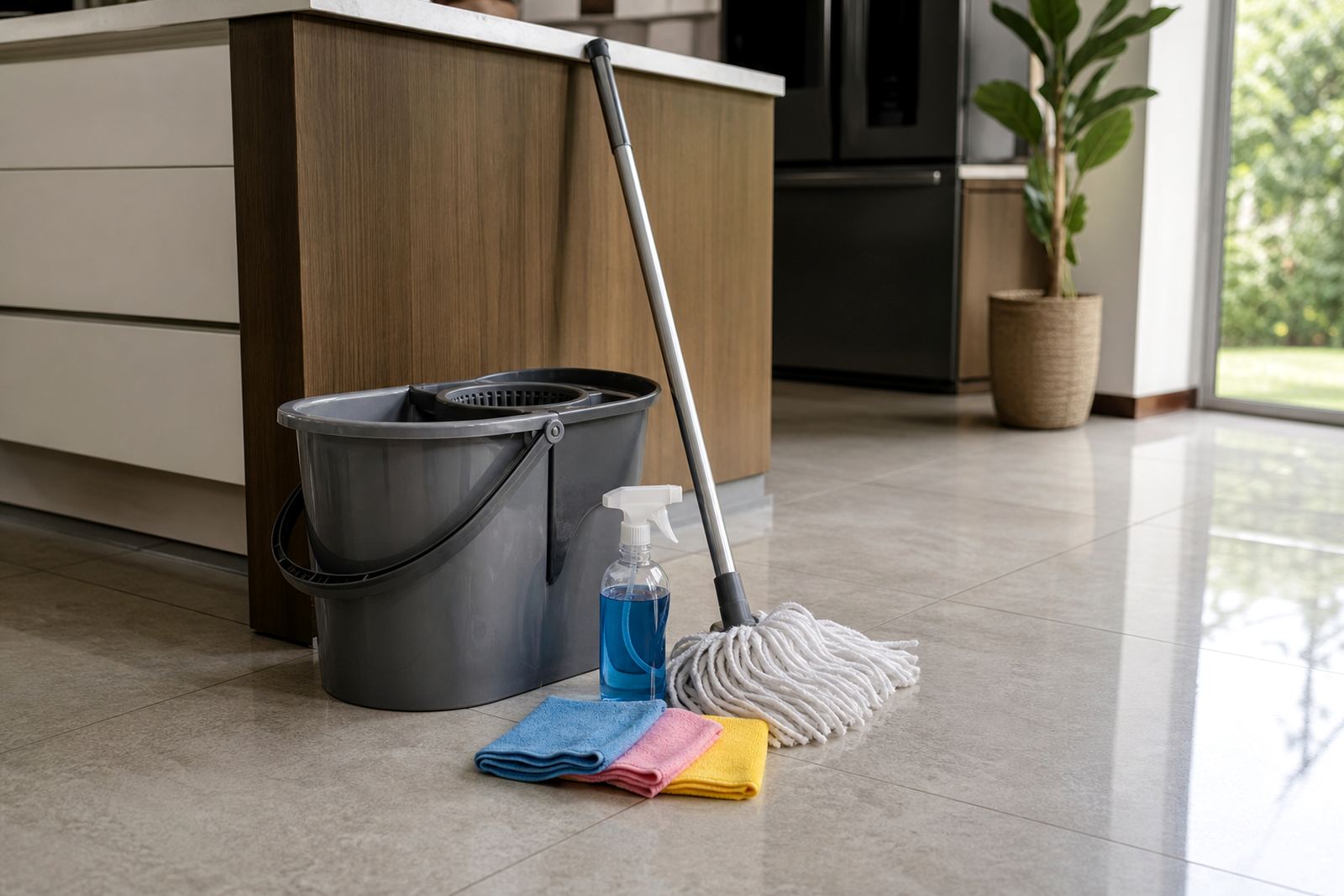
Microfibre picks up fine dirt better than old cotton cloths, and it is lighter to move around a flat or townhouse. If you have laminate, tile or sealed vinyl, a flat mop with washable pads is one of the easiest tools to keep close by. You can use it dry for dust and crumbs, then damp for day-to-day cleaning. For bigger homes or open-plan spaces, a mop bucket with a wringer can save time and reduce drips on the floor.
- Microfibre flat mop with spare pads
- Soft broom for indoor floors
- Rubber-edged dustpan for fine dirt
- Bucket with wringer for larger wash-down jobs
Window Cleaning Tools for Smudges, Sea Air and Storm Marks
Windows need a different set of tools from floors. A squeegee, spray bottle and lint-free cloth can handle fingerprints, rain spots and the usual marks left by dust or cooking steam. For homes in coastal areas like Cape Town, Durban and Gqeberha, salt in the air can leave a film on glass faster than many people expect. That means regular cleaning matters, not just when the windows look dirty.
A good window kit should include a small scraper for stuck-on paint or tape marks, plus a soft brush for frames and tracks. If you live in an apartment block, clean windows on the inside first and keep the floor protected with an old towel. The trick is to work top to bottom, then wipe the sill and frame last so you do not have to repeat the same job twice.
- Squeegee for streak-free glass
- Spray bottle for diluted cleaner or water
- Lint-free cloths for polishing
- Small brush for tracks and corners
Surface Tools That Keep Kitchens and Counters Safer
Kitchens need tools that can move from counter to sink to stove area without spreading grease. A set of reusable cloths, a nylon scrub pad and a small brush help with crumbs, spills and stubborn marks around taps and handles. In homes where load-shedding changes the cooking routine, it is handy to have these items in one caddy so you can clean as you go and not leave mess sitting overnight.
For food prep areas, choose cloths that can be washed often and dried fully. Damp cloths left in a warm kitchen start to smell quickly, especially in summer. A scraper can help with dried sauce or stuck-on food, while a bottle brush is useful for flasks, jugs and narrow containers. If you want less clutter on the sink area, keep the most-used items together in a small tray or caddy. That way the clean-up is quicker and a lot less faffing about.
- Reusable microfibre cloths
- Nylon scrub pad for stubborn spots
- Small detailing brush for taps and handles
- Bottle brush for narrow containers and flasks
Tools That Make Bathroom Cleaning Less of a Chore
Bathrooms need tools that can deal with moisture, soap film and limescale. A dedicated toilet brush, grout brush and soft scrubber make a big difference. When humidity is high, as it often is on the coast, mildew can start in corners and on silicone seals. In Gauteng, hard water marks may be the bigger issue, so scrubbing tools need enough firmness to lift residue without scratching tiles or basins.
A handheld spray bottle is useful for quick weekly maintenance, while a long-handled brush helps with shower walls and awkward corners. If your bathroom has textured tiles, use a brush with a comfortable grip so you can get into the grooves properly. You do not need a lot of products if the tools are right and you keep them separate from kitchen cleaning items.
- Toilet brush with holder
- Grout brush for corners and tile lines
- Soft scrubber for basins and tubs
- Long-handled brush for shower walls
Storage and Organisation Keep Cleaning Gear Ready
Cleaning tools work best when they are easy to find. A wall hook, utility caddy or small basket can keep the basics together so you do not waste time searching for cloths or brushes. In a Midrand flat or sectional title home, storage space is often limited, so slim tools are usually more practical than bulky ones. If the mop fits behind a door and the cloths dry on a hook, the routine becomes simpler.
It also helps to separate indoor and outdoor tools. Keep one set for the stoep, garage or balcony and another for kitchen and bathroom use. That avoids cross-contamination and keeps the house smelling cleaner. A label on the storage bin can help everyone in the household put things back in the same place, which sounds obvious but makes a real difference when you are in a hurry.
- Utility caddy for daily cleaning items
- Wall hook or storage clip for mops and brushes
- Separate cloths for different rooms
- Small labelled bin for spare pads and refills
A Practical Midrand Example for Busy Homes
Picture a family in Midrand with tiled floors, two bathrooms and a kitchen that gets used from early morning to late evening. Dust comes in from the driveway, water spots build up on glass, and the kitchen bench needs wiping after school lunches and supper prep. Instead of buying a pile of random products, they keep a mop, squeegee, scrub pad, cloth set and brush caddy in one place. That simple setup handles most jobs in a few minutes each day.
For many households, the win is not a fancy system, it is having the right tool within reach when the spill happens. A good cleaning kit should make life easier on a weekday, not just look tidy in a cupboard. If you pick tools that suit your flooring, water conditions and storage space, the whole house stays more manageable and you will spend less time chasing mess around the home.