
Start with the three zones that matter most
The easiest way to organise a kitchen is to split it into prep, cook and storage zones. That means each area holds the tools you use for that task most often, instead of moving across the room for every knife, spoon or container. When the layout is right, meal prep feels quicker and cleaner.
In a Midrand home, for example, one counter can handle chopping and mixing, the stove side can keep pots and utensils close, and a cupboard near the fridge can hold dry goods, breakfast items and lunchbox supplies. It does not need to be fancy, only practical. Keep the items you use daily within arm's reach and move the rest higher up or further back.
Build a prep zone that clears the counter fast
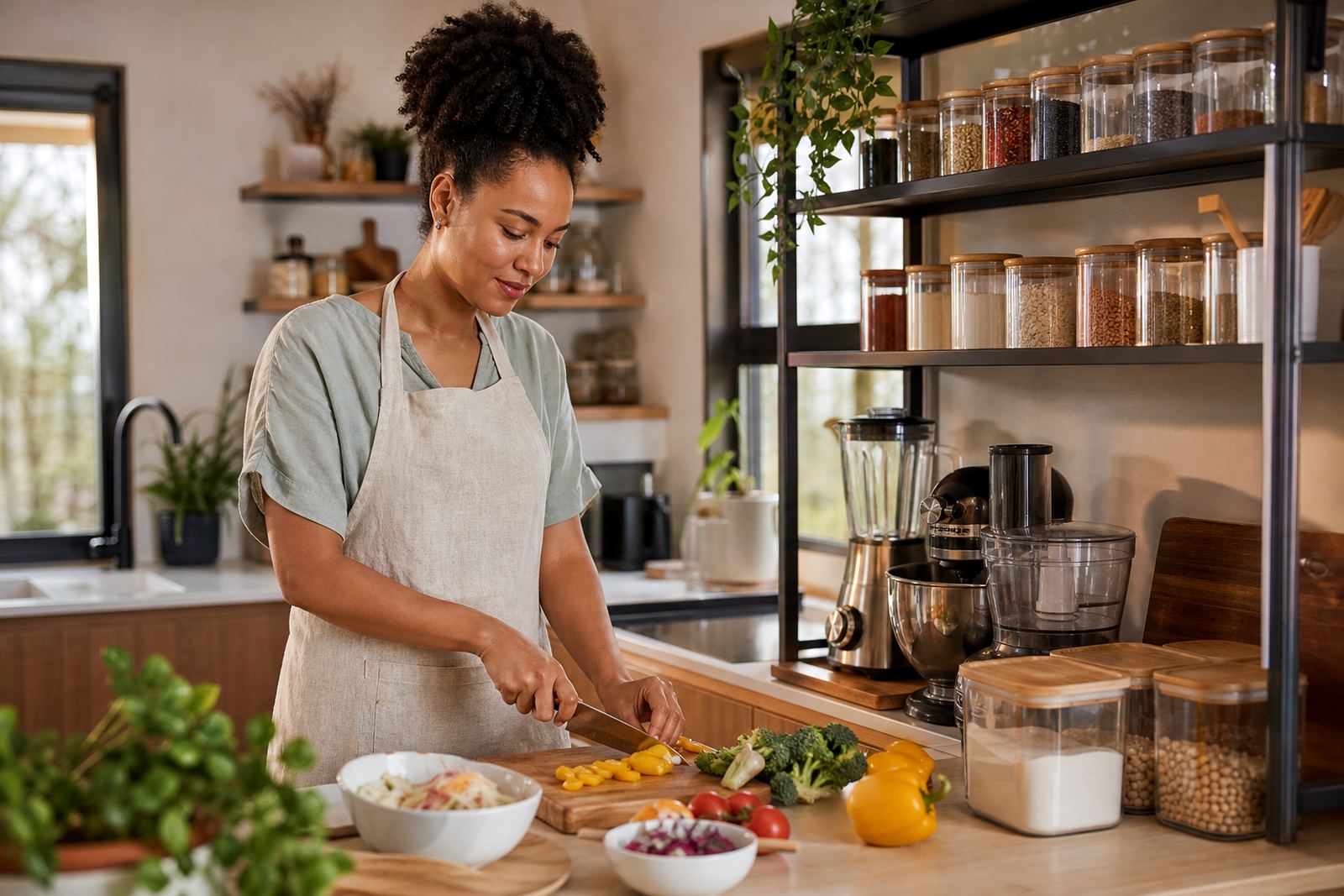
The prep zone works best near the sink and bin, because peeling, rinsing and chopping all create small bits that need clearing away quickly. Keep a chopping board, a sharp knife, mixing bowls, measuring cups and food storage containers in one place. If you batch cook on Sundays, add labels, cling wrap and foil to the same area.
A good prep zone also needs easy cleaning. Use a tray or basket to keep loose items together, and choose containers that stack neatly. In smaller flats or townhouse kitchens, this stops the counter from becoming a catch-all for keys, shopping slips and school notes.
- Store everyday chopping tools together in one drawer or basket
- Keep dry ingredients close to the prep surface for faster cooking
- Use clear containers so you can see what is running low
- Leave enough clear space for a breadboard and mixing bowl
Keep the cook zone tight and easy to reach
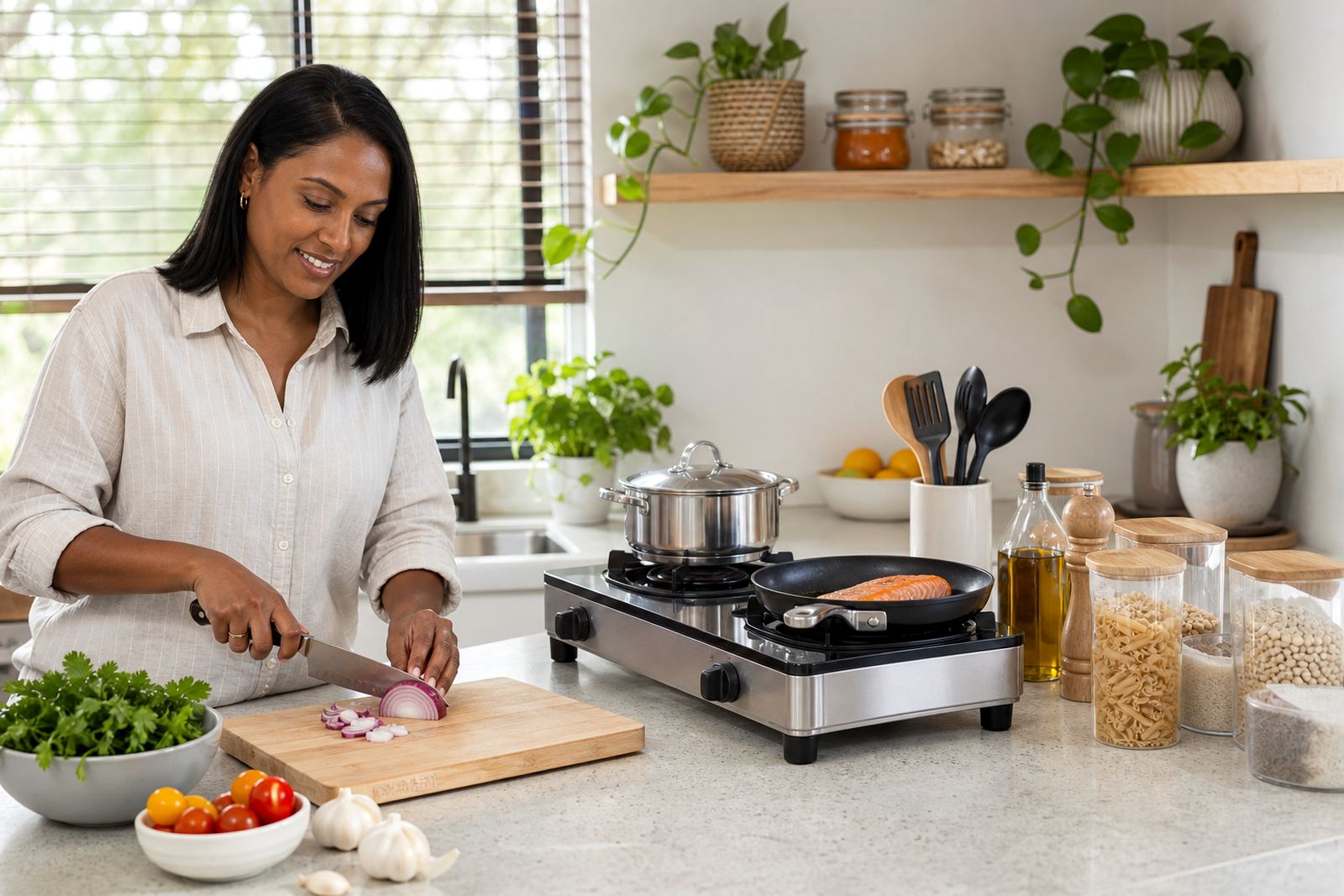
The cook zone should sit around the stove, oven and microwave if you use one for reheating. This area needs only the things that help you cook, such as pots, pans, spatulas, wooden spoons and oven gloves. If you are always reaching across the kitchen for salt or oil, the setup is not doing its job.
During load-shedding, the cook zone becomes even more important. A gas hob, portable cooker or even a thermos station works better when the essentials are already grouped together. Keep a torch, lighter, matchbox and pot holders nearby, but out of the way of heat. In coastal homes such as Durban or Gqeberha, closed containers also help protect spices and dry goods from moisture.
- Hang or store utensils close to the stove for fast access
- Keep cooking oils and seasonings together on a tray
- Move rarely used bakeware to a higher shelf
- Check that nothing flammable sits too close to heat
Store food by category, not by chance
A storage zone works best when similar items stay together. Put breakfast foods in one cupboard, baking items in another and tinned goods in a neat row. This makes shopping easier too, because you can see what is already there before you buy more. It also cuts down on food waste, which matters when grocery prices keep climbing.
Use airtight containers for flour, rice, sugar and pasta. In humid areas or kitchens that warm up quickly, this helps keep food fresher for longer. If your shelves are deep, place older items at the front and new stock behind them. That small habit saves money and stops packets from getting lost at the back of the cupboard.
- Group cereals, spreads and tea or coffee together
- Keep lunchbox snacks in one reachable shelf
- Use labels for jars, tins and decanted ingredients
- Store heavy items on lower shelves for safer lifting
Make the fridge work like a proper system
The fridge can become messy very quickly if everything is pushed in wherever it fits. Give each shelf a purpose. Dairy on one shelf, leftovers on another, fruit and vegetables in the crisper drawers and raw meat sealed at the bottom. That order makes it easier to find meals and helps reduce spills.
For households with children, a clear fridge system also makes packing lunches simpler. Keep yoghurt, fruit, cheese and sandwich fillings together in one section so everyone can help themselves without opening every container. A weekly wipe down and a quick check for expired items keeps the fridge fresher and less cluttered.
Tight spaces need smart habits, not more cupboards
If your kitchen is small, the answer is not always more storage. Sometimes it is better to use the space you have more wisely. Wall hooks, stackable baskets, slim shelves and drawer dividers can make a big difference without blocking walkways. In many Gauteng homes, especially compact flats and townhouses, that kind of planning matters more than size.
Think vertically as well as horizontally. Put the most used items between waist and shoulder height, keep heavier goods lower down, and use the top shelf for seldom used appliances. If one person in the home cooks often and another only makes tea or toast, keep their essentials easy to find so nobody has to search through the same cupboard every morning.
A simple routine helps the zones stay useful. Put items back in their place after washing up, clear the prep counter before bed and do a quick cupboard check once a week. Small habits are what keep the kitchen working well, not a once-off cleanout.