
Start With a Clear Drop Zone by the Door
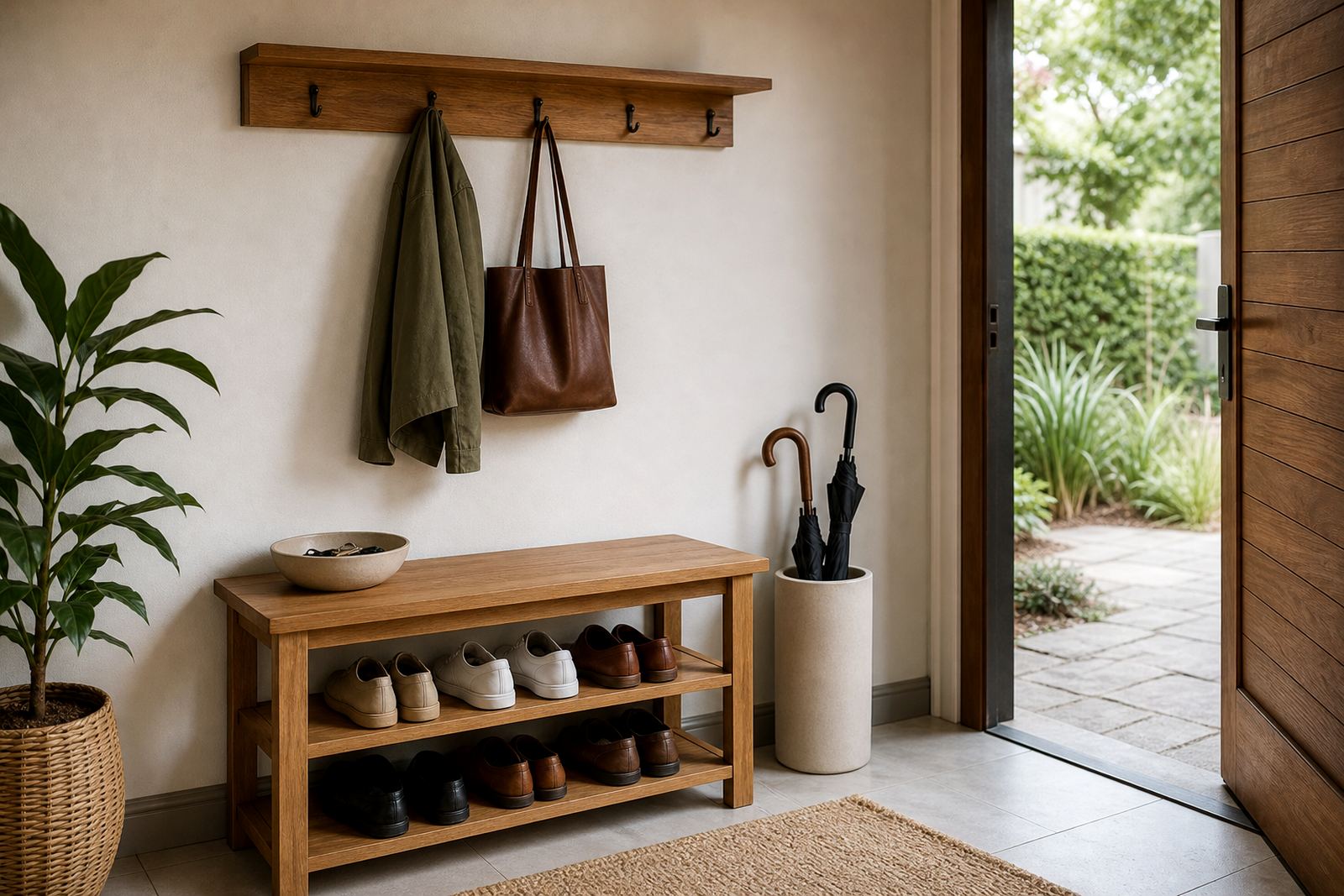
The best entryway organisation starts with one clear place where everyone can drop the same items every day. In a small flat in Midrand or a family home in Pretoria, that might be a narrow shelf, a wall hook rail, or a slim bench with hidden storage. The point is to give shoes, bags and keys one home so they do not spread across the passage, lounge or kitchen counter.
Keep the most used items at arm height and waist height. Keys, dog leads and everyday bags are easier to grab when they are visible, while shoes can sit lower down in a basket or tray. If the area near your door has tiles, use a mat that can be shaken out and washed, especially during rainy season or when red dust and sand get tracked in from outside.
Use Vertical Space When Floor Space Is Tight
Many South African homes do not have a large entrance hall, so the wall is often your best storage space. Hooks, rails and narrow shelves work well in passageways where a bulky cupboard would block movement. This is especially useful in apartments, townhouse entrances and compact homes where load-shedding already makes evening routines more fiddly, because you need to find things quickly when the lights go off.
Try grouping items by height and purpose. A strong hook near the door can hold work bags, school bags and umbrellas, while a higher shelf can keep spare hats or a torch. For heavier items, make sure the fittings are suitable for the wall type, whether it is brick, plaster or drywall.
- Use two hooks per person so a bag and jacket do not end up on the floor.
- Choose shelves with a lip or basket edges to stop small items slipping off.
- Leave enough space below for shoes to go in and out without scuffing the wall.
- If the area gets humid, wipe down metal parts regularly to prevent rust marks.
Keep Shoes Under Control Before They Spread
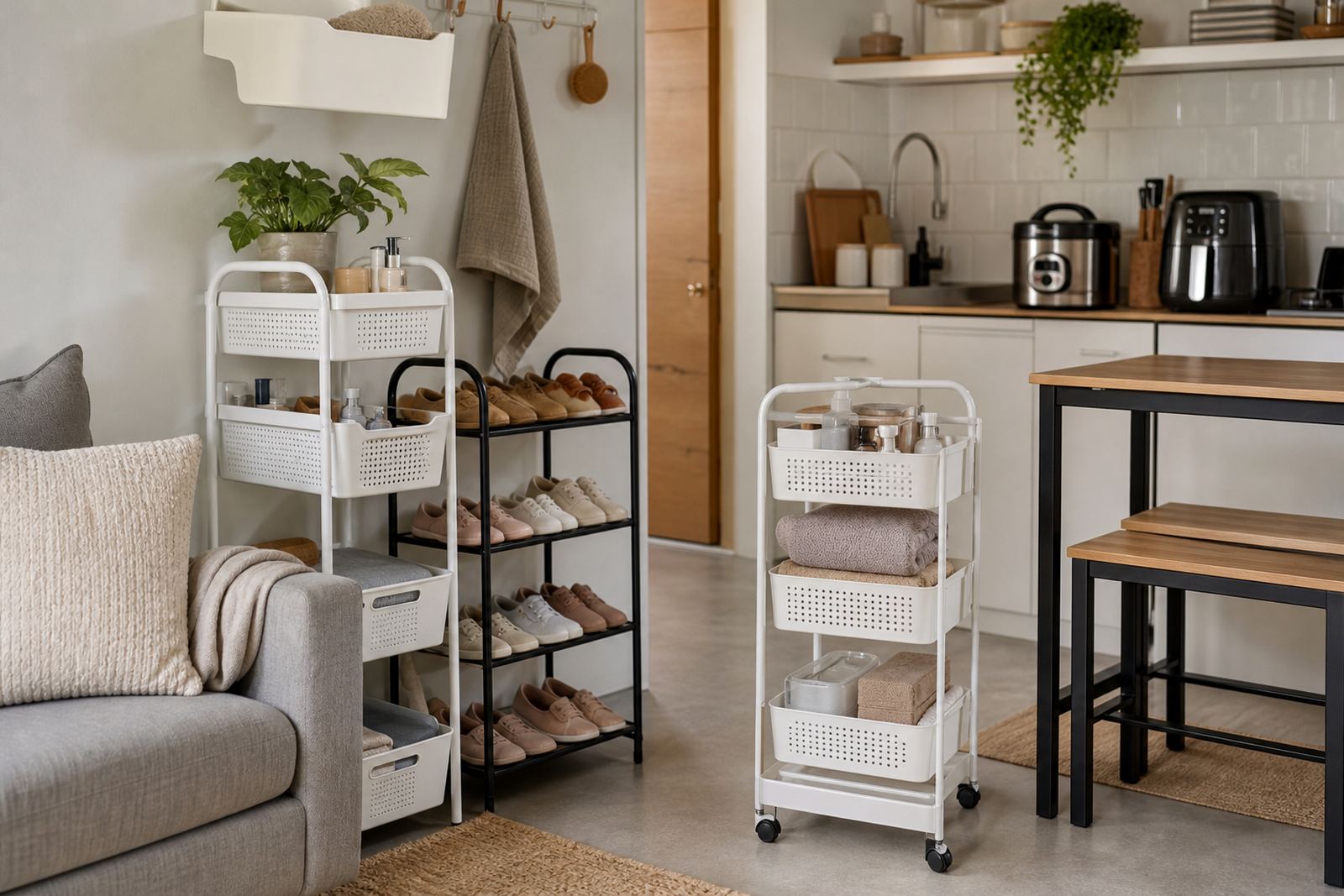
Shoes are usually the first thing to pile up. A proper shoe zone near the door keeps mud, sand and wet soles from being walked through the house. In coastal homes in Durban or Gqeberha, this matters even more because humidity can make shoes smell stale if they are left in a heap overnight. A simple tray, low rack or open basket can make a big difference without taking much room.
Sort shoes by use, not by brand or colour. Everyday pairs should be easiest to reach, while occasional shoes can live on a higher shelf or in labelled boxes. If children are part of the household, give each child one low space that they can manage on their own. It saves arguments in the morning and helps them learn where things belong. A slightly messy pile at the front door becomes a daily habit very fast, so keep the system simple enough to use even when you are rushed.
- Place a washable mat under the shoe area to catch dust and water.
- Use open storage for shoes that need air, closed boxes for special occasion pairs.
- Rotate seasonal footwear so the space does not get crowded.
- Keep a small brush nearby for muddy soles after visits to parks or sports grounds.
Make Keys, Wallets and Small Items Easy to Find
Keys are the biggest time-waster in a cluttered entrance. One minute they are on the table, the next they are under a receipt or between school papers. A shallow tray, wall bowl or hook set close to the door stops that daily scramble. It also helps if the whole household uses the same landing spot for car keys, gate remotes and post, otherwise things start to scatter again.
For homes where more than one person comes and goes at different times, use a simple system. Label hooks, use a colour code, or assign one small container per person. That way no one has to ask where the spare house key has gone. If you have visitors often, keep the area neat enough that it looks cared for without needing a full clean every day. A tidy entrance gives the right first impression and makes the rest of the home feel calmer too.
Choose Storage That Works in South African Conditions
Not all storage handles local conditions equally well. Coastal moisture, summer heat and dusty inland air can all affect how long baskets, boards and finishes last. When choosing items for the front door area, look for easy-to-wipe surfaces, sturdy construction and materials that can cope with frequent use. If the space gets direct sunlight, avoid delicate finishes that fade or crack too quickly.
Practical matters count more than style alone. A storage piece that looks nice but wobbles every time someone hangs a school bag on it will not last in a busy house. If you have tiled floors, soft feet or rubber pads help stop scratching. If you rent, go for options that do not need major drilling, so you can keep the entrance neat without upsetting the lease conditions.
- Pick finishes that are easy to wipe with a damp cloth.
- Use baskets or trays that can be moved out for cleaning.
- Choose items with enough weight or support so they do not tip over.
- In humid areas, allow airflow around shoes and closed containers.
A Simple Midrand Routine That Keeps the Doorway Clear
A good system only works if it is easy to maintain. In a Midrand home with school runs, office traffic and weekend errands, the entryway can go from neat to messy by mid-morning. A useful routine is to spend one minute every evening putting shoes back, hanging bags up and returning keys to the tray before lights out. That small habit makes the next morning far easier, especially during load-shedding when you do not want to hunt for things in the dark.
For busy households, assign a quick reset after the last person comes in. One person can clear the mat, another can return shoes to their place, and someone else can check that the keys and wallet are where they should be. It does not need to be perfect, just consistent. Over time the front door becomes a space that works for the whole household instead of a dumping ground. And if you need to buy organisers, hooks, baskets or practical home items, a well-chosen set of daily deals can help you sort the space without overspending.