
Start with the places where mess builds up fastest
Most family clutter does not begin in a cupboard. It starts at the front door, in the kitchen, near the washing machine, and on the one table everyone uses for bags, keys, school notes and chargers. If those spots are organised first, the rest of the home feels easier to manage.
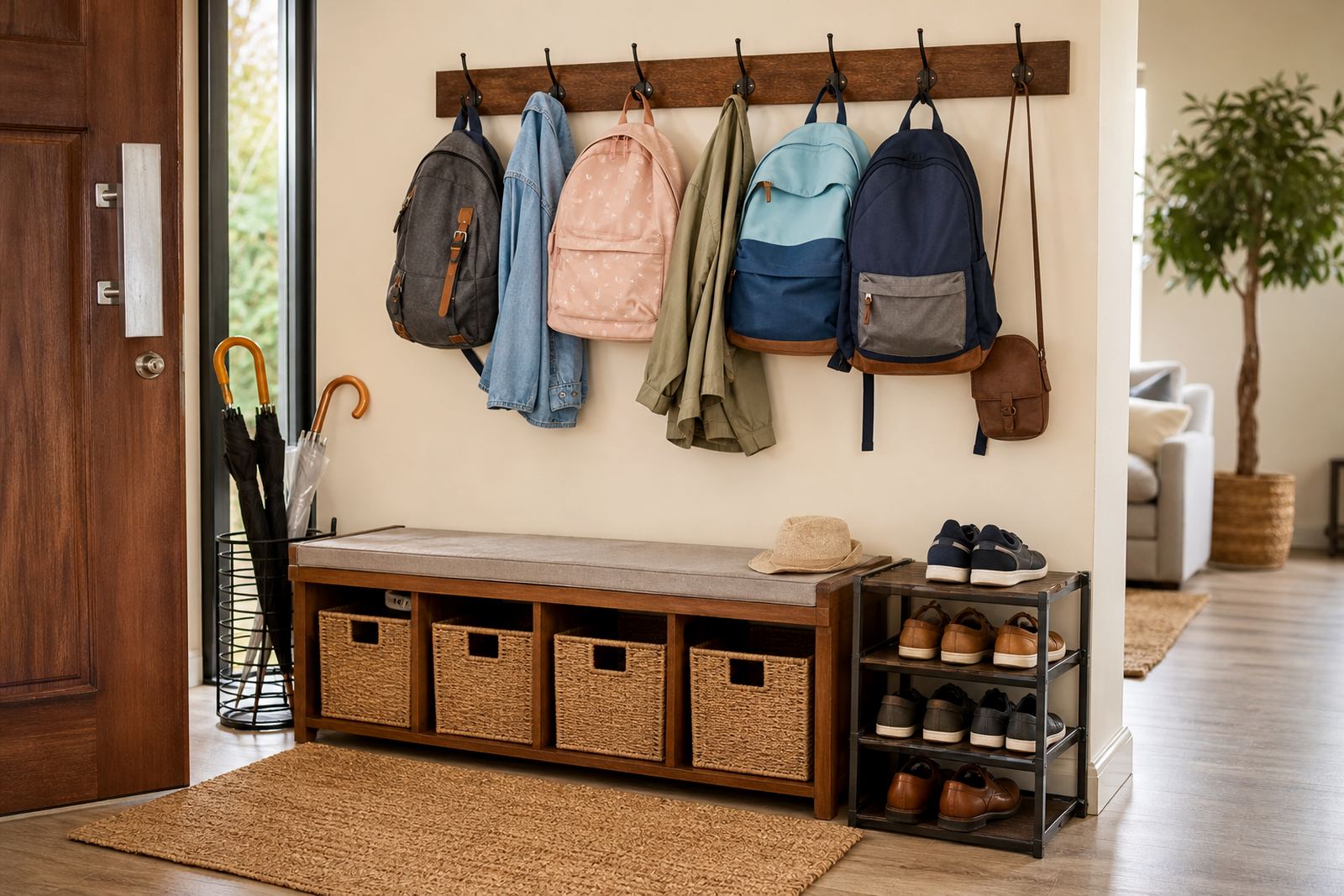
In Midrand, where many households are balancing school runs, work calls and long traffic days, a simple landing zone can save serious time. Use one basket for outgoing items, one tray for keys and wallets, and one hook rail for bags or hats. Keep the system small enough that it is easy to maintain on a busy weekday evening when load-shedding has interrupted the routine again.
- Use a tray for loose items that are picked up daily.
- Keep a basket near the door for school letters, permission slips and parcel slips.
- Assign one hook or peg per family member.
- Choose storage that can be wiped down quickly after dust or rain.
Choose storage that matches how your family actually moves
Good storage works with real habits, not perfect habits. If children drop shoes at the door, a low open rack is better than a closed cupboard. If snacks and lunch items cause confusion in the mornings, clear tubs in a kitchen drawer will work better than deep bins where packets get lost at the back.
Think in zones. One zone for school items, one for meal prep, one for toiletries and one for cleaning products. When each zone has a set home, everybody can pack away faster. It also helps when grandparents, helpers or older children are sorting things out because the system is easy to follow.
- Open baskets suit shoes, toys and blankets used daily.
- Clear containers help with pantry items and craft supplies.
- Stackable tubs make better use of tall cupboards and linen shelves.
- Drawer dividers keep small items from sliding into one messy pile.
Make kitchen storage work harder during the school week
The kitchen is usually the busiest room in a family home. Between breakfast, lunch packing and supper prep, counters fill up quickly. That is why storage in this room should reduce searching first, then improve appearance after that. Group breakfast items together, keep lunch containers in one spot, and place spices, labels and foil where they are easy to reach.
A tidy pantry does not need to be expensive. Even a few matching tubs, a turntable for jars, and a basket for packets can make a big difference. In many South African homes, the kitchen also doubles as a homework spot or a place to charge devices, so leave one dedicated shelf or drawer for electronics and charging leads. Otherwise the counter becomes a catch-all and the mess returns by Friday.
If you live in a coastal town like Gqeberha or Durban, choose storage that can handle humidity. Plastic, coated wire and sealed containers are usually easier to keep clean than materials that absorb moisture. That matters for dry goods and for cupboards that sit close to a back door or utility area.
Use vertical space in bedrooms, bathrooms and laundry areas
Busy homes often run out of floor space before they run out of storage needs. The answer is usually vertical storage, not more furniture. Wall-mounted organisers, hanging shelves, over-door hooks and stackable bins can free up space without crowding the room.
Bathrooms and laundry areas especially benefit from this approach because these rooms often handle towels, toiletries, cleaning products and spare soap in a small footprint. Keep items grouped by use, and place the most-used products at eye level. Less-used items can move higher up. In a smaller flat or townhouse in Pretoria or the East Rand, that simple shift can create enough room to move comfortably without bumping into baskets and bottles.
- Hang towels on wall hooks instead of folding them into deep stacks.
- Use slim shelves above the washing machine for detergent and cloths.
- Keep medicines and personal care items in separate labelled containers.
- Store spare toilet rolls and cleaning items in a lidded bin to keep them neat.
Build a system that survives school terms, holidays and visitors
Storage needs change through the year. During school terms you need room for books, shoes, lunch tins and sports gear. During holidays you may need more space for toys, art supplies and overnight bags. When visitors arrive, the home needs a quick reset that does not take all evening.
That is why flexible organisers are useful. Foldable crates, lidded baskets and modular tubs can be moved from room to room as needed. If the family grows, or if a new hobby starts, you can add one more container instead of changing the whole setup. Keep labels simple and readable so everyone knows where things go, even when the house is full and the pace is quicker than usual.
A practical example: a Midrand family with two school-going children may keep sports gear in one tub by the garage door, art supplies in a labelled box on a shelf, and homework items in a basket beside the dining table. That reduces the morning search for swim caps, pencils and consent forms, which is often where stress starts.
Small storage habits that save time every day
Storage works best when it is paired with a few house rules. Put things back in the same place, sort incoming items on the day they arrive, and clear one surface before moving to the next. These small habits make a home feel calmer and they stop clutter from spreading from room to room.
It also helps to choose storage that is easy to lift, clean and move. Heavy containers become awkward when children need to help or when the room has to be rearranged quickly. Light, durable organisers are usually a better fit for family life, especially in homes where the same area is used for homework, meals and relaxation.
- Do a five-minute tidy-up before supper.
- Empty one “miscellaneous” basket every weekend.
- Check drawers and shelves for broken items or duplicates.
- Keep labels plain so everyone can follow them.
When storage is simple and well placed, the whole house runs with less friction. You spend less time searching for everyday items and more time getting on with the day.