
What a dish drying rack does in a busy kitchen
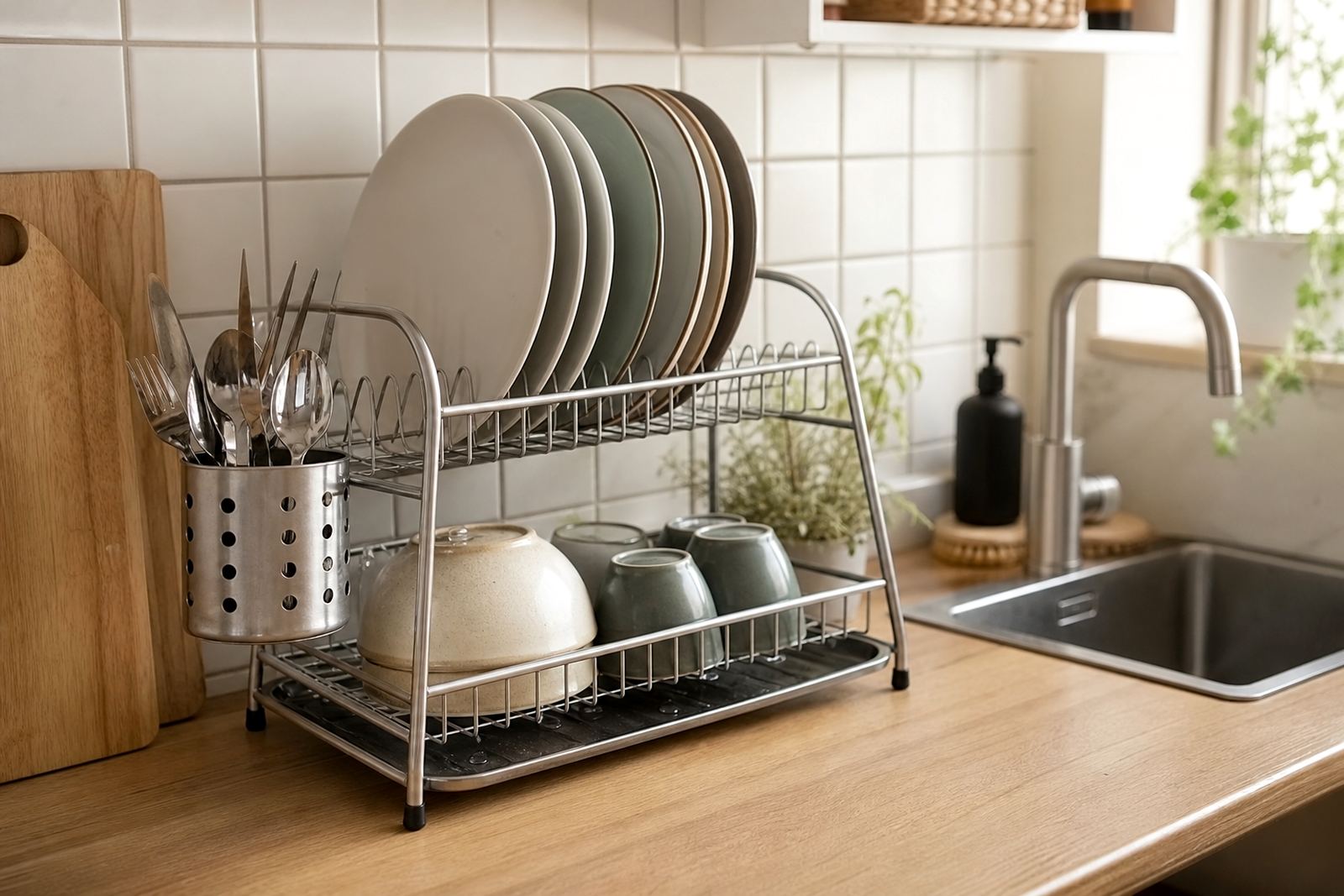
A dish drying rack is made for everyday washing up where you need plates standing upright, cups draining without tipping, and cutlery kept together while it dries. In most homes it sits beside the sink, but it can also work on a prep counter, in a scullery, or on a covered utility shelf if you want the sink area clear. The main job is basic but important, because it keeps wet items organised and lets water drip into the tray instead of pooling on the counter.
For South African homes, that matters during load-shedding too. When the dishwasher is not an option or you are hand washing a few items at a time, a rack keeps the routine manageable. It is also useful in rentals and small flats in Johannesburg or Pretoria where counter space is tight, and in coastal areas like Cape Town or Gqeberha where constant moisture can make kitchen surfaces feel damp if plates are left lying flat.
Sizes and configurations you can order
Dish drying racks are usually sold in a few practical sizes so you can choose one that matches your sink area and daily load. A compact single-tier rack suits a one or two person kitchen, while a wider version is better for families or anyone who cooks most days. Some models include a drip tray, a cutlery cup and a plate holder in one unit, while others add a side basket for mugs or a separate section for chopping boards.
- Compact size: about 35 cm to 45 cm wide for limited counter space
- Standard size: about 45 cm to 60 cm wide for daily family use
- Large size: about 60 cm to 80 cm wide for heavier washing up
- Single-tier option: keeps the profile low for easier reach
- Two-tier option: gives more drying space without taking up extra length
- Stainless steel or coated wire finish: better for humid kitchens and longer use
If you are comparing options, check the inside width of your sink run and allow a little extra room for the tray edges. A rack that is too wide can block the tap or make dish handling awkward, so a quick measure before ordering saves hassle.
Where it suits best in the home
This product suits kitchens where washing up happens at the sink and you want a dedicated drying spot rather than a towel on the counter. It works well in open-plan homes, townhouse kitchens, student accommodation, staff rooms and small offices with a wash basin nearby. If you run a home-based business from Midrand or the East Rand and use a prep sink for cups and utensils, a rack helps keep clean items separate from the wet washing area.
It is also a sensible choice for households that prepare a lot of meals and do dishes in stages. You can load it after breakfast, clear it again before supper, and avoid piling wet crockery in the sink. In coastal homes, especially where humidity stays high for much of the year, a raised rack can reduce the chance of items sitting in stagnant water. For renters, it is a low-fuss solution because it does not need mounting or drilling.
- Best for countertops next to the sink
- Useful in sculleries and utility rooms
- Handy for holiday homes and guest cottages
- Suitable for apartments, townhouses and small family kitchens
Installation, setup and power needs
Most dish drying racks need no tools and no permanent installation. You simply place the unit on a level counter, fit the drip tray if included, and position the cutlery holder or side basket. There is no power requirement and no gas connection, which makes it one of the simplest kitchen items to set up. If you choose a wall-mounted or over-sink style, make sure the wall surface and sink dimensions suit the unit before ordering, because the fit is what matters most.
For the best result, leave enough space behind the rack so air can circulate and water can run off freely. If your sink is close to a tiled backsplash, check that plates will still stand upright without hitting the wall. In a load-shedding household, this simplicity is useful because the rack works all the time without relying on electricity. Just place it where the kitchen can stay tidy even when the lights go off.
Care, cleaning and what to watch for over time
Good care is straightforward. Empty the drip tray regularly, rinse off soap residue, and wipe the frame dry so mineral marks do not build up. If you live near the coast or in a humid area, it is worth drying the rack with a soft cloth once or twice a week. Stainless steel and coated finishes usually need only basic cleaning, but any metal item will last longer if it is not left standing in dirty water for long periods.
- Wash the tray with warm water and mild dish soap
- Dry joints and corners where moisture can collect
- Check rubber feet or supports for wear
- Do not overload the rack with heavy pots unless it is rated for that use
- Keep knives and sharp tools separate from plates and cups
If a rack starts wobbling, check whether the surface is level or whether one foot has shifted. A small adjustment often sorts it out. When a rack is well looked after, it stays neat, does its job quietly and does not take up much of your time.
What to check before you place an order
Before ordering, look at the width of your sink area, the depth of your counter, and how many items you normally wash in one go. Check whether you need a drip tray, a cutlery holder, or a higher section for mugs and glasses. If you have limited space, a compact rack may suit better than a wide multi-level option. If you cook daily for a family, a larger model may save you from stacking dishes on the side of the sink.
Also confirm the material finish, especially if your kitchen gets damp or you want something that is easy to wipe clean. If you are buying for a gift, add gift wrapping if needed and double-check the delivery area for Midrand, Johannesburg, Pretoria, Cape Town, Durban, Gqeberha, East Rand or West Rand. For bulk order help or corporate gifting, it helps to know the exact quantity and any colour preference up front so the right stock can be arranged.
- Measure the available counter space in centimetres
- Confirm whether you need single or two-tier storage
- Check the finish for humid or coastal use
- Choose based on the daily number of plates and cups
- Review delivery details and the contact form before checkout
Key facts
| Product type | Dish drying rack for kitchen counters and sinks |
|---|---|
| Typical size range | 35 cm to 80 cm wide depending on model |
| Material options | Stainless steel, coated wire, plastic drip tray |
| Main use | Drying plates, cups, glasses and cutlery |
| Power or gas needed | None |
| Care level | Low, with regular rinsing and wiping |