
What LED strip lights do and where they work best
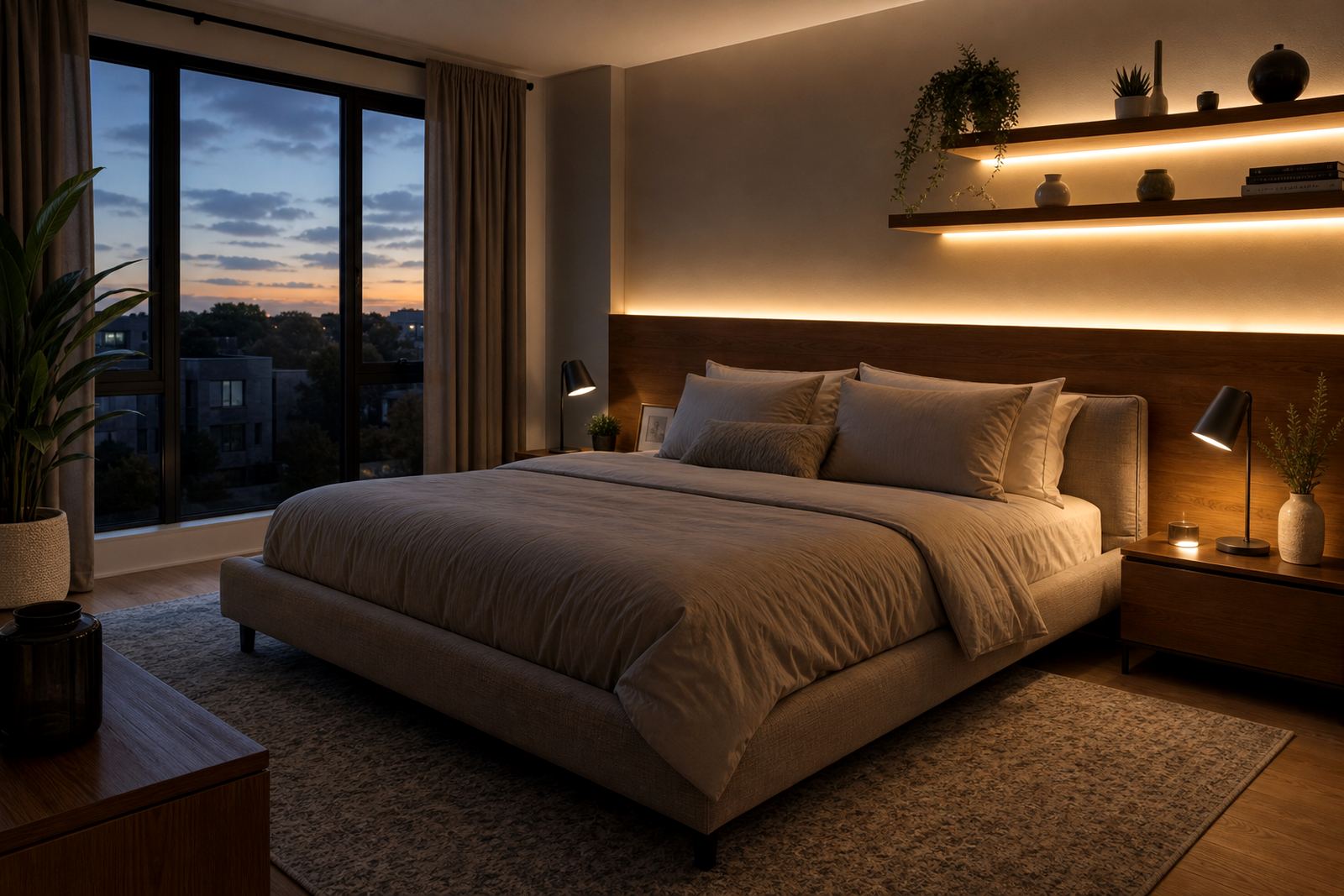
LED strip lights are narrow, flexible light strips with small diodes spaced along the length of the strip. They are used for accent lighting rather than main room lighting, so they work well in places where you want mood, definition or a bit of extra light without a bulky fitting. In homes around Midrand, Johannesburg and Pretoria they are often fitted behind TV units, under kitchen cupboards, along headboards, inside display shelves and around mirror frames.
Because the strip is flexible, it can follow straight runs, corners and gentle curves. This makes it handy for modern apartments, townhouses and rental rooms where you want a neat finish. They are also useful in garages, study nooks and home bars, especially where load-shedding makes it helpful to have a low-power light source ready for backup power.
- Best for ambient and task accent lighting
- Can be used in bedrooms, lounges, media spaces and shelving
- Compact enough for small rooms and tight edges
- Suitable for decorative use in homes and small offices
Available sizes, colours and control options
LED strip lights are usually sold in lengths such as 1 m, 2 m, 3 m, 5 m and longer rolls for larger jobs. Many products can be cut at marked points, which helps when you only need a shorter run under a cabinet or around a feature wall. Always check the cut intervals before ordering, because the spacing can differ from one strip to the next.
Common options include warm white for a softer bedroom feel, cool white for cleaner task lighting, and colour-changing strips for entertainment spaces. Some sets come with a simple inline switch, while others include a remote or controller for dimming and colour changes. For kitchen use, many customers prefer a neutral white tone because it shows food prep areas more clearly and does not feel too harsh in the evening.
- Lengths commonly from 1 m to 5 m, with longer rolls available
- Colours can include warm white, cool white and multi-colour
- Some strips are dimmable or remote controlled
- Cut points allow a neater fit for custom spaces
Technical specs to check before you order
Before placing an order, check the technical details carefully so the strip suits your space and power setup. Most LED strip lights run on low-voltage DC power and need a matching transformer or adapter. If you plan to use them during power cuts, it helps to confirm whether the strip can be powered from a plug, a battery backup or a compatible inverter setup. That matters in homes and small businesses where power stability is not always guaranteed.
Also check the brightness rating, measured in lumens or sometimes by the number of LEDs per metre. A denser strip normally gives a fuller line of light. For humid homes near the coast, especially in Durban or Gqeberha, it is worth asking about moisture resistance if the strip will be used near a sink, bar area or enclosed kitchen edge. For dry indoor use, standard indoor strips are usually fine if installed properly.
- Power rating: usually 5V, 12V or 24V DC
- Brightness: often linked to LEDs per metre
- Length: confirm the exact roll or cut size needed
- Installation type: adhesive backing, clips or aluminium channel use
- Indoor rating: standard dry-area use unless stated otherwise
- Control type: plug switch, remote or dimmer-compatible
Installation points that give a cleaner finish
Installation is usually straightforward, but the finish depends on the surface and how well you plan the route. Clean the mounting area first so the adhesive can grip properly. Smooth painted wood, melamine and sealed drywall usually give better results than dusty plaster or rough brick. If the strip is being fitted under cupboards or behind a TV, measure the full path first and allow a little extra for corners and power lead placement.
For a longer lasting result, many installers use clips or an aluminium profile rather than relying on adhesive alone. This helps the strip stay straight and can also improve heat dissipation. It is especially useful in kitchens or media spaces where the strip may stay on for several hours at a time. If you are not sure where the controller should sit, keep it in an accessible spot so you can reach it for adjustments or replacement later.
- Clean and dry the surface before fitting
- Measure twice, cut once and check the cut marks
- Allow space for plugs, controllers and corner turns
- Use clips or profiles on longer or warmer runs
Power use, backup options and load-shedding planning
LED strip lights use far less power than older lighting types, which makes them practical for homes that want mood lighting without a heavy electricity draw. They are a good choice for small backup systems, provided the voltage and connector match your setup. If you are using a power station, inverter or battery backup during load-shedding, check the wattage of the full strip length so you know how long it can run.
Some customers use strip lights as part of a small emergency lighting plan, for example in a hallway, nursery or kitchen shelf edge. They are not a substitute for proper room lighting, but they do help keep key areas usable when the main supply is off. If the strip will be switched on and off often, choose a controller or switch that is easy to reach and simple to reset after a power cut.
- Low power draw compared with older lighting
- Suitable for inverter or battery backup use if voltage matches
- Helpful for accent lighting during load-shedding
- Check total wattage for longer runs
Care, cleaning and how to keep the strip working well
LED strip lights do not need much servicing, but a little care helps them last longer. Dust can build up along the strip and reduce the brightness slightly, so wipe the area with a dry microfibre cloth now and then. Avoid harsh cleaners, soaking water or rough scrubbing, especially near the controller or power input. If the strip is inside a cabinet or display shelf, check that it is not trapped behind items that generate heat.
If a section stops working, look first at the connections, adhesive lift points and any bent corners. In many cases the issue is at the plug or controller rather than the full strip. Keep the original packing if possible, because the voltage and cut-point information is often printed there and it makes replacement easier later.
- Dust with a dry cloth only
- Avoid strong chemicals and excess moisture
- Check connections if a section goes dim or fails
- Keep the strip away from direct heat sources
What to confirm before placing your order
Before ordering, confirm where the strip will be used, how long the run needs to be and whether you need warm white, cool white or colour-changing light. It is also worth checking if the strip comes with a transformer, plug, remote or clips, because some listings include only the strip itself. That affects the total setup cost and whether you can install it straight away.
If you are ordering for a bedroom, media room, shop shelf or gift project, measure the exact space and note any corners, joins or hidden power points. For clients in Johannesburg, Pretoria, Cape Town, Durban and Gqeberha, courier delivery is available across South Africa, so it helps to order with your measurements ready. That way you avoid short lengths, wasted joins and extra returns work later.
- Confirm the exact length needed for the space
- Check colour temperature or multi-colour function
- Ask what is included in the pack
- Make sure the voltage suits your power source
- Note any corners, joins or concealed cable runs
Key facts
| Product type | Flexible LED strip light for accent and feature lighting |
|---|---|
| Common lengths | 1 m, 2 m, 3 m, 5 m and longer rolls |
| Voltage | Typically 5V, 12V or 24V DC depending on model |
| Lighting colour | Warm white, cool white or colour-changing options |
| Installation | Adhesive backing, clips or profile fitting |
| Typical use | Bedrooms, media spaces, shelving, cupboards and mirrors |