
A mirror and jewellery organiser in one unit
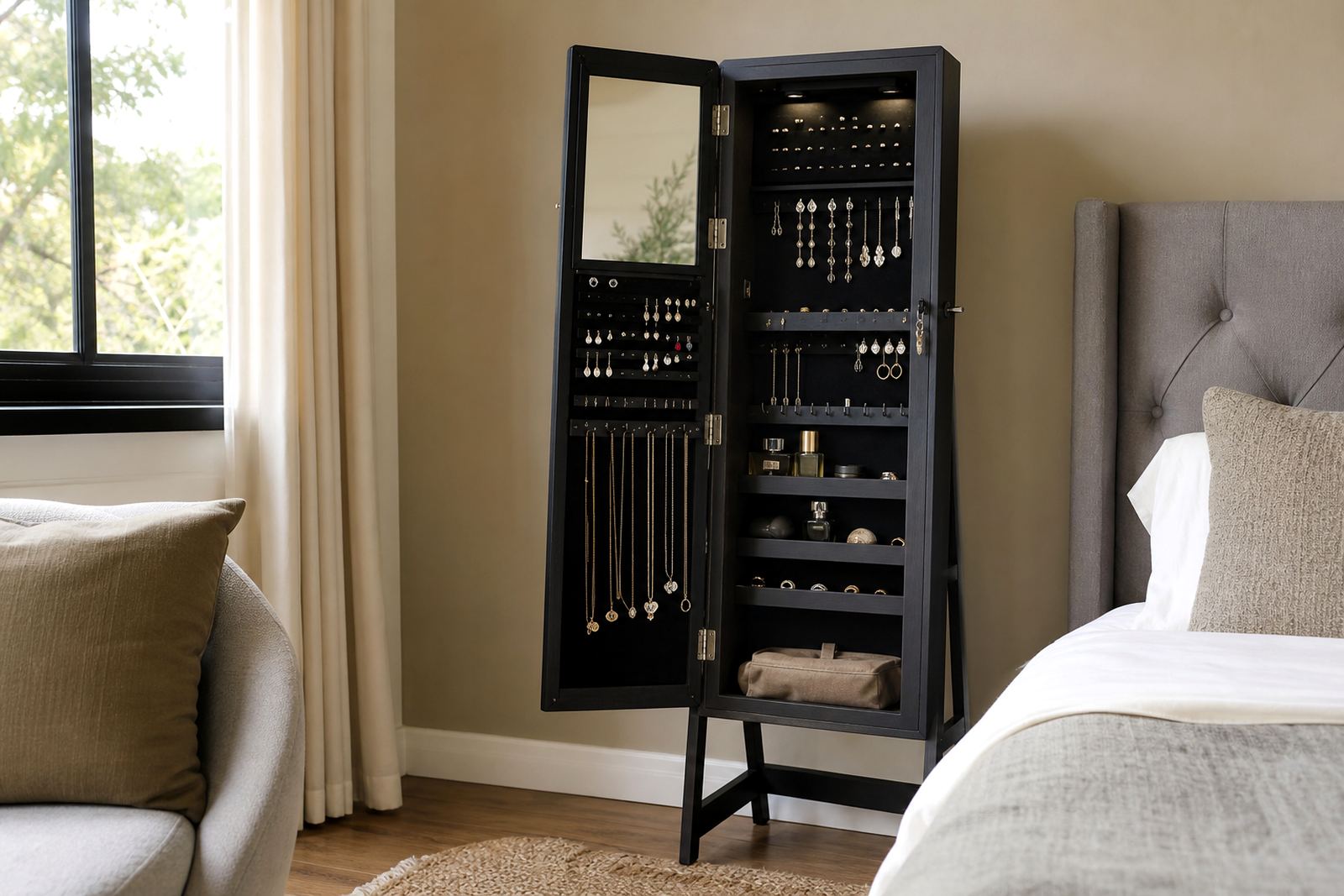
This cabinet is made for homes that need storage without adding clutter to the wall or floor. From the outside it works as a clean mirror for dressing, while inside it gives you dedicated space for rings, chains, earrings, watches and small accessories. It is a practical option for apartments in Johannesburg or Pretoria, guest rooms in Cape Town, and family homes where a drawer full of jewellery gets untidy quickly.
The internal layout normally includes hooks, shelves, ring slots and hanging space, depending on the model. That means you can keep fine chains separate from heavier items and avoid tangling. If you often get ready in a hurry, having everything in one place saves time. It also helps protect pieces from dust, humidity and accidental knocks, especially in coastal areas like Durban or Gqeberha where moisture can be a problem.
Most buyers choose this kind of cabinet because it combines function with a neat appearance. It looks like a regular mirror, but inside it gives you better order and easier access to your daily pieces.
Sizes, finishes and layout options
Mirror jewellery cabinets come in a few common sizes so you can match the unit to the room and the amount of storage you need. Taller models are suited to bedroom walls or cupboard doors, while narrower versions work well in smaller flats or passage areas. When checking a listing, look at the overall height, width and internal depth. Those measurements matter if you need the cabinet to fit beside a doorway or above a dressing table.
- Compact size: Suitable for smaller jewellery collections and tighter wall spaces
- Mid-size cabinet: A good balance for everyday use and a growing accessory collection
- Large cabinet: Better for households with several users or more item storage
- Mirror finish: Clean reflective surface for dressing and makeup checks
- Internal fittings: Hooks, trays, shelves, ring slots and earring holders may vary by model
Finish choices are usually kept simple so the cabinet can blend into most homes. White and black are common, while wood-look finishes suit warmer interiors. If the cabinet will be used in a room with strong sunlight, check whether the mirror has a protective backing and whether the frame is designed to handle daily use without warping.
Where it fits best in South African homes
This product suits spaces where storage and mirrors are both useful. In a bedroom, it can sit on a wall near a dressing area or cupboard. In a shared flat, it is handy because one person can keep jewellery secure without using a full chest of drawers. It also works well in guest rooms, main bedrooms and small studios where every square metre counts.
For homes affected by load-shedding, the cabinet is especially useful because it does not rely on power or batteries. You can still get ready with natural light or a torch, and the mirror stays usable at any time of day. That makes it a sensible choice for practical households that want order without extra electricity use.
- Bedrooms with limited drawer space
- Rental homes where wall-mounted storage helps keep counters clear
- Gifting for weddings, birthdays or housewarming presents
- Rooms with a simple dressing corner or vanity table
- Households that want jewellery kept out of reach of children
If you live near the coast, it helps to choose a cabinet that can handle damp air. Keep it away from direct shower steam and avoid placing it in a bathroom unless the product is clearly made for that environment. A dry bedroom wall is usually the safer choice.
Installation basics and what you need to check
Most mirror jewellery cabinets are wall mounted or door mounted, depending on the design. Before ordering, measure the available space carefully and check that the mounting points suit your wall type. Brick, concrete and timber stud walls each need the right fixings. If you are fitting it to a hollow wall, use suitable anchors so the cabinet stays secure when opened and closed.
The unit does not need water, gas or electrical connection. That makes installation simpler and keeps running costs at zero. Even so, the cabinet should be fitted level and at a comfortable height so the mirror is easy to use. If it is too high, you may struggle to reach the upper hooks. Too low and the mirror can be awkward for daily use.
- Measure height, width and door clearance before buying
- Check whether wall brackets, screws and plugs are included
- Confirm if the cabinet opens left or right, depending on your space
- Make sure the wall can support the filled weight of the unit
- Allow enough room for the door to open fully without hitting furniture
When in doubt, ask for the product dimensions and fitting method before placing the order. A few minutes of checking can save time and avoid returns later.
Care, cleaning and long term servicing
The mirror surface should be cleaned with a soft microfibre cloth and a light glass cleaner. Avoid harsh chemicals, abrasive pads or heavy scrubbing because they can mark the reflective surface or dull the frame finish. For the inside storage area, dust it out now and then with a dry cloth and keep items dry before placing them back inside.
If the cabinet has felt-lined sections, take extra care not to soak them. Moisture can leave marks and affect delicate pieces. In humid towns like Richards Bay or Durban, it is worth airing the cabinet sometimes and checking that clasps, hinges and hooks stay firm. A quick wipe after cleaning the room is usually enough to keep it in good condition.
There is little in the way of servicing, but it is wise to check screws and hinges every few months. If the cabinet is on a door, make sure repeated opening does not loosen the fittings. Small adjustments can prevent sagging and keep the mirror aligned properly.
What to confirm before you place your order
Before you order, make sure the cabinet matches both your storage needs and the room it will live in. A lot of problems come from guessing the size or assuming all cabinets have the same layout. Check the product images, dimensions and storage style carefully, then compare that to the jewellery you use most often.
- Overall size and internal storage layout
- Mounting type for wall or door use
- Included fittings and installation method
- Mirror style and frame finish
- Return terms in case the size or layout is not suitable
- Whether the cabinet is best for light daily use or a larger collection
If you are buying for gifting, think about the recipient’s room size and the type of accessories they keep. A compact cabinet is often enough for everyday use, while a larger model suits someone with more earrings, chains and watches. For corporate gifting or bulk order help, it is worth choosing a neutral finish that suits different interiors.
Key facts
| Product type | Mirror jewellery cabinet with internal accessory storage |
|---|---|
| Power / gas | No power or gas required |
| Mounting | Wall mounted or door mounted, depending on model |
| Typical layout | Hooks, shelves, ring slots and earring storage |
| Common sizes | Compact, mid-size and large options |
| Best use | Bedroom, dressing area, flat or guest room |