
What the food storage set is for
A food storage set is a practical group of matching containers made for storing cooked meals, chopped vegetables, snacks and pantry staples. Most sets include several sizes so you can move from a small portion of nuts to a family serving of curry rice or pasta without using odd containers that do not stack well. For homes in Midrand, Pretoria or the coast, the main appeal is simple: food stays covered, cupboards stay tidy, and the fridge is easier to manage.
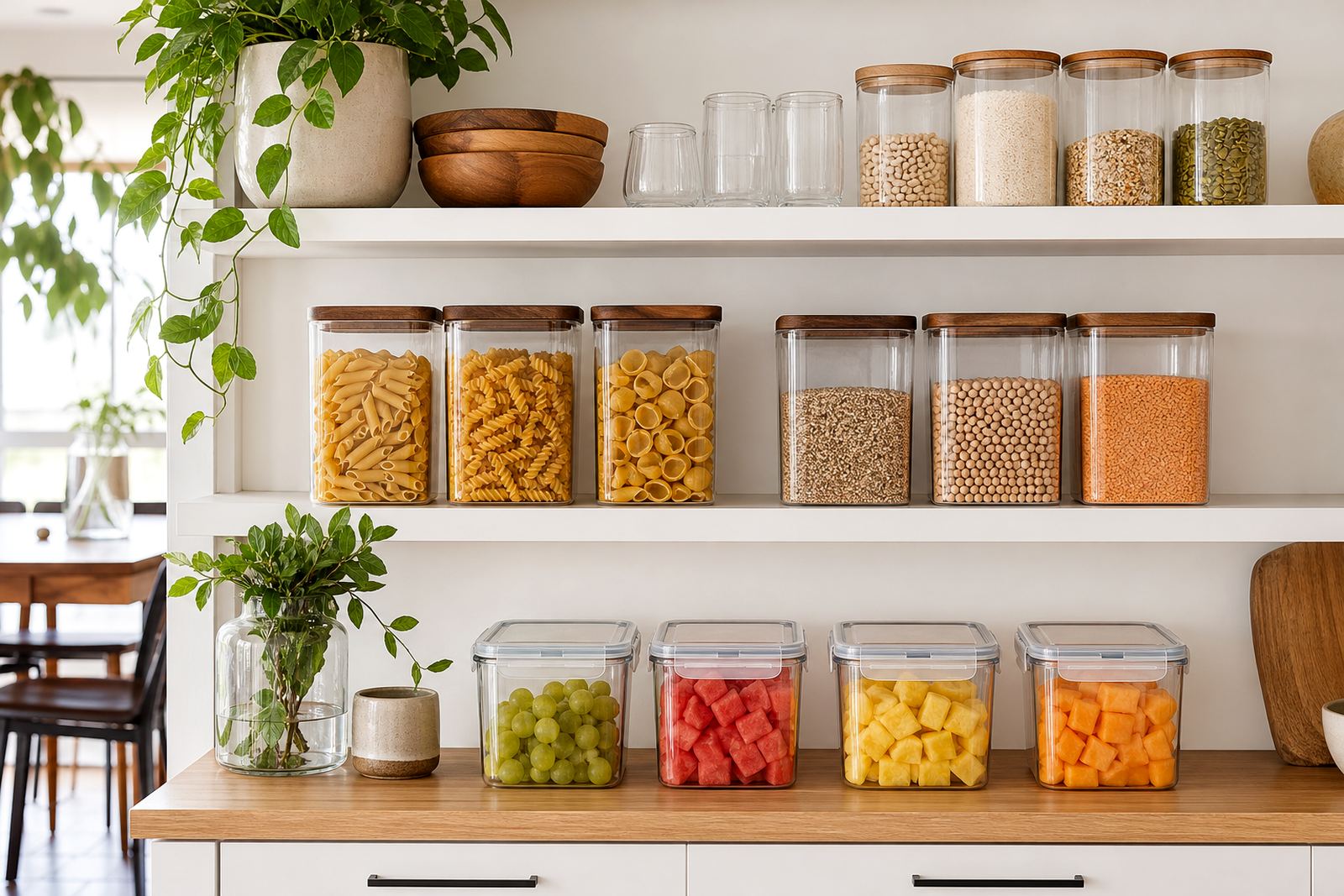
It is also useful for bulk buyers who portion ingredients after a shop. If you decant rice, flour, cereal or coffee into clear containers, you can see what is running low at a glance. That saves time when you are planning weekly meals and makes it easier to spot spillage or stale goods before it becomes a waste issue.
Sizes, shapes and storage options
Most food storage sets come in a mix of rectangular and square pieces because they stack neatly in fridges, freezers and pantry shelves. A common set may include 250 ml, 500 ml, 1 litre and 2 litre containers, though larger family packs can go higher. Smaller tubs suit sauces, chopped fruit and meal prep snacks, while bigger units work well for cooked pasta, stews, salad leaves and dry goods.
- Small containers for chutney, nuts, herbs and lunchbox bits
- Medium containers for leftovers, meal prep portions and chopped produce
- Large containers for cereals, maize meal, flour, rice and bulk snacks
- Lid types that may include clip lock, snap seal or twist seal styles
When comparing options, check whether the set nests inside itself when empty. That saves space in small kitchens and is especially handy in flats, staff kitchens or shared households where cupboard space is tight. A clear container also helps when you need to check stock without opening every lid.
Where this set suits best in the home
This kind of storage works in almost any room where food needs to stay covered. In the kitchen, it helps with leftovers after supper and keeps ingredients organised near the stove or prep area. In a scullery or laundry room cupboard, it can hold packets, baking supplies and dry groceries away from moisture. In homes near the coast, sealed storage is useful because humidity can affect crisp foods faster than many people expect.
It also suits office kitchens, guest houses and small catering spaces where portions need to be separated before service. If you are packing school lunches or prepping food for a long work day, a good set makes the fridge easier to read and cuts down on last minute sorting. A slight bonus is that the same set can move from fridge to bag to shelf without needing extra packaging.
Installation, power and gas needs
No installation is needed for a food storage set, and there are no power or gas requirements. You do not need a plumber, electrician or fitted connection. Once the containers arrive, rinse them, dry them and start using them straight away. That makes them a simple purchase for households, renters and small businesses that want an organised storage option without any setup work.
If you plan to use the containers for freezer storage, make sure your freezer shelf space can take the height of the chosen pieces. For bulk pantry use, measure the shelf depth first so you know whether a 1 litre or 2 litre container will fit front to back. It sounds basic, but a few millimetres can be the differance between a neat shelf and one that never closes properly.
Care, cleaning and everyday servicing
Most food storage sets are designed for routine washing with warm water and mild dish soap. If the lids have a sealing ring or clip mechanism, check those parts now and then for crumbs or moisture so the closure keeps working properly. Dry each piece fully before stacking it away, because trapped water can leave a smell or cloud the plastic over time.
- Wash before first use and after storing oily or strongly scented foods
- Let lids and bases dry separately to avoid trapped damp
- Do not force clips shut if food is caught on the seal edge
- Replace any warped lid if the seal no longer holds
For households that use containers every day, a quick weekly check helps. Look at the lid fit, the clarity of the container and whether any odour remains after cleaning. Good care keeps the set useful for longer and reduces the need to keep replacing single pieces.
What to check before you order
Before placing an order, check the total number of pieces, the exact litre or millilitre sizes and whether the lids lock tightly enough for transport. If you plan to use the set for soup, curry or sauces, confirm that the seal is suitable for liquids and not only for dry goods. It is also worth checking whether the containers are fridge safe, freezer safe or microwave safe, because not all sets are suited to every use.
Think about your household routine too. A family that cooks in large batches will need bigger pieces, while a person who meal preps for work may prefer a set with several smaller containers. If you store food in a humid area or move groceries between home and a work kitchen, clear stacking pieces usually make life easier. The right choice depends on how you cook, how often you shop and how much shelf room you actually have.
Key facts
| Product type | Food storage container set for home and meal prep use |
|---|---|
| Typical capacity range | 250 ml to 2 litre pieces, with larger sets available |
| Common materials | Food safe plastic, clear container bodies with matching lids |
| Seal type | Clip lock, snap seal or twist seal depending on set |
| Use areas | Fridge, freezer, pantry, lunch bags and cupboard storage |
| Power or gas need | None |