
What Solar Path Lights Do For Your Outdoor Space
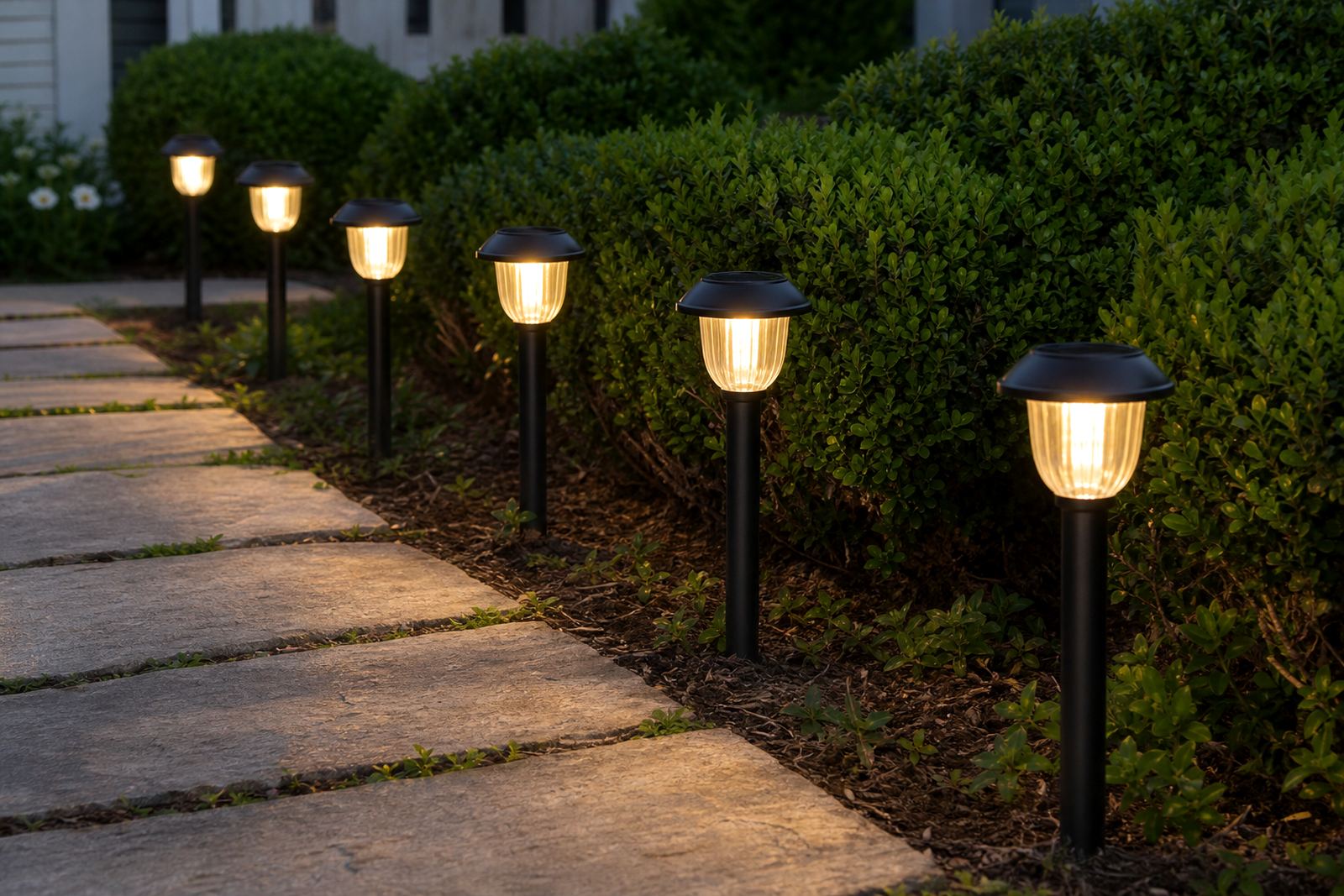
Solar path lights are low outdoor stakes with a light head, a built-in solar panel and a rechargeable battery. During the day the panel collects sunlight, then the light comes on automatically when the sun sets. They are commonly used to guide people along steps, driveways, braai areas and garden paths where a bit of visibility helps prevent trips and missed footing.
For South African homes, they are useful where you want light without the extra wiring, trenching or ongoing power use. That makes them a sensible option for rental properties, sectional title gardens and yards where you do not want to alter the main electrical setup. They also help during load shedding because they do not rely on mains power.
These lights are not meant to flood an entire yard. Their job is to mark edges clearly and give a soft, practical glow. If you need bright security lighting for a gate or parking bay, you would usually pair them with larger outdoor fittings.
Sizes, Finishes And Light Output To Look At
Most solar path lights are sold as single stakes or in sets. Common heights range from about 30 cm to 50 cm overall, with the light head sitting above the ground to catch sun and spread light down onto the path. The spike section is usually designed to push into soil or soft gravel. For paved areas, some buyers place them in planter borders or use stable edging spots rather than trying to mount them into solid concrete.
When checking options, look at the casing material and the lens style. Plastic bodies are lighter and usually more affordable, while metal-effect finishes can suit formal gardens. Clear or frosted lenses change the light spread, with frosted covers giving a softer look at night. Brightness is often listed in lumens, though for path lighting the beam shape and placement matter just as much as the number on the box.
- Set sizes commonly include 2, 4, 6 or 8 lights
- Height is usually between 30 cm and 50 cm
- Light colour is often warm white or cool white
- Charging time is typically 6 to 8 hours of good sun
If your garden gets only morning sun, choose a model with a more efficient panel and use it in areas that still receive some direct light. In winter, shorter daylight hours will reduce runtime, so placement matters more than people often expect.
Where They Work Best In Midrand Homes And Gardens
These lights suit front walkways, side passages, pool edges, stepping stone runs, vegetable beds and patio borders. In Midrand and the wider Gauteng area, they are useful where lawns and paving meet because they help define the edge at night. In Cape Town and Durban, many buyers also look for a weather-resistant body and sealed lens because of coastal air and damp conditions.
They work well in spaces where you want to guide movement rather than light the whole area. For example, a row of path lights can show the route from the kitchen door to the washing line, or from the gate to the front step. They can also make it easier for visitors and delivery drivers to find the entrance after dark.
- Garden paths and stepping stone routes
- Driveway edges and parking approach lines
- Patio borders and braai areas
- Raised beds, shrubs and landscaped corners
If your property has municipal restrictions on extra outdoor wiring, solar path lights are a simpler option because they do not need trenching or a connection to the mains supply. For estates and shared complexes, they are often easier to manage because there is no ongoing cable work and less maintenance pressure on the body corporate.
Installation, Sun Exposure And Power Requirements
Installation is usually simple. Most solar path lights arrive with the stake separate from the head, so you fit the pieces together, turn the unit on if there is a switch, and place it where the panel gets direct sun. Push the spike into firm soil and make sure the light stands upright. If the ground is very hard, water the area lightly first rather than forcing the stake and cracking it.
There is no gas requirement, and there is no mains power connection needed for standard solar path lights. The only thing they need is good sunlight for charging. South African buyers should place them where trees, boundary walls or roof overhangs do not block the panel for most of the day. If a path runs under heavy shade, runtime may be shorter and the light dimmer by late evening.
On first use, give the unit a full day or two in bright sun before judging performance. Many rechargeable batteries need a full charge cycle to perform properly. If the light has a sensor mode, avoid placing it near another bright source such as a porch light because it can affect the dusk-to-dawn function.
Care, Weather Exposure And Routine Servicing
Solar path lights need light maintenance, but they do benefit from regular cleaning. Dust, pollen, coastal salt and garden spray can collect on the panel and reduce charging. Wipe the top surface with a soft damp cloth every few weeks, more often if the area is exposed to dust or sea air. Keep the lens clean too so the beam remains clear at night.
Check that the stake is still firm after heavy rain or lawn work. If the fitting leans over, realign it before the panel starts pointing away from the sun. In colder months or after several cloudy days, the runtime may drop. That is normal. If the battery no longer holds charge after a long period of use, it may need replacement depending on the model.
- Clean the solar panel with a soft cloth, not abrasive pads
- Keep sprinklers from hitting the panel every night
- Store spares in a dry box if you are not using them for a while
- Replace worn batteries when runtime becomes very short
For garden work, trim grass and mulch back from the base so the fitting is not buried. A little routine care keeps the light output steadier and helps the casing last longer in sun and rain. If one light fails in a set, check the switch position and panel first before assuming the battery is the problem.
What To Check Before You Place Your Order
Before ordering, check the number of lights you need and the route they must cover. Measure the length of the path in metres and think about spacing. A common approach is one light every 1 to 2 metres, depending on how bright the garden is and how much guidance you want. If you are lighting a longer driveway or a wide border, a larger set usually gives a neater result.
Also check the following details so the product suits your space and climate:
- Battery type and whether it is rechargeable
- Expected runtime after a full charge
- Weather resistance for rain and outdoor dust
- Ground type, especially soil, gravel or paving edges
- Light colour, panel size and overall height
- Whether the set includes stakes, fixings or batteries
If you are buying for a home near the coast, look for a finish that can handle humidity and regular cleaning. For a shaded property, choose a unit that works well in partial sun, but keep in mind that no solar light performs at its best without decent daylight. The right choice is usually the one that matches your garden layout, not just the lowest price.
Buy-This Deals serves shoppers across Midrand, Johannesburg, Pretoria, Cape Town, Durban, Gqeberha and surrounding areas with courier delivery nationwide. If you need help with product selection, a bulk order for multiple units, or gift wrapping for a home mover, our team can help through the enquiry form on the contact page.
Key facts
| Product type | Outdoor solar path light stake |
|---|---|
| Typical height | 30 cm to 50 cm |
| Power source | Solar charged rechargeable battery |
| Lighting mode | Automatic dusk to dawn operation |
| Common finish options | Plastic body, metal-effect body, frosted or clear lens |
| Weather use | Outdoor use for gardens, paths and driveways |