
Start With Where You Will Use It
Before you compare specs, decide where the projector will sit and what you want to watch. A bedroom, lounge, braai area or small meeting room all need a slightly different setup. If the room has a lot of daylight, you will need more brightness. If you plan to move it between rooms or take it to a family visit, size and weight matter more.
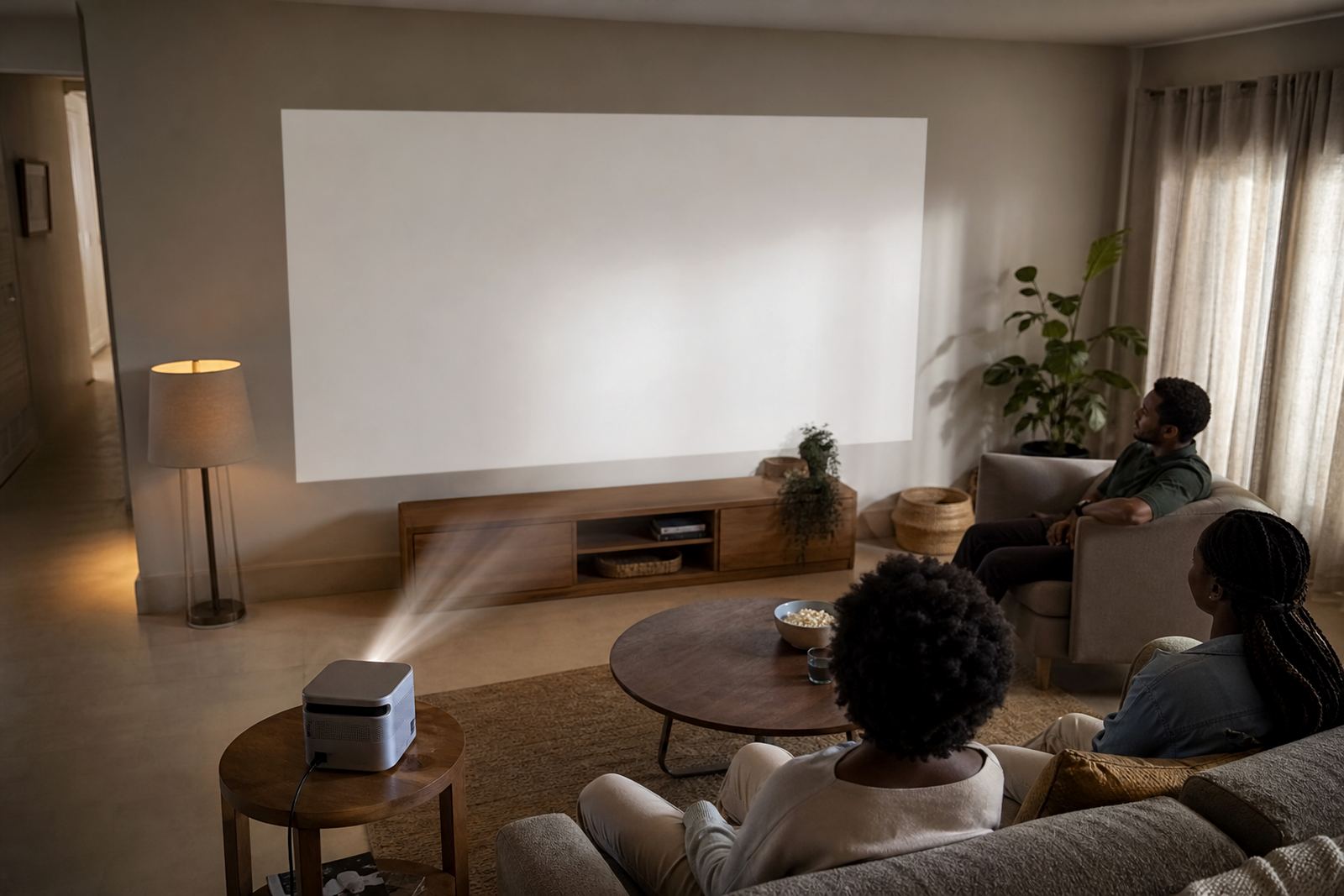
Think about wall space too. A plain white wall can work for casual viewing, but a pull-down screen or fixed screen usually gives a cleaner picture. Measure the throw distance from the projector spot to the wall or screen so you do not end up with an image that is too small or too large for the room.
- Measure the distance from the lens position to the screen area
- Check if the room gets direct sun in the afternoon
- Confirm where power sockets are placed
- Make sure there is enough space for ventilation around the unit
Brightness And Picture Quality You Can Actually Use
Brightness is one of the main things to check. For a dim room at night, a lower brightness unit may be fine. For a lounge with some light on or a room with open curtains, look for stronger output. Do not rely on pictures alone, because a bright image in a dark room can still look dull when there is daylight coming in.
Resolution also affects the viewing experience. A sharper image is helpful for movies, sport and text, while basic viewing can work with a simpler setup. Contrast matters as well, since it helps dark scenes show more detail. If the projector will mainly be used for films and series, aim for a picture that feels clear from the usual seating distance, not just up close.
For practical home use, it is worth checking how the image looks at the size you plan to use most. A unit that looks good at 80 inches might struggle at 120 inches, depending on the room and light.
Portability Features That Make Daily Use Easier
A portable projector should be easy to carry, quick to place and simple to pack away. Weight is important if you will move it often, but so is the shape of the unit. A compact model with a solid handle or a neat carry bag is easier to live with than a bulky one that needs extra space on every shelf.
Battery power can be useful during load-shedding or when you want to use the projector away from a plug point. Some units run for a short viewing session on battery alone, while others still need mains power for longer use. If you are planning outdoor movie nights in Gauteng or a garden setup in Cape Town, battery life and cooling become much more important.
- Check the total weight if you will move it between rooms
- Look at battery runtime if power cuts are a concern
- See whether the unit has built-in speakers for quick setup
- Choose a model that is easy to store in a cupboard or bag
Inputs, Sound And Streaming Options
Connection options decide how easy the projector is to use with your other devices. If you want to play content from a media box, laptop or console, check that the ports suit your equipment. Wireless screen sharing can be handy, but a cable is often the faster choice when you want less faff and fewer dropouts.
Sound is another point people miss. Small built-in speakers may be enough for a bedroom, but a larger room often needs an external speaker or soundbar. If the projector has audio output, that gives you more flexibility later. For families who want quick movie nights without setting up extra gear, simple sound and easy connection options can save time every week.
If the unit supports apps directly, that can reduce the number of devices you need. Just check whether the app setup is straightforward and whether it will still work well on your home network.
Room Setup Tips For A Better Picture
Good placement makes a bigger difference than people expect. Keep the projector level and centred with the screen or wall where possible. If it sits too high or too low, you may spend too much time correcting the image. A small stand, coffee table or shelf can work, but make sure the unit has air flow around it so it does not overheat.
For the clearest image, reduce room light as much as possible. Thick curtains help in sunny rooms, especially in places with strong afternoon light. In a lounge or flat, darker walls around the screen area can also improve the feel of the picture. If you use the projector in a coastal town like Gqeberha or Durban, keep an eye on humidity and store the unit in a dry place when it is not in use.
- Place the projector on a stable surface
- Keep vents clear so the fan can work properly
- Use curtains or blinds to control daylight
- Test the image before guests arrive
How To Compare Models Before You Buy
When you are deciding, compare the practical details side by side rather than focusing on one spec alone. A unit with excellent resolution but weak brightness may not suit your room. A very small projector with a short battery life may be easy to carry, but not ideal for a two hour film. Balance matters.
It helps to list your must-haves before you place an order. For example: enough brightness for evening use, a port for your main device, easy portability and a setup that works in your available room. If you are buying for gift giving or corporate gifting, a simple model with broad compatibility usually makes the most sense. Buy-This Deals can also help with product sourcing, wishlist support and delivery queries if you are not sure which option fits best.
A final check is after-sales support. Make sure you know how returns, order tracking and secure checkout work before you confirm the purchase. That gives you peace of mind if the projector is not quite right for your space.