
Start with the way your laundry is really done
The best laundry setup begins with your routine, not the product label. If washing happens twice a week, you need a different system from a household that runs smaller loads every evening. In Midrand flats, family homes in Pretoria, and coastal homes in Durban, the main aim is the same: keep dirty washing contained, sorted and ready to move when load-shedding, rain or a busy weekday gets in the way.
Look at three things before you choose anything: how many people are in the home, where the laundry is kept, and whether your washing area is near a bathroom, balcony or scullery. A small space calls for slim baskets, stackable sorters or a foldable bag. A larger home may need a trolley-style sorter, more than one hamper, and a drying aid for delicates. If you sort on the day, add more compartments. If you sort as you go, one strong basket may be enough.
Compare basket types for speed and space
Laundry baskets do more than carry clothes. They keep the washing area neat, help separate clean from dirty items, and save time when it is time to move loads. Plastic baskets are easy to wipe down and suit humid coastal conditions where damp clothing can sit for a few hours. Woven or fabric-lined options look softer in bedrooms or dressing areas, but they need a bit more care if they are used near wet towels or sports kit.
For tight spaces, measure the gap beside a washing machine or the bottom of a cupboard before buying. A basket that fits 45 to 50 cm wide can be easier to manage than a large open tub that takes over the passage. If you carry washing up stairs or across a yard, choose handles that feel firm in the hand and do not flex under weight. A smaller basket used twice is often better than one heavy load that spills on the way to the line.
- Open basket: quick to use, good for daily family washing
- Lidded basket: keeps odours and sightlines under control
- Foldable basket: useful in apartments and guest rooms
- Ventilated basket: better for damp towels and activewear
Choose a sorter that matches your household habits
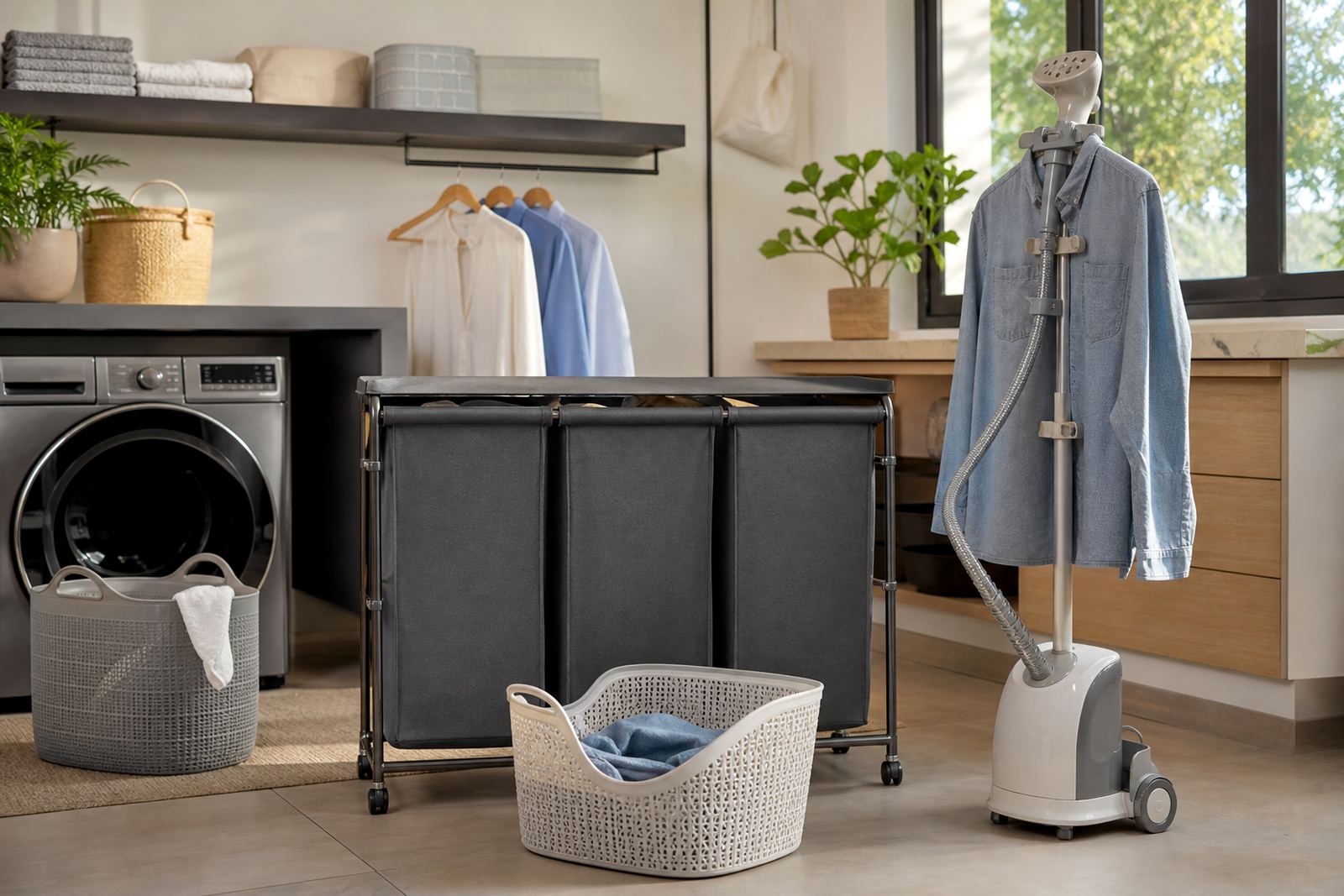
Sorters save time because they do the first job before the machine starts. A two-bin sorter works well for light and dark loads. A three-bin sorter can separate whites, colours and delicates, which is useful if you wash school uniforms, office shirts and gym gear in the same week. If the household is large, label each section so the whole family can help. A sorter with wheels is handy when the laundry area is far from the bedrooms or when you do a full clean-out every Saturday.
For South African homes with limited space, think vertically. Narrow sorters with a small footprint can sit beside a bathroom cupboard or in a laundry nook. If you live in a coastal town, check that the frame and fittings can cope with moisture and salty air. It is worth choosing materials that clean easily with a damp cloth, especially if the sorter will sit near wet shoes, school bags or pet blankets. A good sorter should make the job faster, not add another thing to clean.
- Two compartments: simple weeknight sorting
- Three compartments: family washing with mixed fabrics
- Rolling sorter: easy movement between rooms and washing area
- Wall or hook hanging bags: best for very small spaces
Add care tools that protect fabrics and save time
Care tools are small, but they make a big difference to how long clothes last. Mesh wash bags help protect hosiery, baby items and delicate tops from snagging in the drum. A folding drying rack is useful when outdoor drying is not possible or when rain comes in during the afternoon. If power cuts interrupt your routine, a rack that fits inside a spare room or under a covered patio helps you keep moving without stuffing damp laundry into chairs and railings.
Clothes pegs, lint removers and stain brushes are also worth keeping together in one container. That way you are not hunting for them when a shirt needs quick attention before work. In homes near the coast, a peg basket with drainage holes can stop rust marks and sticky buildup. In drier inland areas, check that the rack folds flat and stores easily, because unused gear can fill up a small scullery fast. A few well chosen tools often do more than a shelf full of extras.
Build a weekly laundry station that is easy to keep tidy
A simple laundry station usually works better than a complicated setup. Place the basket or sorter where clothes naturally come off, such as near the bedroom entrance or bathroom door. Keep your most used care tools in one tote or tray so they can move with the washing, hanging and folding steps. If several people share the space, make the layout obvious: one place for dirty clothes, one place for clean items, one place for care tools.
Try this weekly setup checklist:
- One basket or sorter in the bedroom or passage
- One smaller container for socks, delicates and repair items
- One drying rack or line space that clears quickly
- One box for pegs, stain tools and mesh bags
- One storage spot for clean, folded washing waiting to be put away
Once the station is set up, keep it uncluttered. If an item does not help you sort, wash, dry or store, it probably belongs elsewhere. A tidy system makes the weekly load feel smaller, even when the washing pile is not.
Match your choices to local homes and delivery needs
Homes in Johannesburg, Pretoria and the East Rand often need practical storage that fits busy schedules and mixed household sizes. In Cape Town and Gqeberha, moisture and wind can affect how you dry and store laundry items, so breathable materials and sturdy frames are worth checking. In Durban and other humid areas, wipeable surfaces and ventilation matter because damp clothes and baskets can hold smell if they are left shut too long.
When you are choosing laundry solutions online, check the product size, compartment layout and care notes before placing the order. If you need help for a home, gift or small business purchase, use the enquiry form on the contact page to ask about stock, delivery timing or bulk order help. It also helps when you are buying for corporate gifting or for several addresses at once. A clear list of what you need now and what can wait saves time and keeps the weekly washing plan on track.