
Start with one fixed charging point
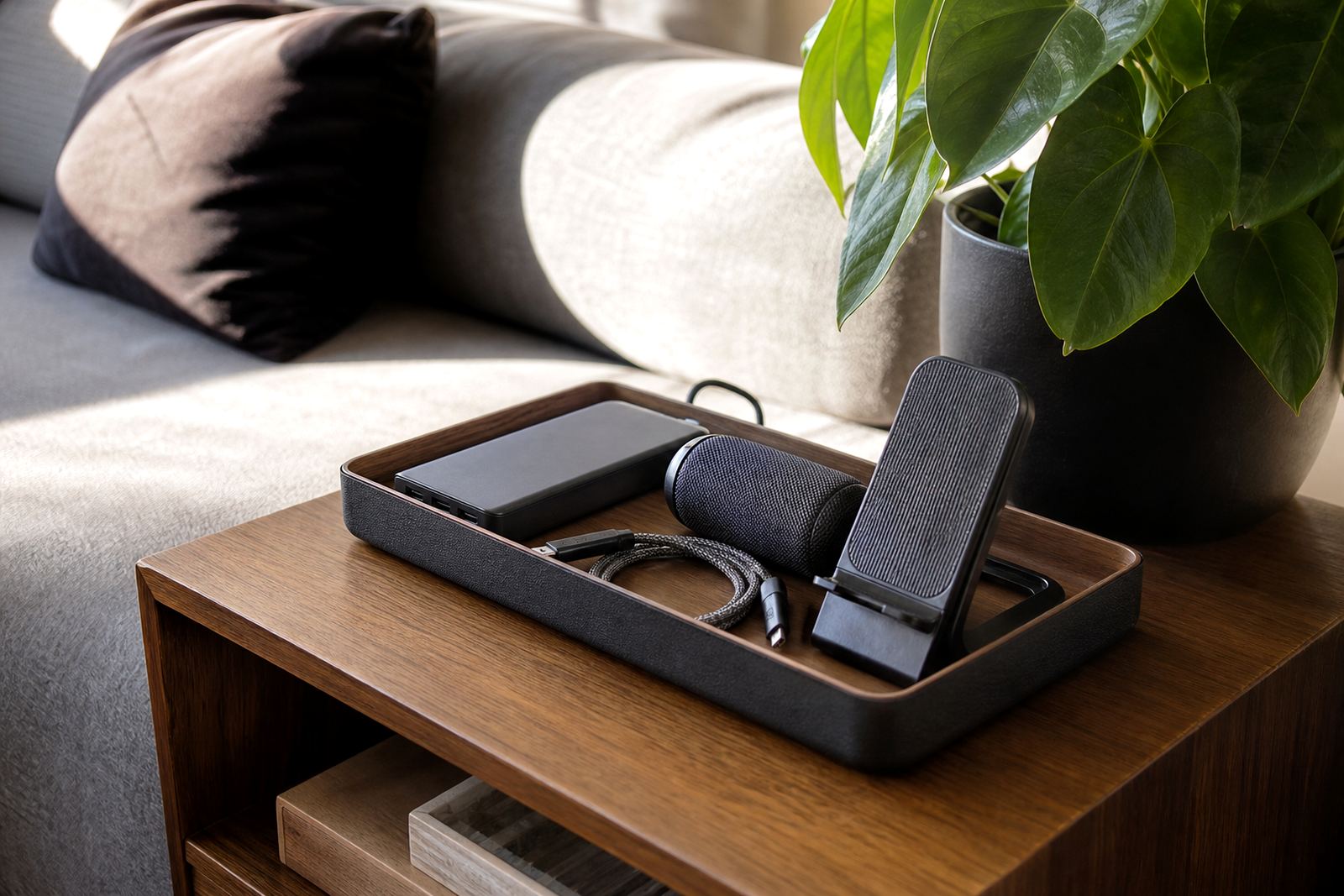
Every home needs one spot where phones, tablets, watches and portable speakers can charge without trailing cords across the room. A narrow shelf, a side table or the end of a kitchen counter can work well if it is close to a plug point and away from water, heat and busy foot traffic. In many Midrand homes, the best place is a passage nook or a spot near the lounge where family members already drop keys and bags.
Keep the area simple. One multi-plug unit with surge protection, a small tray for adapters and a cable clip set will do more than a basket full of loose leads. If load-shedding is a regular part of your week, a charging corner also helps you top up power banks and portable lights in one place before the next outage.
Use containers that stop small items disappearing
Earbuds, memory cards, spare charging heads and remote controls are easy to lose. Use shallow containers so you can see what is inside at a glance. Clear jars, divided trays and small boxes work well because they stop tiny accessories from sliding under furniture or vanishing into kitchen drawers. If you have children at home, a lidded box can keep items safer than an open dish.
- Use one tray for chargers and cable ends
- Use a second container for headphones and small speakers accessories
- Keep spare batteries in a marked box, away from coins and keys
- Label each section by item type so everyone knows where things go
When a storage system is clear, people are more likely to return items properly. That saves time and reduces the usual last minute rush when a phone is flat and the right cable cannot be found.
Tame the cable mess before it takes over
Cables are often the biggest source of clutter. A neat gadget corner depends on shortening what you can and securing what you cannot. Use cable ties, clips or Velcro straps to keep leads grouped by device. Where a cable is much too long, coil the extra length and fasten it behind the furniture or along the back edge of a shelf. Avoid tight bends near the plug ends because that can wear them out faster.
For homes with more than one user, name each cable with a small tag or colour marker. It sounds small, but it stops family members from borrowing the wrong lead and leaving the rest in a tangle. If your corner sits near a window, keep cables out of direct sun because heat can harden some coverings over time.
Choose furniture that fits the room not the other way round
A gadget corner should suit the room size. In a compact flat, a wall shelf or floating ledge can hold a speaker, a charging pad and a small box without taking floor space. In a larger home, a narrow console table in the lounge or a kitchen trolley can create a better organised zone. The aim is not to fill the corner, but to give each item a clear place.
Think about the daily route through the room. If people pass through with shopping bags, school bags or laundry baskets, the corner should not block movement. In apartments with shared walls, a speaker shelf on a sturdy surface may also help reduce vibration and noise complaints from neighbours.
- Choose smooth surfaces that wipe clean easily
- Leave enough space for ventilation around chargers and speakers
- Pick a height that children can reach if they need to charge a device
- Avoid placing gear directly on damp floors or near sink splashes
Make the corner practical for South African conditions
South African homes deal with power cuts, summer heat and coastal humidity, so a gadget corner should be ready for those conditions. In Durban or Gqeberha, moisture can be an issue if devices are stored too close to open windows or unsealed cupboards. In hotter inland areas, a corner near an oven or sunny window can become too warm for batteries and chargers. Keep the area cool, dry and easy to clean.
If your home uses backup power, store a charged power bank in the same corner and check it on a set day each week. Keep a printed note nearby with the names of devices that need regular charging, especially for school tablets, work phones and portable speakers used on weekends. A little routine prevents the scramble that often comes before an early start or a family braai.
Keep it tidy with a weekly reset
Even the neatest corner needs a short reset once a week. Dust the shelf, check for damaged cables and remove items that no longer work. If a speaker is not used often, store it upright in its own box rather than letting it sit under papers or beside a half used charger. This is also the best time to sort out mixed items that drift into the wrong place.
A weekly reset takes only a few minutes, but it keeps the whole system working. The corner stays useful instead of turning into another dumping spot. For households with students, remote workers or several phones in use, that small routine can save a lot of frustration and help everyone start the week with fully charged gear.