

Start With the Job, Not the Label
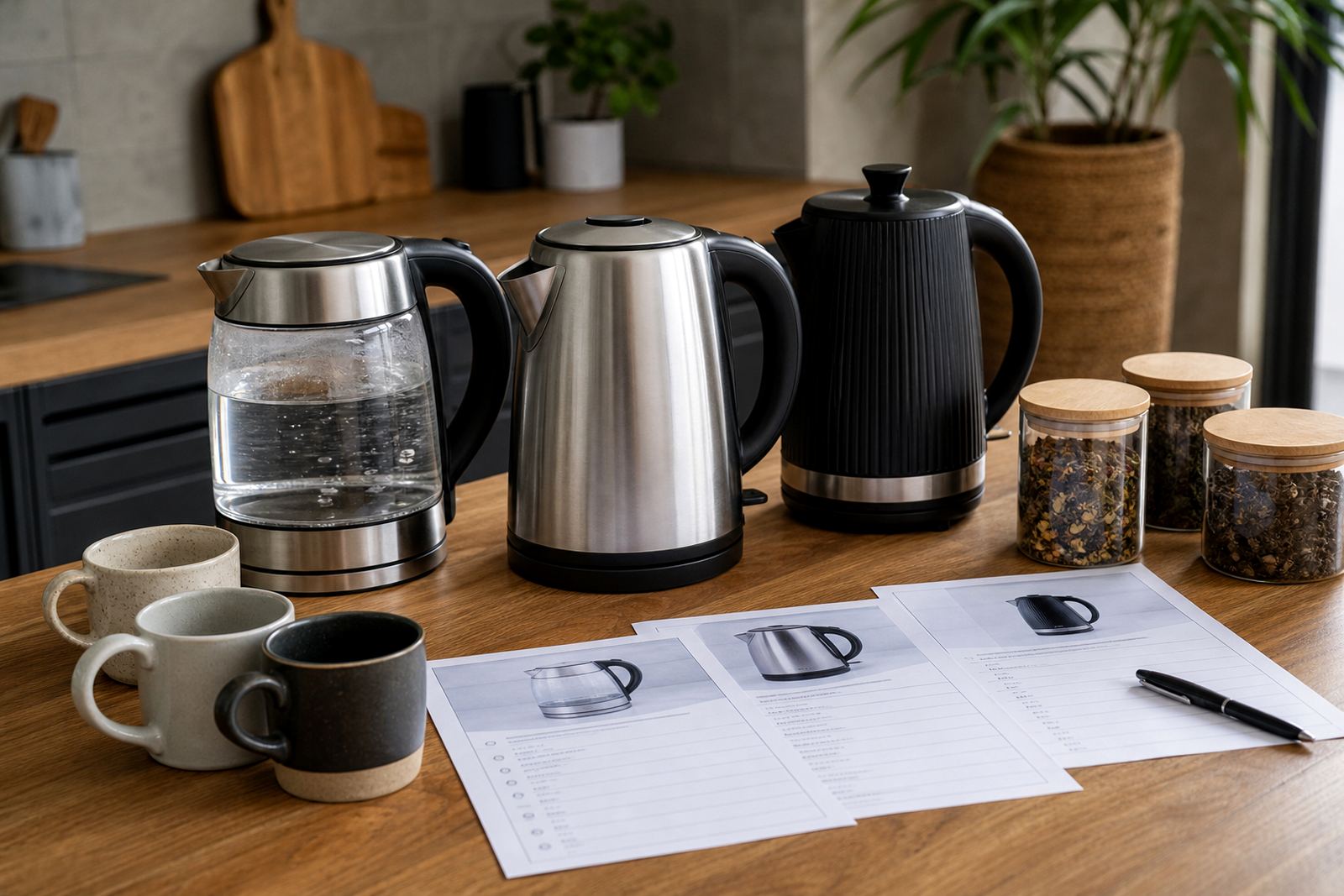
Before you compare prices, decide what the appliance must actually do in your home. A kettle for a quick cup in the morning is different from one that boils water all day for a family, and a compact blender for sauces is not the same as a unit for ice and frozen fruit. When you know the task, you can ignore features you will never use and focus on the parts that matter.
Many shoppers overspend because they buy for a future need that never arrives. In a Midrand flat or townhouse, counter space is often tight, so a smaller unit that stores easily can be better than a large model with extras you will not use. If the appliance will sit on the counter, measure the space first and check plug placement too.
Compare the Features That Affect Daily Use
Useful features are the ones that change how the appliance performs every day. Look at capacity, power use, speed settings, heat control, safety features and how easy it is to clean. For example, removable parts save time after dinner, while a clear water level window on a kettle helps avoid waste.
- Capacity: Choose enough for your household, but not so much that you heat or power more than you need.
- Power draw: Check whether the appliance is likely to strain a backup system or run up your electricity bill.
- Controls: Simple dials and switches are often easier than extra modes you may never use.
- Cleaning: Smooth surfaces, removable trays and parts that rinse well make upkeep easier.
- Safety: Auto shut-off, cool-touch handles and stable bases matter in busy kitchens.
Do not pay extra for functions that only look good on paper. A model with a dozen settings can be useful, but if you use only two of them, you are paying for features that sit idle.
Check Power Use and Load-Shedding Practicality
In South Africa, power use matters. During load-shedding, many homes rely on inverters, batteries or gas for part of the day, so a smaller appliance that uses less power can be the smarter choice. Even if you are not off-grid, lower consumption helps over time, especially for items used often like kettles, irons and toasters.
Look for the wattage on the box or product details. Higher wattage usually means faster heating or stronger performance, but it can also mean more strain on your setup. If you live in a complex or sectional title building with tighter rules on generators or external setups, a low-power appliance may be far easier to use every day.
- Check whether the appliance has an automatic cut-off or standby control.
- Ask if it works well on a basic inverter or only on full mains power.
- Think about how often it will be used each week, not just how nice it looks.
Materials and Build Quality Matter More Than Extras
Good build quality can save money because the appliance lasts longer and needs fewer repairs or replacements. Stainless steel, thick plastic, solid hinges and well-fitted lids usually hold up better than thin, flimsy parts. If a product feels too light for its size, it may not be the best long term buy.
Also consider how it handles local conditions. In coastal areas such as Cape Town and Gqeberha, humidity can affect metal parts if they are not properly finished. In Gauteng homes, dust and constant daily use can wear cheap buttons and seals faster than expected. A slightly higher upfront spend can be worthwhile if the appliance is built for regular use.
Look for practical details like non-slip feet, sturdy lids, heat-resistant handles and parts that lock into place properly. These small things often matter more than a fancy finish or extra light on the front.
How to Spot Real Value in a Daily Deal
A real saving is not just a lower price tag. It is a lower cost for the useful life of the appliance. Compare the deal price with the features you need, then ask whether the item will still be useful in six months or two years. If you are buying for a gift, think about whether the person can use it easily without a steep learning curve.
Useful value checks include:
- Does the size suit the household, or is it too big for a small kitchen?
- Are spare parts or simple replacements likely to be available later?
- Will the appliance still be easy to store after first use?
- Is the cleaning process simple enough for everyday life?
When a deal looks very low, ask what has been left out. Sometimes a cheaper appliance lacks a good seal, a proper safety cut-off or a strong motor. Those missing parts can cost more over time than a better made item bought once.
A Midrand Example for Households That Buy Smart
Take a Midrand family that wants a small breakfast setup for school mornings and early work starts. They may need a kettle, toaster and compact blender, but not the largest versions of each. In that case, a smaller kettle with quick boil performance and a toaster with wider slots may be more useful than a premium model with extra presets that never get used.
If the home is in a complex with limited kitchen space, it also helps to choose appliances that stack or store neatly. A clean counter makes a bigger difference than many people expect. The family may save more by choosing mid-range items that are easy to maintain than by buying cheaper products that need replacing soon after purchase.
That approach works for many South African homes, whether the delivery is going to Johannesburg, Pretoria, Durban, Cape Town or further afield. The aim is simple: buy what fits your routine, your space and your power setup, then use it fully.
Final Checks Before You Place the Order
Before you confirm your order, read the item details one more time and check the size, power rating, cleaning instructions and return terms. If you are buying several items together, it is worth checking whether any of them need special handling or separate storage when they arrive. Good habits here can spare you a lot of hassle later.
It also helps to keep a short list of what you actually need in the home. That way, if a deal pops up on a product that looks good but does not solve a real problem, you can pass on it without second-guessing yourself. Smart buying is not about chasing every special. It is about choosing tools that make daily life easier, one useful item at a time.