
Start With The Surfaces In Your Home
Before you add anything to your trolley, look at what you clean most often. A tiled flat in Midrand needs different tools from a family house with laminate floors, a balcony, and a bit of dust coming in after a windy day. If you live near the coast in places like Durban or Gqeberha, you may also deal with damp air, salty residue and windows that need more regular wiping.
Make a quick room-by-room list: kitchen floors, bathroom grout, glass doors, mirrors, skirtings, carport paving and any outdoor areas. That tells you whether you need a flat mop, a bucket and wringer, a telescopic duster, squeegees or a set of microfibre cloths. It also helps you avoid buying duplicate tools that do the same job.
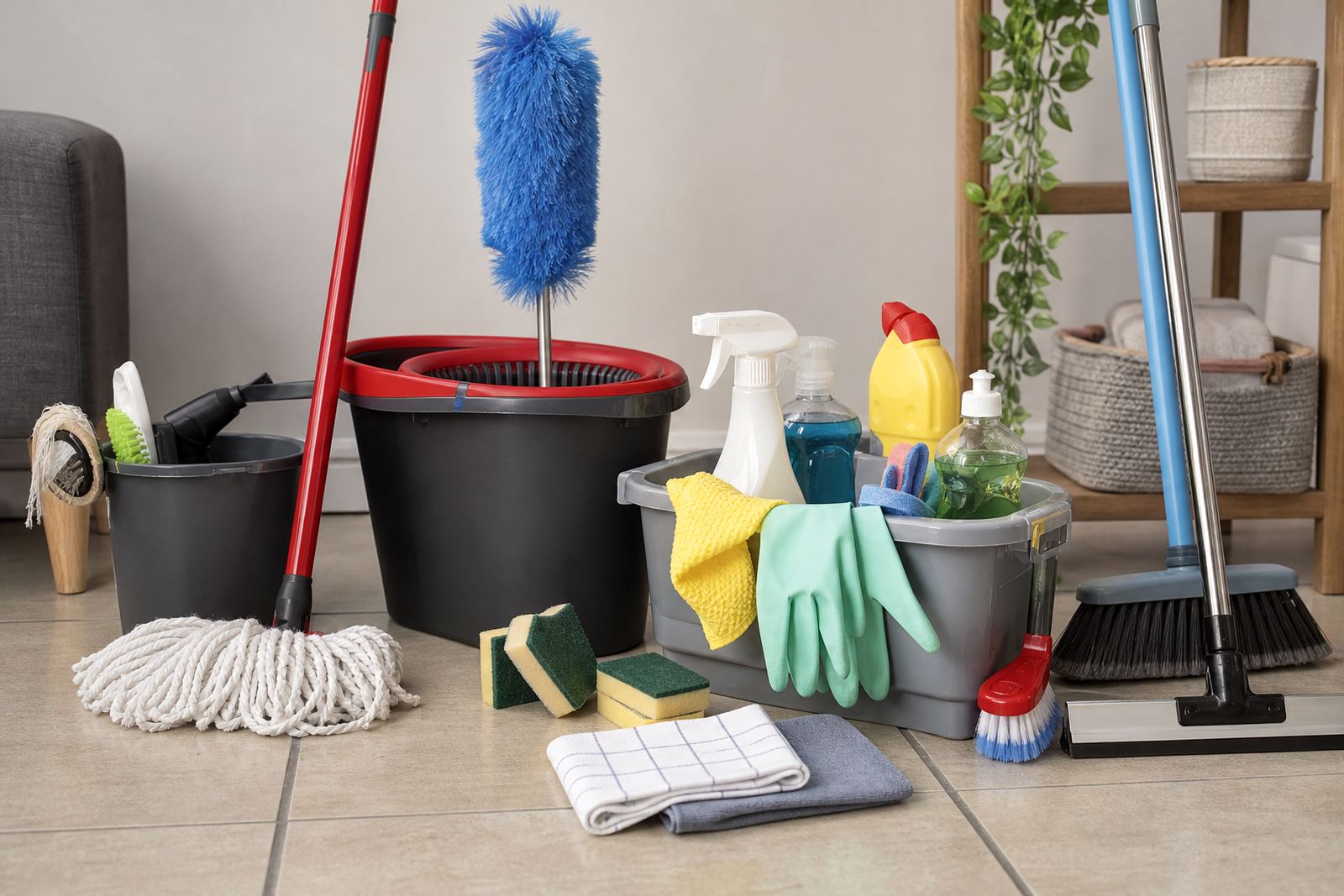
- Hard floors: microfibre mop, soft broom, dustpan and bucket
- Windows and glass: squeegee, lint-free cloths, extension handle
- Bathroom cleaning: stiff brush, grout brush, handheld scrubber
- Daily dusting: duster, reusable cloths, small hand brush
Choose Tools That Fit Your Cleaning Style
If you prefer quick clean-ups during the week, pick tools that are light and easy to rinse. A spray mop or flat mop works well for tiled areas and laminated floors, especially when you want a fast sweep after supper or before guests arrive. For homes with pets, a rubber broom or a microfibre broom can help gather hair better than a standard broom.
For deeper weekend cleaning, a fuller set makes sense. Look for a sturdy bucket, a wringer, scrub brushes in different sizes and cloths that can handle counters, taps and cupboard doors. If you are cleaning up after children, a smaller handheld brush can help with crumbs, sticky patches and bathroom corners. One good rule is to buy tools that are simple to wash and dry, because damp cleaning gear stored in a closed cupboard can start smelling unpleasant, especially in humid weather.
- Quick daily routine: mop, broom, dustpan, spray bottle, 3 to 5 cloths
- Weekly deep clean: scrubbing brush, grout brush, bucket, wringer, squeegee
- Small-space setup: foldable mop, compact caddy, hanging hooks
- Busy household: extra cloths, refillable spray bottle, spare mop head
Check Materials, Handles And Refill Parts
Good cleaning tools should feel comfortable in the hand and hold up to regular use. Check handle length first. A handle that is too short can strain your back, while one that is too long may feel awkward in smaller rooms. Adjustable handles are useful if different people in the home do the cleaning. For taller ceilings, windows or outdoor walls, an extendable handle can save time and a ladder trip.
Also look at the working part of the tool. Microfibre pads are useful for dust and light dirt, while firmer bristles suit grout lines and stubborn marks. If a mop head or brush can be replaced, that is often better value over time. You should also think about storage. Some tools hang neatly on a wall, while others need a narrow cupboard or a laundry shelf. In many South African homes, space is tight, so buying compact gear can make daily cleaning less of a faff.
- Handle length should suit the tallest person using it
- Replaceable heads can lower long-term costs
- Washable pads are handy when you clean often
- Hanging loops and slim handles help with storage
Match Tools To Load-Shedding And Water Saving
In South Africa, cleaning plans often need to work around load-shedding and water use. When the power is off, you may prefer manual tools that do not rely on charging. A simple mop, broom, dustpan and cloth set will still get the job done. If your area has water restrictions or you are just trying to keep usage down, choose tools that need only a light rinse instead of a big bucket of water.
Microfibre cloths are useful because they pick up dust and marks with less water than old-style rags. Spray bottles can help you control how much liquid you use on mirrors, counters and cupboards. For stubborn dirt, pre-soaking a cloth or brush can be more efficient than scrubbing harder. It is worth keeping a small cleaning caddy ready so you can move from room to room without hunting for supplies.
- Keep one manual kit for power cuts
- Use spray bottles for controlled application
- Choose cloths that dry quickly between uses
- Store a backup mop head or extra pads for busy weeks
Buy For The Rooms You Clean Most Often
Different rooms need different tools, and that is where many people overspend. The kitchen often needs cloths, a small brush and a non-scratch scrubber for sinks and counters. Bathrooms call for a stiff brush, grout tool and a dedicated cloth set so you do not mix jobs. Living rooms usually need dusting tools, a broom for corners and a vacuum-friendly attachment if you already use one. Bedrooms need light dusting, quick floor cleaning and sometimes storage-friendly items that can sit in a cupboard without taking up much room.
If you are buying cleaning tools for a new home, begin with the basics and add more only when a gap shows up. That way you build a kit that suits your actual routine instead of a long list of items that stay unused. It also makes budgeting easier, especially if you are furnishing a home and trying to keep track of every Rand.
- Kitchen: cloths, small scrubber, sponge, bottle brush
- Bathroom: grout brush, toilet brush, non-scratch pad, squeegee
- Floors: broom, dustpan, mop, bucket
- Glass and mirrors: lint-free cloths, squeegee, spray bottle
Simple Checklist Before You Order
Before you place an order, check that each item solves a clear job in your home. Ask yourself whether the tool is for daily wiping, weekly scrubbing or occasional deep cleaning. If you have a balcony, workshop, garage or courtyard, add one or two outdoor items too. It is also worth considering whether the tool is easy to replace later, because that keeps your cleaning routine steady when wear and tear catches up.
Use this final checklist to narrow things down:
- Does it suit your floor type, windows or surfaces?
- Is the handle length comfortable for regular use?
- Can the cloth, pad or head be washed or replaced?
- Will it store neatly in your cupboard or laundry area?
- Can it work during load-shedding or when water is limited?
- Does it help with the rooms you actually clean most often?
Once you have those answers, buying cleaning tools becomes much simpler. You end up with practical items that fit your home, your schedule and the way South Africans really live, with less guesswork and fewer wasted purchases.