
Start With How Much Water You Boil Each Day
The first thing to check is capacity. A single person or couple may be fine with 1 litre to 1.2 litres, while a family of four often does better with 1.7 litres or more. If you make tea, instant coffee, oats and soup through the day, a larger kettle saves repeat boils and helps during load-shedding when every cycle counts.
Think about how the kettle will be used in your kitchen. In a busy Midrand home, one person might only need a quick cup before work, while a household in Pretoria may have school breakfasts, visitors and evening tea all coming from the same counter. Bigger is not always better though, because a heavy kettle filled to the top can be awkward to lift when the water is hot.
- 1.0 to 1.2 litres: light use, small households, office corners
- 1.5 to 1.7 litres: most families and shared kitchens
- Above 1.7 litres: frequent tea rounds or bulk boiling
- Check the minimum fill mark so you do not waste power on half-empty boils
Choose A Finish That Suits Your Kitchen And Climate
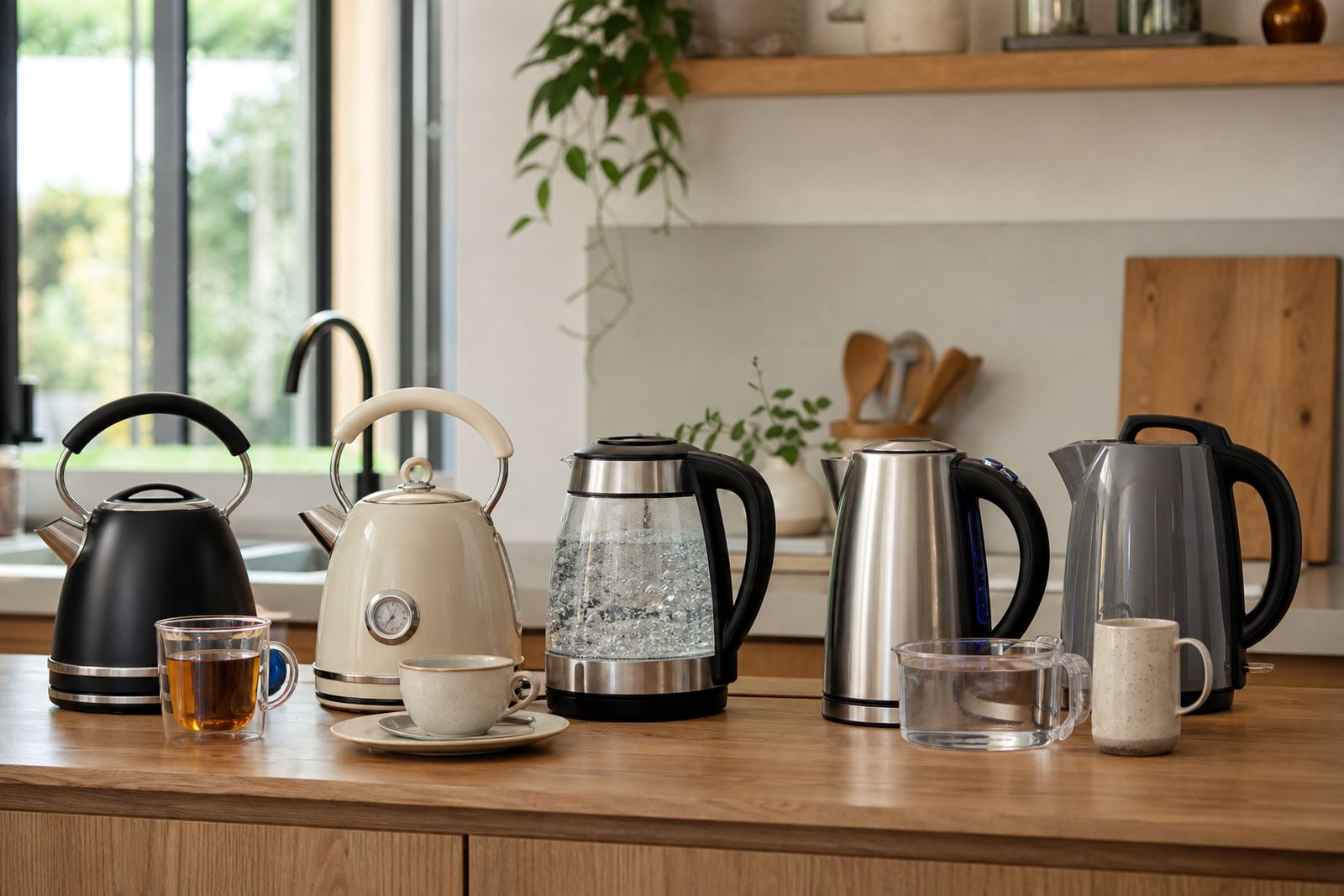
The outer finish changes how a kettle looks and how it ages. Stainless steel is easy to wipe down and suits modern kitchens, while plastic can be lighter and cooler to the touch. Glass models let you see the water level at a glance, but they can show limescale sooner in areas with hard water. If you live near the coast, keep an eye on fittings and bases that may be exposed to humidity.
For South African homes, durability matters because the kettle is often used several times a day. A matte finish can hide fingerprints better than a shiny one, especially if the kettle sits near a prep area or gets moved often. If your counter gets crowded with jars, air fryers or bread bins, a neutral colour usually looks tidier than something bright that dominates the space.
- Stainless steel: strong, neat, easy to clean
- Plastic: lighter, often cooler externally
- Glass: good visibility, but needs more regular cleaning
- Matte finishes: better at hiding smudges and water spots
Check Handle Shape Before You Look At Extras
Handle comfort makes a bigger difference than most people expect. A kettle can have the right capacity and still feel awkward if the handle is too thin, too close to the body or hard to grip with one hand. When boiling water for porridge, mugs or a pot of noodles, you want a handle that feels secure from the first lift to the pour.
Look for a handle that gives enough space for adult fingers and stays steady when the kettle is full. If children or older family members may use it, the grip should feel natural and not force the wrist into an uncomfortable angle. A well-placed handle also helps if you pour over a sink or carry the kettle from a scullery to the dining area.
- Try a full grip with dry hands and imagine lifting a full kettle
- Check that the handle stays cool enough during normal use
- See whether the pour feels balanced or top-heavy
- Make sure the lid opens easily for refilling and cleaning
Match The Wattage To Your Routine And Power Use
Wattage affects boiling speed. A higher wattage kettle usually brings water to temperature faster, which is useful when people are waiting for coffee before school or work. Faster boiling can also help when supply is interrupted and you want to get the job done quickly. That said, a very fast kettle may draw more power at once, so it helps to think about what your kitchen circuit can handle.
If you often boil just one or two cups, a mid-range option may be enough. Households that use the kettle repeatedly throughout the day may prefer something quicker, especially when the geyser is already working hard and the whole home is juggling appliances. The aim is not to buy the most powerful model on the shelf, but the one that fits your daily rhythm.
- Fast boil models suit busy mornings and shared homes
- Mid-range options often balance speed and power use well
- Check cord length so the kettle sits safely near the plug point
- Keep it away from crowded sockets and wet areas
Small Features That Make Daily Use Easier
Once the basics are right, the smaller details can improve the experience. A water window helps you fill only what you need. A removable filter can reduce bits in the cup. A clear on and off switch is useful when the kitchen is busy and someone wants to check at a glance whether the kettle is heating.
Useful extras should make life simpler, not add fuss. If the kettle has too many buttons for a basic task, it may be harder to use in a rush. For most homes, the best add-ons are the ones that save time during cleaning, refilling and pouring. Keep an eye on the lid opening too, because a wide opening makes rinsing much easier.
- Water level window for accurate filling
- Removable filter for cleaner pours
- Wide lid opening for easy rinsing
- Light indicator so you can see when it is running
Use A Simple Checklist Before You Order
Before you place the order, go through a short checklist so you choose with confidence. Think about who uses the kettle, how often it boils and where it will sit. A kettle for a family kitchen in Johannesburg may need a different balance of size and speed from one used in a compact flat in Cape Town or a shared office in Durban.
If you are buying as a gift, consider the recipient’s home setup. A slim kettle may suit a small apartment, while a larger household may need a bigger jug and a sturdier handle. If you need help with a bulk order or gifting for staff, it is worth planning early so the right item arrives on time and fits the use case.
- Decide on the right litre capacity
- Choose a finish that suits cleaning and daily handling
- Check handle grip and balance
- Confirm cord length and base placement
- Review cleaning needs and filter access
- Make sure the size fits your counter space