
Start with how you cook at home
Before you compare pan sets, look at your normal meals. A household making eggs, sauces and quick stir-fries needs a different set from a family that does stews, braais on the stove and big Sunday cooking. In Midrand and across Gauteng, many homes cook on gas during load-shedding, so weight and handle strength matter as much as the number of pans.
Think about whether you want one versatile frying pan, a deeper sauté pan, or a full set with lids. If you cook for four or more people, a 24 cm or 26 cm frying pan is usually more useful than a small 20 cm pan that fills up fast.
- Small household: 20 cm to 24 cm pans
- Family use: 24 cm to 28 cm pans
- Batch cooking: deep pans and matching lids
- Gas, ceramic or induction: check base compatibility first
Compare set sizes before you compare price
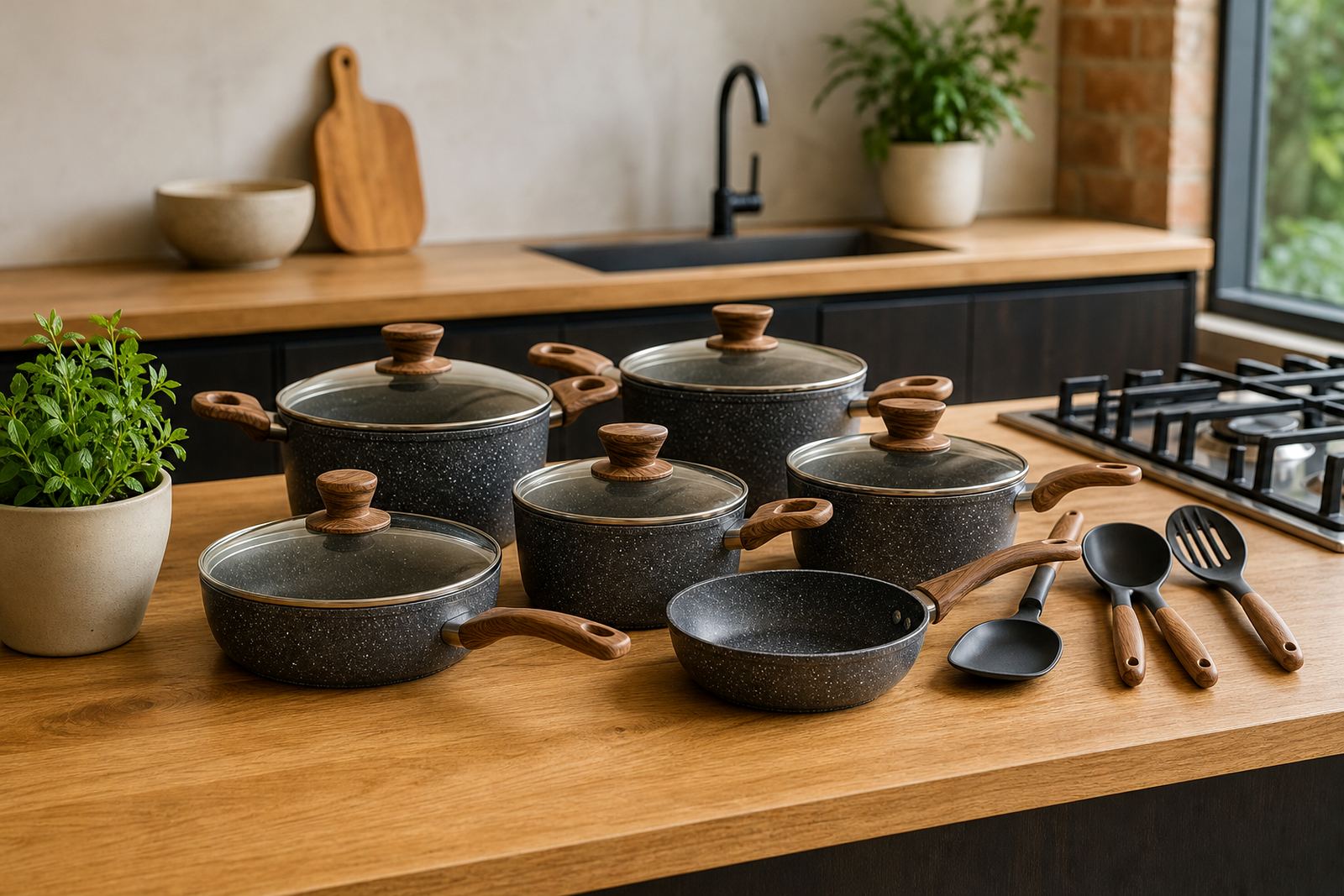
Set size is often the biggest difference between two deals. Some sets give you two useful pans and a lid, while others include several sizes that you may never use. A lower price is not always better if the set leaves out the pan size you reach for every day.
Check the measurement across the top, not just the base. A pan that says 28 cm should have a cooking surface that suits that size, and the sides should be deep enough for stirring without food spilling onto the stove. For Cape Town flats with limited cupboard space, a compact set can be more practical than a large stack of pans.
- 2 piece sets suit light cooking and small kitchens
- 3 to 5 piece sets cover most daily meals
- Larger sets help if you cook for guests or batch meal prep
- Stackable lids and nesting pans save storage space
Understand coatings and what they do in daily use
Coating affects how easy the pan is to clean and how much oil you need. Non-stick is handy for eggs, pancakes and fish, while stainless steel or hard-anodised styles can handle higher heat better for browning and searing. If you often cook spicy sauces or sticky marinades, a good coating makes life easier.
With any non-stick surface, use wooden, silicone or nylon utensils unless the maker says otherwise. Metal tools can scratch the coating and shorten the life of the pan. In humid coastal areas like Durban and Gqeberha, keep pans dry after washing so handles, rivets and edges do not pick up marks or rust.
- Non-stick: easy cleaning and low-oil cooking
- Stainless steel: better for browning and heavy use
- Hard-anodised: tough surface and even heating
- Check if the coating is dishwasher safe, but hand washing usually lasts longer
Match the pan set to your stove and power cuts
South African kitchens often switch between electric, gas and backup cooking during load-shedding. A pan set should heat evenly on the stove you use most. Flat bases help on induction and ceramic tops, while heavier pans can stay steadier on gas burners when the flame shifts.
If you use gas during outages, look for heat-resistant handles and lids that sit firmly. If you cook on a standard electric hob in Pretoria or Johannesburg, lighter pans may warm faster, but they should still sit flat with no wobble. A good base saves time and gas, and it helps stop hot spots that burn food in the middle while the edges stay raw.
- Induction: magnetic base is required
- Gas: sturdy handles and even base contact help
- Ceramic or glass top: flat, smooth bottoms are best
- Electric coil: heavier pans can distribute heat better
Look at handles, lids and cleaning time
The details matter when you use a pan every day. Riveted handles tend to feel more secure than loose fittings, and a comfortable grip matters when you are moving a full pan from stove to counter. Glass lids are useful because you can check sauce levels without lifting the lid and losing heat.
For busy homes in Johannesburg or Pretoria, quick cleaning is a big plus. Pans with smooth interiors and fewer corners are easier to rinse after breakfast or supper. If you have a small sink or a water-saving routine, choose pans that do not trap food around the edge. That small choice saves time every week, not just once.
- Heat-resistant handles are safer for daily cooking
- Glass lids help you monitor food without lifting
- Wide rims make pouring easier and neater
- Smooth interiors clean faster after sticky food
Use this quick comparison checklist before you order
When you are comparing two or three pan sets, use a simple checklist so you are not swayed only by the number of pieces. The best set is the one that suits your kitchen, your stove and your cooking style. If you are buying for a gift, think about the person’s home size and whether they cook daily or only now and then.
In South Africa, many shoppers also look for value in practical extras like lids, depth and easy storage. A slightly more expensive set can still be the better buy if it lasts longer and covers more of your day-to-day cooking. That matters whether the delivery is going to Midrand, East Rand, West Rand or further afield.
- Does it include the sizes you use most?
- Is the coating suitable for your cooking style?
- Does it work on your stove type?
- Are the handles, lids and base made for regular use?
- Will it fit your cupboard space and cleaning routine?
Choose the right set for the kitchen you actually have
A good pan set should make cooking easier, not create more work. If you need one dependable frying pan, buy for that. If you batch cook soup, curry or mince, choose deeper pieces that hold more without splashing. If you are shopping for a corporate gift or housewarming present, a neat set with everyday sizes is usually the safest choice.
For South African homes, the practical choice is often the one that saves time, uses less oil and stands up to daily heating, cooling and washing. Compare the set size, the coating and the stove fit, then decide based on real use rather than the biggest bundle on the page. That way you end up with pans that earn their place on the shelf.