
Start with what you actually store
Before you buy storage containers, make a list of the foods and items you want to pack away. Most homes need a mix of dry-food containers for rice, pasta and cereal, plus smaller tubs for sauces, snacks and single portions from last night’s dinner. If you batch cook or send lunch to school or work, think about what fits in a bag, a fridge shelf and a freezer drawer.
Measure your cupboard shelves and fridge space first. A container that looks perfect online can be awkward if it is too tall for a shelf or too wide for a narrow door rack. In Midrand and other busy households, the best choice is often a set with matching lids and a few different sizes so you can keep everything stacked and easy to find.
Choose shapes that suit pantry, fridge and freezer
Shape matters just as much as size. Square and rectangular containers usually make better use of shelf space, while round tubs can work well for soups, chopped fruit and wet ingredients. For a pantry, straight sides help you line up jars neatly and use every metre of shelf space. For the fridge, slimmer containers are easier to place around milk, jars and meal prep boxes.
If you freeze food, look for containers that allow a little room at the top as liquids expand. Avoid filling every tub to the brim. That small gap helps prevent cracked lids and spills when temperatures change, especially during load-shedding when appliances may warm and cool more than usual.
Check lids, seals and everyday handling
A good lid should close firmly without needing a struggle every time you open it. For dry foods, a tight seal helps keep out moisture and insects, which is important in warmer months and in coastal humidity. For leftovers and liquids, test whether the lid locks evenly on all sides. One loose corner can cause leaks in a school bag, cooler box or car boot.
Look at the way you will use the container each day. If older family members or children will open them, pick lids that are easy to lift but still secure. If you often heat food in the microwave, choose containers marked for that use and avoid lids that warp in high heat. It saves money and avoids replacing them too soon.
Build a simple set for daily meals
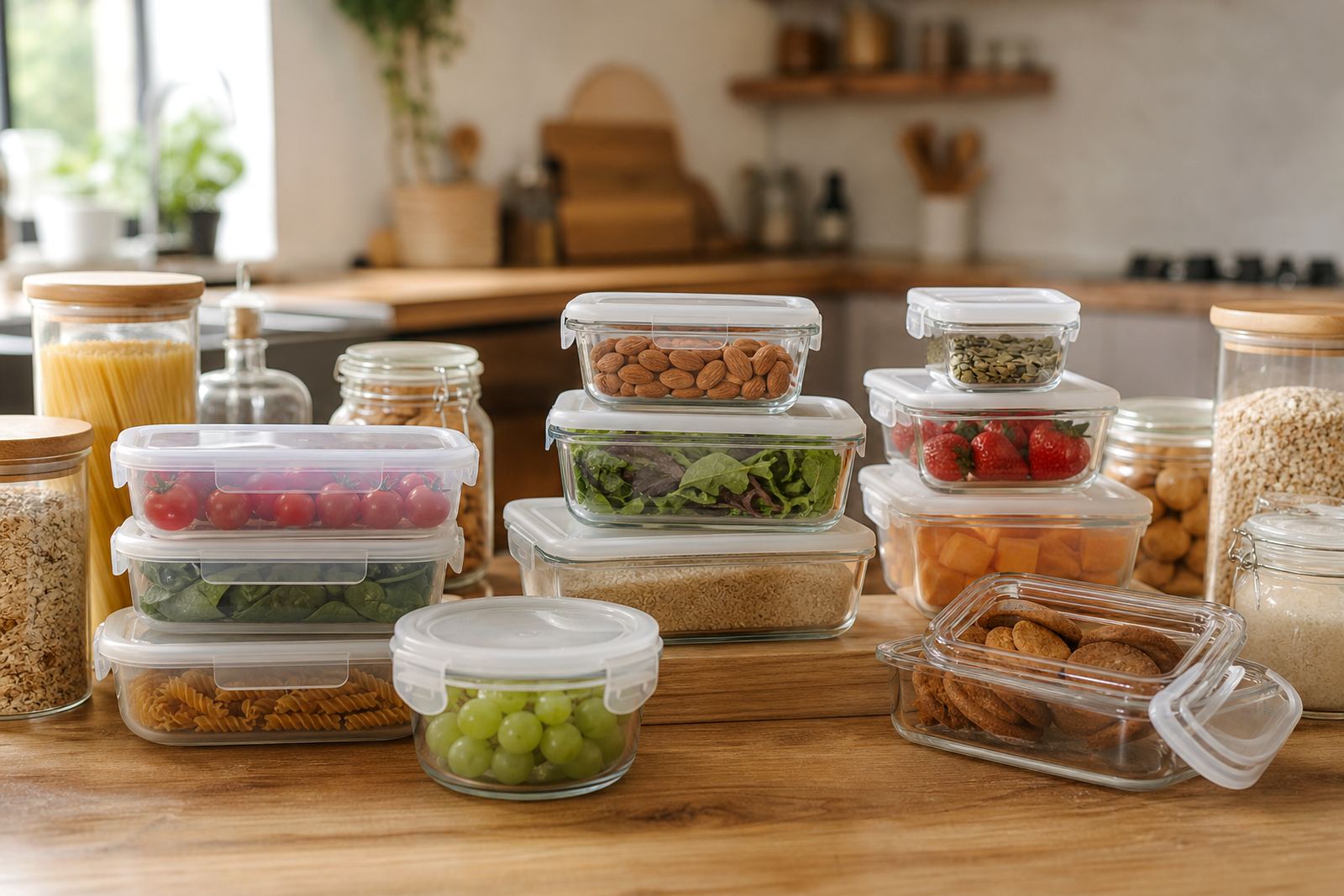
You do not need dozens of containers to stay organised. A practical starter set can cover most kitchen jobs and help you sort food faster after shopping. Keep a few large tubs for flour, rice or dog food, medium tubs for leftovers, and smaller cups for condiments or chopped fruit. That way you are not hunting for the right lid every time supper is packed away.
- 1 to 2 large containers for pantry staples
- 4 to 6 medium containers for leftovers and lunch prep
- 3 to 4 small containers for snacks, herbs or sauces
- Label areas for dry goods, fridge food and freezer items
- Use clear tubs where possible so you can see stock at a glance
Clear sides make stock control easier. You can tell at a glance when rice is running low or when there is still enough soup for tomorrow. That helps with grocery planning and can cut down on duplicate buys, which is useful when you are trying to stretch the monthly budget.
Make storage work in small kitchens and busy homes
In a compact kitchen, storage containers need to do more than hold food. They should stack well, fit into awkward corners and move easily from counter to fridge. If your cupboard space is limited, choose containers that nest inside one another when empty. That keeps the shelf neat and frees up room for pots, plates and dry ingredients.
For households with school lunches, shift work or shared meals, set up a small system. Keep one shelf for breakfast items, one for dinner ingredients and one box for snacks or fruit. If you live near the coast or in a humid area, wipe containers dry before sealing them so moisture does not sit inside. It is a small step but it helps a lot.
Keep your containers in good condition
Storage containers last longer when you wash them properly and store them with care. Use warm water and a mild dish soap, then dry them fully before stacking. Strong smells from onion, curry or fish can linger, so wash lids and seals carefully. If a container is stained, scrub it soon before the mark settles in.
Check lids for cracks and seals for wear every few months. If a lid no longer fits tightly, move that container to dry foods or recycle it if it is beyond use. Good care helps avoid waste and keeps your kitchen more organised. For households that buy in bulk or send parcels to family, having clean reusable tubs ready can make packing much easier.
When you are choosing storage containers for your home, think beyond price alone. A slightly better shape, a tighter lid and a size that actually fits your shelf will save time every week. That is the kind of purchase that earns its place in the kitchen.