
Start With the room’s main purpose
Before you buy any LED lighting, decide what each room needs to do. A bedroom usually needs soft, restful light for winding down, while a lounge may need a mix of general light and brighter spots for reading, cleaning or entertaining. Display areas need focused light that shows off shelves, art or decor without making the room feel harsh.
In South African homes, the same room often has to do more than one job. A dining area may also be a work spot during load-shedding, and a passage may double as a display wall. That is why it helps to list the main use first, then choose the fitting and bulb style after that.
- Bedroom: calm, low glare light
- Lounge: layered lighting with a warm feel
- Display area: focused light with good colour clarity
- Home office corner: brighter light for reading and screen work
Check brightness before you choose the bulb
Brightness is measured in lumens, not watts. Many shoppers still look at watts out of habit, but with LED lighting the watt number only tells part of the story. A 5W LED can be enough for a bedside lamp, while a main ceiling light may need much more output depending on room size and ceiling height.
A small bedroom in Midrand will not need the same light level as a large double volume lounge in Cape Town. Coastal homes may also benefit from fittings that handle humidity better, especially in enclosed patios or near kitchens. If the room has dark walls, darker flooring or heavy curtains, choose a slightly brighter light than you would for a white painted room.
- Small bedroom or passage: lower lumen output
- Medium lounge: mid range output with more than one light source
- Display shelf or feature wall: narrow beam light
- Kitchen work area: stronger light for safety and accuracy
Choose the right colour temperature for each space
Colour temperature affects the mood of the room. Warm white usually feels cosy and relaxed, which suits bedrooms and lounges. Cool white gives a cleaner and sharper feel, so it works better for task areas, mirrors and some display spaces. Neutral white sits in the middle and is useful where you want a balanced look.
A practical rule is to keep bedrooms warmer and use cooler tones only where you need clearer visibility. If you are matching new lighting to existing fittings, check the colour temperature on the pack so the new lights do not clash with the old ones. Mixing very warm and very cool light in one room can make the space feel uneven.
- Warm white: bedrooms, soft lounges, relaxation corners
- Neutral white: general household use
- Cool white: studies, laundries, worktops and display areas
- For a calm home, use one main colour tone per room
Match the fitting to the space and ceiling height
Not every LED light works in every room. Recessed fittings suit clean ceilings and modern rooms, while pendant lights can help over a dining table or kitchen island. Strip lights and cabinet lights are useful for shelves, cupboards and under-counter areas. If your ceiling is low, avoid fittings that hang too far down, because they can make a room feel cramped.
Think about the path people walk through the room too. In a narrow passage or stair area, light should spread evenly so there are no dark patches. In a lounge, one central fitting may not be enough on its own. Add lamps or wall lights where needed, then you can switch on only what is necessary and save power.
- Low ceilings: flush or recessed fittings
- Dining areas: pendant or drop fittings
- Shelves and cabinets: strip or spot lighting
- Passages and stairs: even spread with no harsh shadows
Use layered lighting for bedrooms and lounges
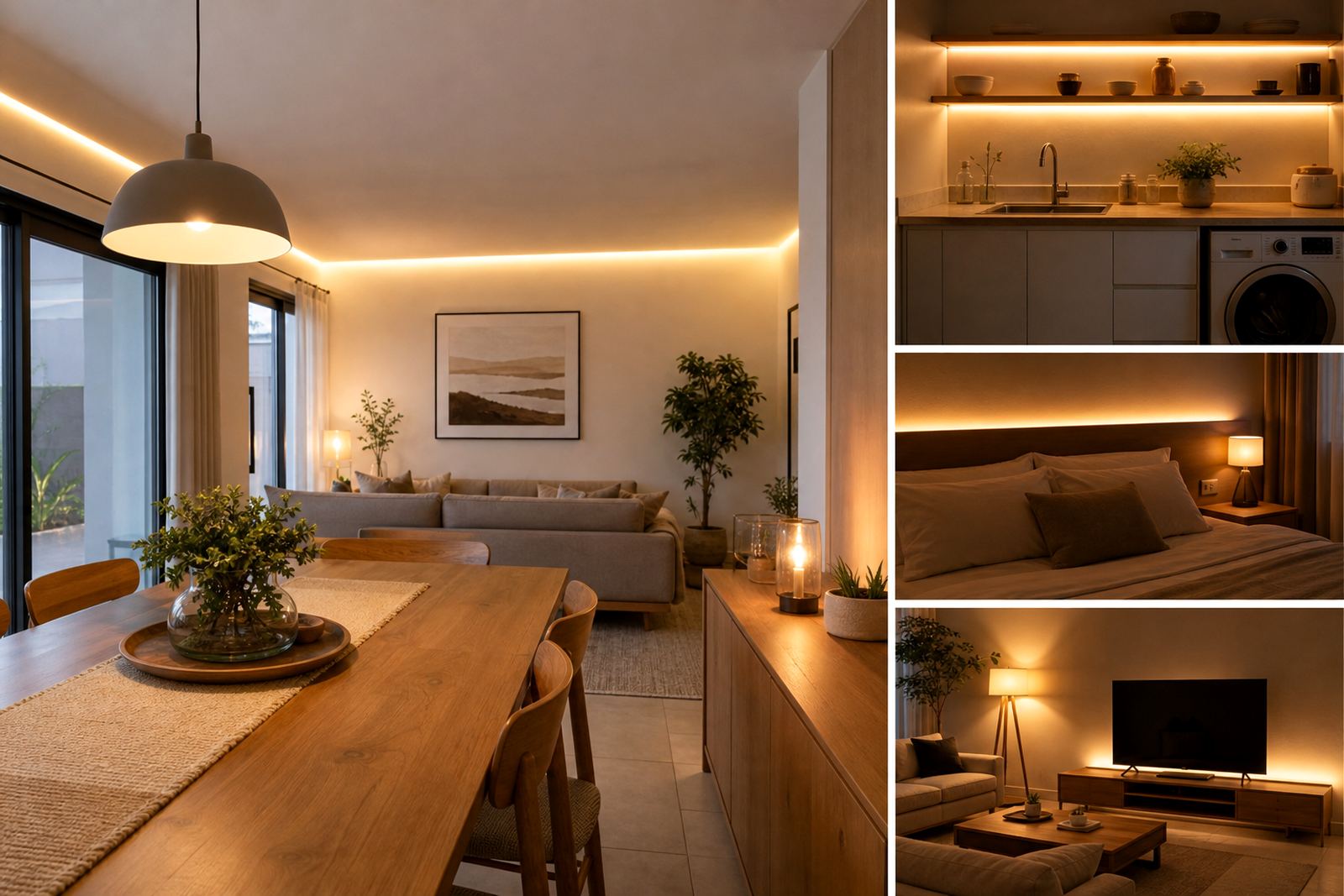
Layered lighting means using more than one source in the same room. This gives you control over brightness and mood. In a bedroom, one ceiling fitting can be paired with a bedside lamp or wall light. In a lounge, add a main light, reading light and a soft accent light for evenings when you do not want the whole room bright.
This approach is especially useful during power interruptions, because you can keep part of the room lit without draining a backup system too fast. It also helps in family homes where one person wants to read while another watches TV. Good layering makes the room more practical, and it stops one light from having to do everything.
- Main light for general brightness
- Task light for reading, working or cooking
- Accent light for shelves, art or decor
- Soft lamp or wall light for evening use
Think about maintenance, safety and energy use
LED lighting lasts longer than older bulbs, but the fitting still needs to suit your home. Check whether the light can handle dust, humidity or outdoor shelter areas. For coastal homes, fittings that resist corrosion are worth the extra care. In inland areas, dust can build up on shades and covers, so a simple design may be easier to clean.
If you are fitting lights near bathrooms, kitchens or outside entrances, make sure the product is suitable for that area and that the installation follows local electrical rules. For safety, keep wiring neat and do not overload one circuit. A good LED choice should lower electricity use, reduce heat and make your daily routine easier.
- Choose fittings that are easy to clean
- Check suitability for humid or dusty areas
- Use an installer where wiring is involved
- Keep backup lighting ready for load-shedding
Quick buying checklist before you place the order
Use this final check to avoid buying the wrong light. Measure the room, note the ceiling height and decide where each light will go. Then match brightness, colour temperature and fitting style to the space. If you are buying for a gift, a starter home or a full room refresh, it helps to keep the purpose simple and practical.
At Buy-This Deals, shoppers often ask for help with home gift ideas, bulk order help and delivery queries across Johannesburg, Pretoria, Cape Town, Durban and Gqeberha. If you need to source more than one type of light for a room or a few rooms, it is easier to compare the basics first, then choose the items that fit your budget and your home.
- Room size measured
- Ceiling height checked
- Brightness suitable for the task
- Colour temperature matched to the room
- Fitting style chosen for the space
- Cleaning and maintenance considered