
Start with the items that do not need to live there
The quickest way to neaten a bathroom is to remove anything that does not need daily access. Most family bathrooms collect extras over time, from spare soap bars and half-used bottles to old medicine boxes, empty packets and hair tools that belong somewhere else. If a product is only used once a week or once a month, it should probably not sit on the basin or windowsill.
Take everything out of the visible areas and sort it into three groups: keep in the bathroom, move to another room, or throw away. Be honest about duplicates too. One family often keeps three shampoos open at once, plus travel-size products and samples that never get used. Once those are out, the room already feels lighter.
- Keep daily items within easy reach, like hand wash, face cloths and one toothbrush holder.
- Move spare stock to a cupboard, linen closet or labelled box elsewhere in the home.
- Dispose of empty containers, old cosmetics and medicines that are past their use-by date.
- Limit visible items to what the family actually uses every day.
Use wall space and vertical storage before adding more furniture
In many South African homes, the bathroom is not large enough for extra furniture. That means the walls must do more work. A narrow shelf above the toilet, a hook rail on the back of the door or a simple wall-mounted caddy can free up a surprising amount of floor and basin space. This is especially useful in older homes in Midrand where the bathroom layout is compact and every metre counts.
Vertical storage also helps with cleaning. If fewer things sit on the floor, mopping becomes easier and there are fewer damp corners where dust and mould can gather. In humid coastal areas like Durban or Gqeberha, this matters even more because wet towels and closed cupboards can quickly develop a musty smell.
- Use hooks for bath towels, school hats and toiletry bags.
- Choose slim wall shelves for toiletries that need to stay in the bathroom.
- Place baskets high up for extra toilet paper and unopened packs.
- Keep the floor clear enough for easy cleaning each week.
Create one spot for each family member
When several people share a bathroom, clutter often happens because nobody knows where their things belong. A simple naming system can solve that. Give each person a small basket, pouch or section of a shelf. This makes it easier for children to find their own items and put them back after use. It also reduces the mixed pile of hairbrushes, lotion bottles and school accessories that usually ends up beside the basin.
For younger children, keep only the basics in reach. Store the rest higher up so the room does not get reset every morning by a flung towel or tipped bottle. If two adults share the bathroom with children, agree on a few shared items that stay on the basin and everything else stays in personal storage.
- Label baskets or bins by name, age group or use.
- Keep daily wash items separate from grooming tools.
- Use a small container for items that travel between bathroom and bedroom.
- Review the setup every few months as routines change.
Choose containers that make cleaning easier
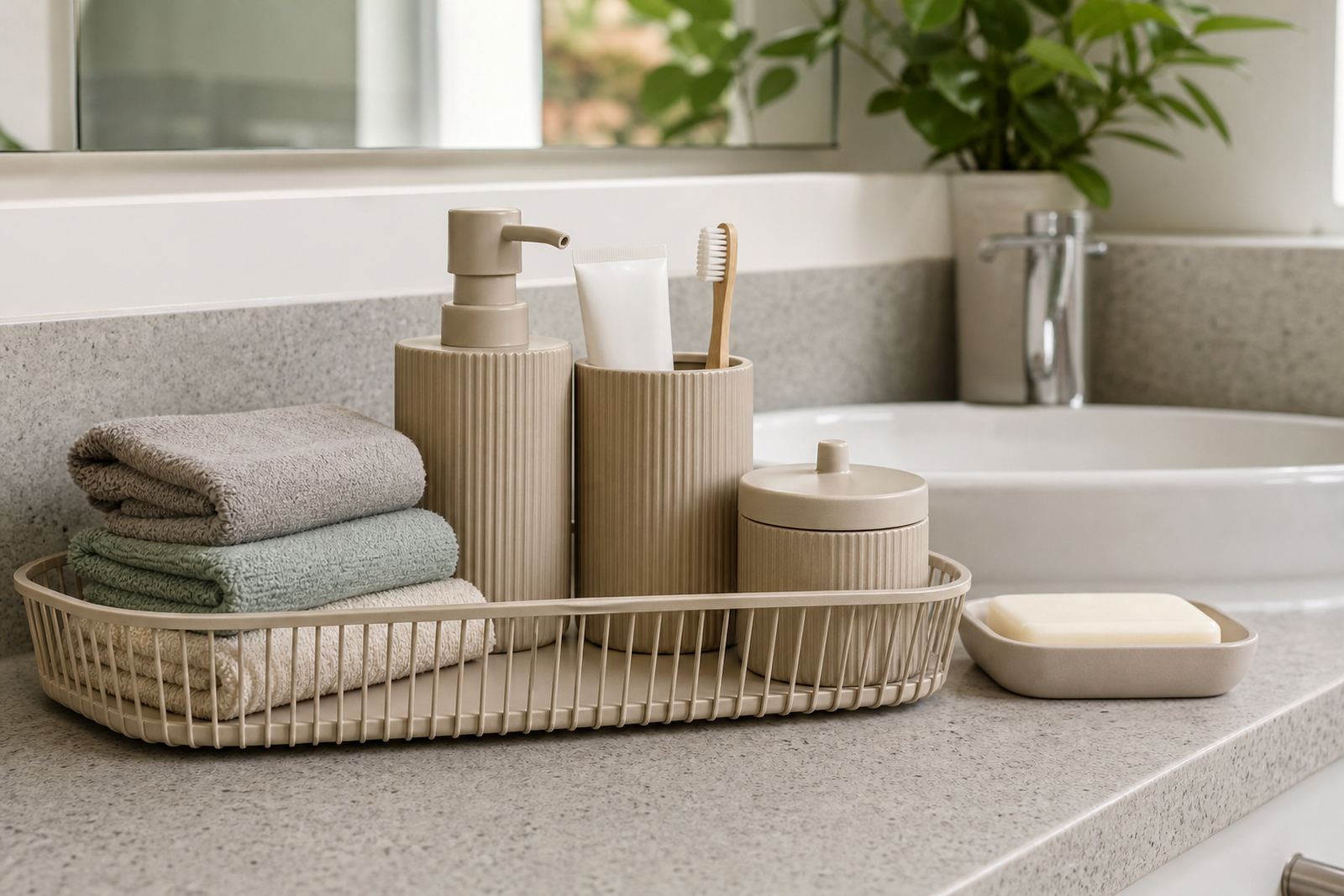
Clear containers, small trays and covered boxes can stop products from spreading across every surface. The aim is not to fill the bathroom with storage, but to make what stays there easier to manage. A tray under the soap and lotion keeps drips in one place. A lidded tub for cotton pads or spare razors keeps moisture out. Even a simple plastic basket can stop loose items from drifting into the corner.
If you are storing toiletries near a window or in a room that gets damp, choose containers that can be wiped dry quickly. Open wire baskets may look neat but they are not always ideal when steam and water splashes are part of daily life. In family homes with children, shatter-resistant containers are usually a safer choice than glass, especially near a tiled floor.
When load-shedding is part of the routine, it helps to keep one small container for the essentials you may need in low light, like a torch, spare batteries or a simple face wash kit. That way nobody has to search through several shelves during an evening outage.
Build a cleaning habit around small daily resets
A neat bathroom is usually the result of small habits, not a big weekend clean only. A 2 minute reset at the end of the day can make the room feel orderly with very little effort. Put lids back on, hang up towels, return toothbrush cups to their place and wipe the basin if toothpaste has splashed. These tiny actions stop clutter from turning into a bigger task.
Try pairing bathroom tidy-up with another fixed routine, such as after the evening bath or before the first person leaves for work. When the habit is linked to something already happening, it is easier to keep up. This is especially useful in busy households where mornings are rushed and everyone needs the same room within a short time.
- Clear the basin before bed so the room starts fresh the next morning.
- Hang wet towels properly rather than leaving them in a heap.
- Empty the bin before it overfills and starts making the room feel untidy.
- Replace nearly empty products before they create a cluttered backup pile.
Make space for the things that matter most
Not everything in the bathroom needs to be hidden, but the most useful items should be easy to reach. Think about what your family uses every day and place those items at hand level. Everything else can be stored higher up or in a separate cupboard. This is the practical part of a neater bathroom: less searching, fewer spills and less time spent moving things around.
If you are buying new organisers, measure first. A container that is too wide can waste space or block a drawer from closing. A hook that is too low can get in the way of the door. Small measurements save frustration later, especially in bathrooms where the layout is tight or the walls have limited fixing points. A few well-chosen pieces are better than a lot of mismatched storage that creates more clutter than it solves.
For many families, the real improvement is not a perfect-looking bathroom. It is a room where everyone knows where things belong, where cleaning takes less time and where the morning rush feels slightly less hectic. That is what a neater bathroom should do.